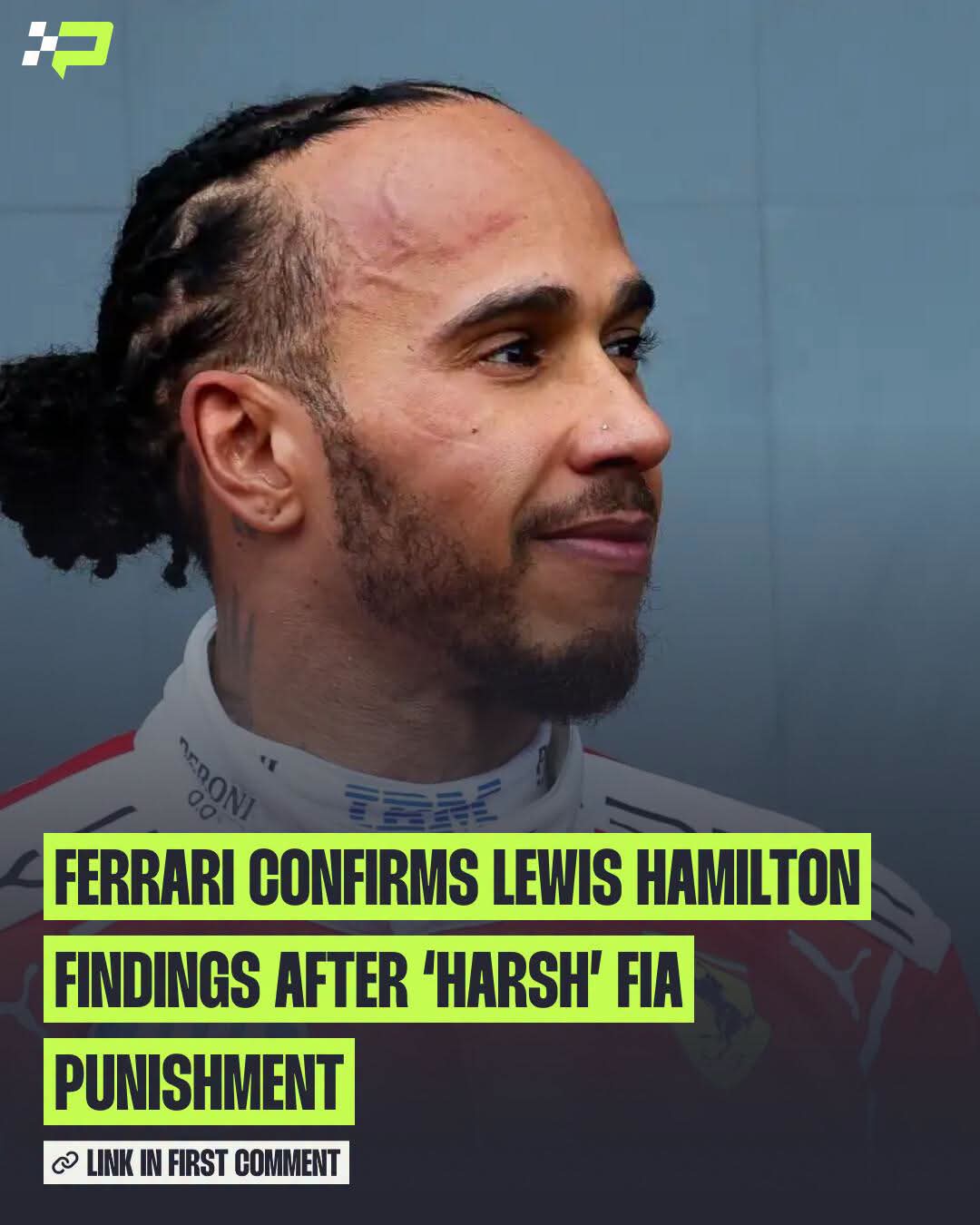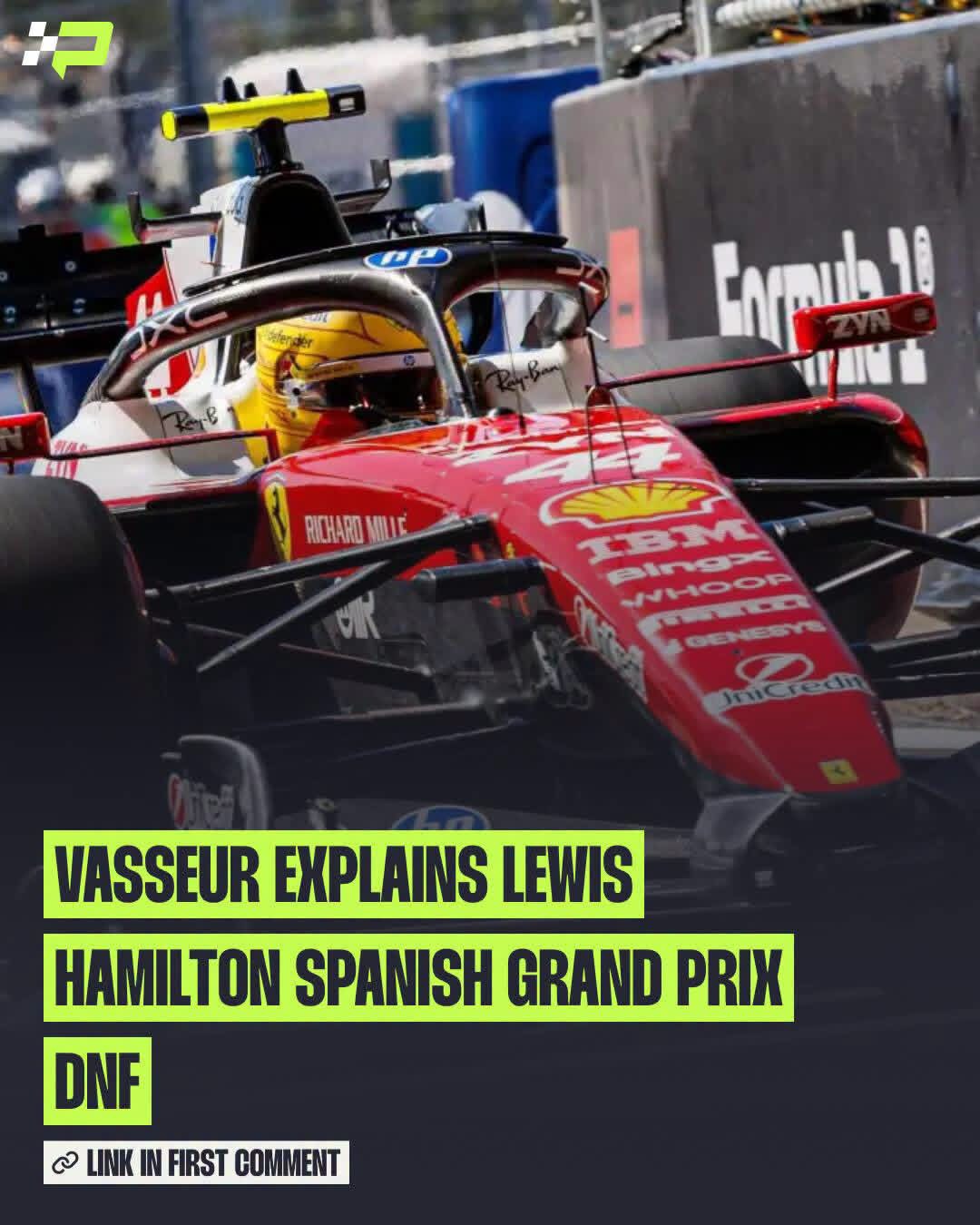
Ferrari team principal Fred Vasseur has confirmed the details behind Lewis Hamilton’s early retirement from the Spanish Grand Prix, revealing that a recurring long brake pedal forced the team to pull the seven-time world champion out of the race for safety reasons. The DNF at the Madring delivered another heavy blow to Hamilton’s already fading 2026 title challenge.
With the gap to championship leader Kimi Antonelli now standing at 101 points, the Madrid afternoon may prove to be the moment Hamilton’s championship hopes were finally extinguished.
WHAT WENT WRONG WITH HAMILTON’S BRAKES
Hamilton reported a sudden change in brake pedal feel early in the race. According to Vasseur, the pedal went long and Ferrari attempted to address the issue remotely from the pit wall. The fix proved only temporary. When the problem returned a few corners later, the team decided continuing was too dangerous.
“The pedal was long. We tried to fix it from the pit wall, and then it happened again a couple of corners later,” Vasseur explained. He added that staying on track “made no sense” given the risk, especially as Hamilton began collecting track-limit violations while struggling to control the car.
WAS THE VERSTAPPEN CLASH TO BLAME?
Hamilton had gone side-by-side with Max Verstappen at the start, with the Red Bull driver taking to the runoff and later being instructed to give the position back. Asked whether that incident could have triggered the brake problem, Vasseur was non-committal.
“Honestly, I don’t know, because they were working on the car when I left,” he said. The team principal’s response left open the possibility of a connection while stopping short of drawing a direct link.
HAMILTON’S OWN ACCOUNT MATCHES THE TEAM’S EXPLANATION
Hamilton’s post-race description aligned closely with Vasseur’s version of events. He reported that the brakes initially functioned normally into Turn 5 before the pedal suddenly took a step and the car failed to decelerate. He ran wide, made light contact with the barrier, and briefly believed the issue had resolved itself before the pedal went long again.
The sequence left him with no realistic option but to retire.
A BITTER END TO HAMILTON’S TITLE AMBITIONS
The retirement in Madrid came at a point when Hamilton’s championship hopes were already hanging by a thread. An early exit, combined with Antonelli’s continued strong form, has stretched the deficit to 101 points. In modern Formula 1, such a gap with a significant portion of the season remaining is usually decisive.
For Ferrari the result adds to a growing list of reliability and operational frustrations. Hamilton has often shown competitive pace in 2026, yet technical issues and strategic setbacks have repeatedly prevented him from converting that speed into consistent results.
WHAT FERRARI MUST ADDRESS NEXT
A brake-pedal failure of this nature raises immediate questions about component reliability and system redundancy. Ferrari will need to conduct a thorough investigation to determine the root cause and ensure it does not reappear in future races. For a driver of Hamilton’s experience and stature, confidence in the car’s fundamental systems is essential.
The team’s decision to retire the car was clearly driven by safety. Continuing with an unpredictable brake pedal on a demanding circuit would have carried unacceptable risk, both to Hamilton and to others on track.
THE ROAD AHEAD AFTER MADRID
Hamilton leaves Spain with another retirement and a clearer view of the championship landscape. While individual race wins remain possible, the title itself now appears beyond reach. Ferrari’s focus must shift toward delivering a more reliable package and maximising the remaining opportunities in 2026.
Vasseur’s explanation provided clarity on the technical issue. What remains is for Ferrari to ensure that similar failures do not define the rest of Hamilton’s season. In Madrid, a long brake pedal did more than end one race — it may have closed the door on a championship challenge for good.