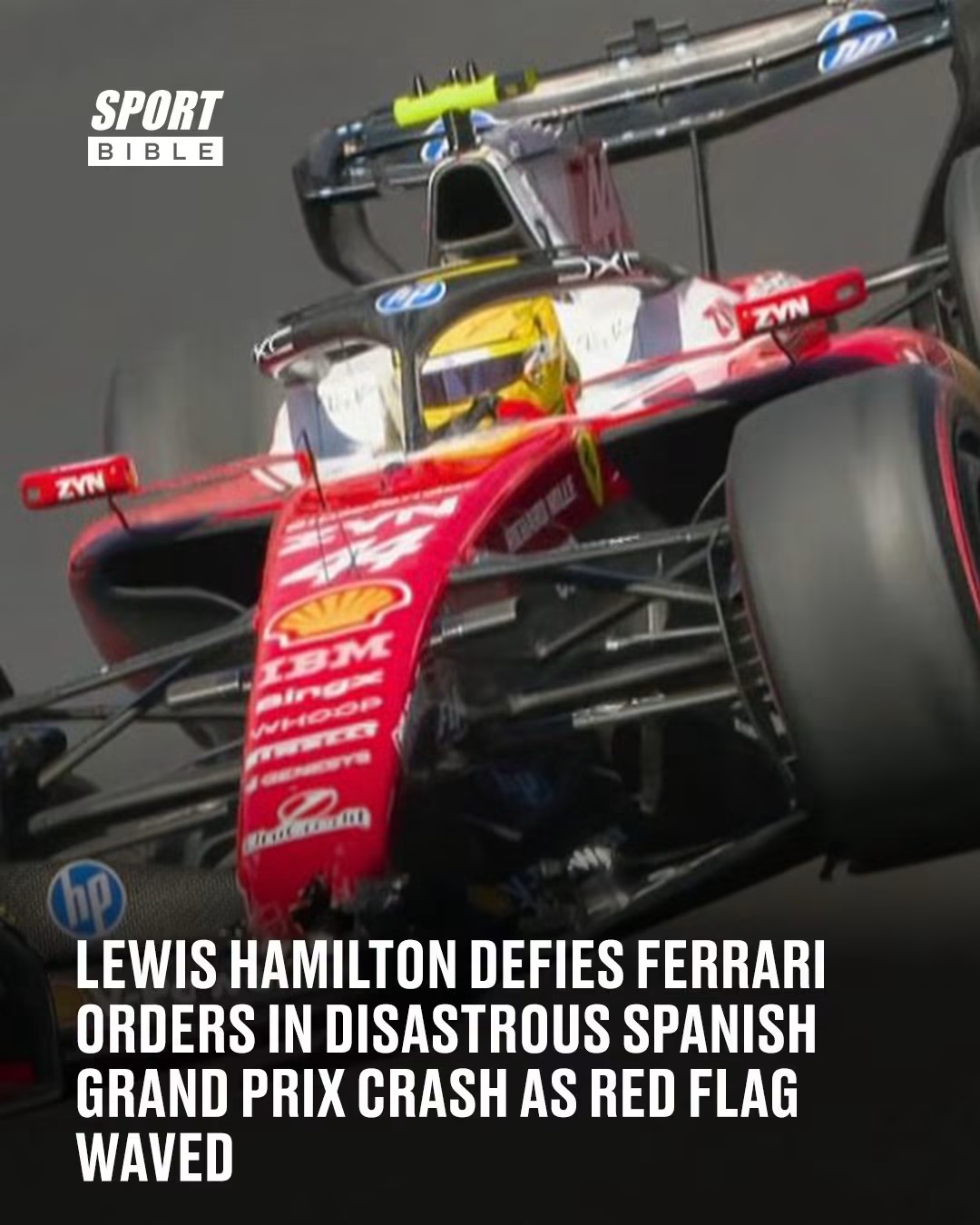
Lewis Hamilton’s bid to etch his name into the history books at Formula 1’s newest venue hit a major obstacle in final practice. The seven-time world champion crashed heavily at the Madring, then ignored repeated instructions from Ferrari to stop his damaged car, ultimately forcing a red flag that disrupted the entire session.
The incident has raised fresh questions about risk, team discipline, and whether Hamilton’s relentless competitive drive is helping or hindering Ferrari’s weekend in Madrid.
HOW THE CRASH UNFOLDED AT FORMULA 1’S NEWEST CIRCUIT
With roughly 37 minutes remaining in Free Practice 3, Hamilton approached Turn 22 when his front-left wheel locked up. The Ferrari SF-26 went straight on and slammed into the barrier. It was the first Spanish Grand Prix to be held at the purpose-built Madring in the Spanish capital, a circuit making its debut on the 2026 calendar.
Hamilton managed to reverse the car out of the wall. However, he had already passed the pit-lane entry. Returning to the garage meant completing nearly a full additional lap with a front wing lodged under the nose of the car. The damage was obvious and significant.
THE RADIO EXCHANGE THAT DEFINED THE MOMENT
Ferrari race engineer Carlo Santi immediately instructed Hamilton to find a safe place to stop. The team’s priority was clear: protect the car for qualifying and Sunday’s race rather than risk further damage by driving it back. Hamilton pushed back, arguing he could still make it to the pits.
Only after the race director formally ordered the car to stop did Hamilton comply. By then he had already covered a substantial portion of the lap. The session was red-flagged so marshals could repair the barriers, bringing an abrupt halt to final practice preparations for the entire grid.
WHY THIS INCIDENT CARRIES EXTRA WEIGHT IN MADRID
This weekend represents a unique opportunity. A pole position and race win at the inaugural Spanish Grand Prix at the Madring would give Hamilton a permanent place in the circuit’s history. At 41, every chance to add to his legacy carries heightened significance. That context helps explain, though not excuse, the decision to keep driving a compromised car.
Yet the cost is already mounting. Ferrari mechanics now face a compressed timeline to repair the SF-26 before qualifying. Any residual damage or imperfect setup could compromise Hamilton’s chances of converting practice pace into a front-row start. A potential stewards’ investigation for continuing with significant damage only adds further uncertainty.
THE TENSION BETWEEN INSTINCT AND INSTRUCTION
Hamilton has built a career on refusing to accept limitations. That mindset has delivered seven world titles and countless memorable recoveries. In this case, the same instinct collided with clear team orders and safety protocols. Free practice sessions still involve high speeds, other cars on track, and marshals who may need to intervene. Continuing with a front wing tucked under the car creates unpredictable handling and debris risks that the regulations are designed to eliminate.
For Ferrari, the episode highlights an ongoing challenge: managing a driver whose competitive fire remains undimmed while maintaining operational discipline across a high-pressure weekend. For the rest of the grid, the red flag compressed valuable final practice time, potentially affecting setup decisions ahead of qualifying.
WHAT IT MEANS FOR THE REST OF THE WEEKEND
Qualifying now becomes even more critical. Hamilton must extract maximum performance from a car that has already taken a heavy hit, while Ferrari works to ensure reliability. A strong result remains possible — Hamilton has recovered from far worse situations — but the margin for error has narrowed.
The broader championship picture also looms. Every point matters in 2026, and a suboptimal qualifying position or any post-session penalty would represent a self-inflicted setback at a circuit where making history was genuinely on the table.
Hamilton’s crash and the subsequent defiance of team orders will be remembered as more than a simple practice incident. It crystallised the enduring conflict between a champion’s refusal to yield and the structured demands of modern Formula 1. How Ferrari and Hamilton respond in qualifying and the race will determine whether this moment becomes a footnote or a turning point in their Madrid weekend.