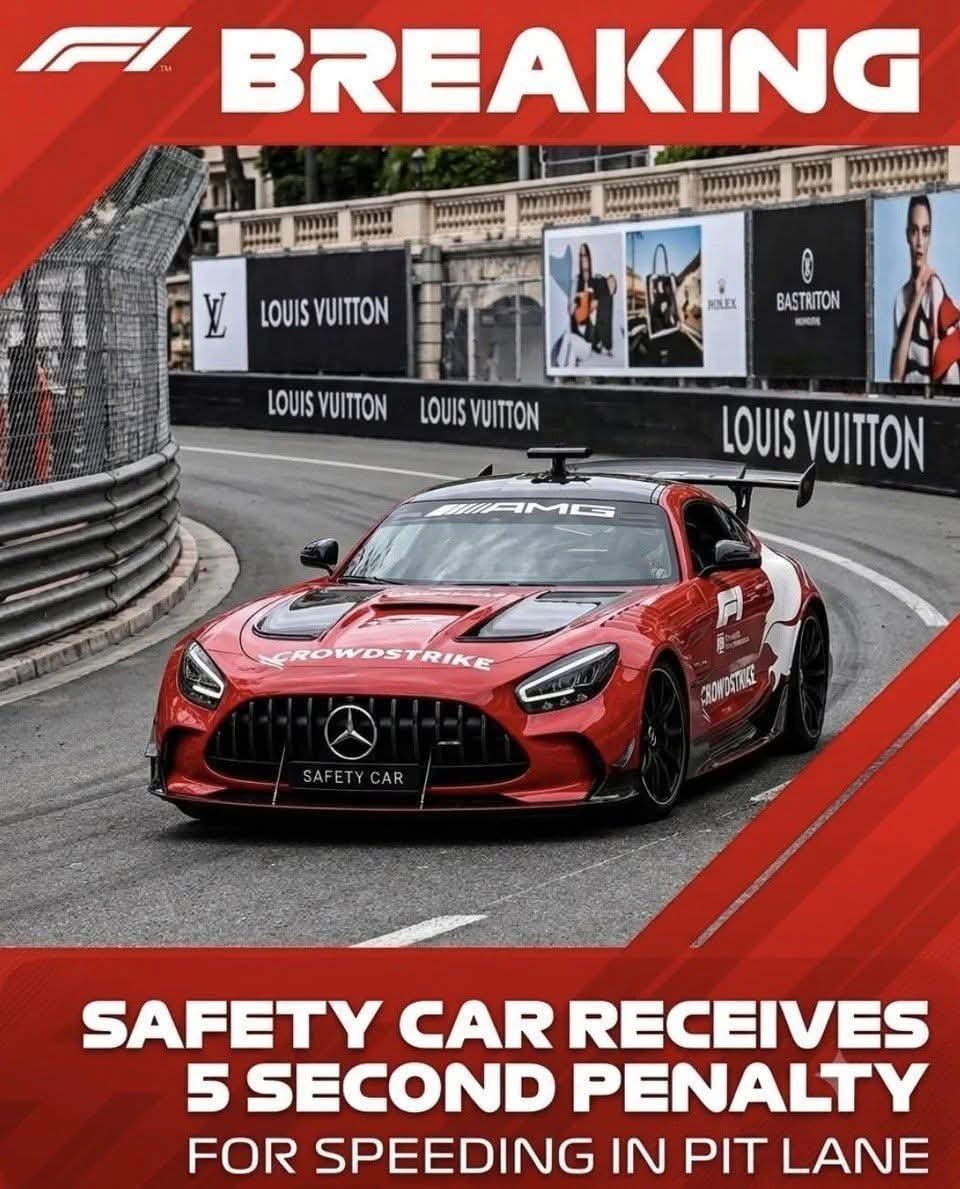
The 2026 Monaco Grand Prix will be remembered for much more than Kimi Antonelli’s latest victory. In a race weekend already filled with investigations, penalties, red flags, and controversial steward decisions, Formula 1 fans were left stunned when reports emerged that even Safety Car driver Bernd Mayländer was handed a fine.
The unprecedented situation has fueled fresh debate about whether the FIA’s strict enforcement of regulations has reached an extreme level. Across the Monaco weekend, drivers, teams, and officials found themselves under constant scrutiny as race control cracked down on every possible infringement.
For many observers, the message was clear: nobody was exempt from the rulebook.
MONACO WEEKEND TURNS INTO A PENALTY FESTIVAL
Monaco has always been one of Formula 1’s most challenging venues. The narrow streets, limited overtaking opportunities, and constant proximity to barriers leave little room for mistakes.
However, the 2026 edition became notable for another reason: the sheer number of investigations and penalties handed out throughout the event.
Multiple drivers received sanctions for pit-lane speeding, several incidents were referred to the stewards, and teams found themselves facing inquiries over procedural breaches. The spotlight wasn’t limited to competitors fighting for championship points. Officials appeared determined to enforce regulations with maximum consistency regardless of status or circumstance.
That approach ultimately led to one of the most surprising developments of the weekend.
WHY THE MAYLÄNDER INCIDENT IS DRAWING ATTENTION
Bernd Mayländer is one of the most respected figures in Formula 1. Since becoming the FIA Safety Car driver, he has been responsible for controlling countless race interruptions and helping ensure driver safety during dangerous conditions.
His role is rarely controversial. In fact, many fans hardly notice him unless the Safety Car is deployed.
That is why news of a penalty or fine involving Mayländer immediately generated discussion throughout the paddock and across social media.
For some fans, the incident became symbolic of what they view as an increasingly rigid interpretation of regulations. If even the Safety Car driver is not immune from sanctions, then clearly every participant at a Grand Prix weekend is being held to the same standards.
Others argue that this is exactly how the sport should operate.
THE FIA’S POSITION: CONSISTENCY ABOVE ALL
One of the biggest challenges facing modern Formula 1 is maintaining credibility when applying rules.
Over the years, teams and fans have frequently criticized the FIA for perceived inconsistencies in stewarding decisions. Similar incidents have sometimes resulted in different penalties depending on circumstances, leading to accusations of favoritism or confusion.
By enforcing regulations across the board, the FIA may be attempting to eliminate those criticisms.
The governing body has repeatedly emphasized that safety and fairness must remain the sport’s top priorities. From world champions to rookies, from team personnel to officials, the expectation is that everyone follows the same framework.
Viewed from that perspective, penalizing any breach—regardless of who committed it—supports the principle of equal accountability.
WHAT THIS MEANS FOR FORMULA 1 GOING FORWARD
The Monaco weekend could become a significant reference point for future stewarding decisions.
Teams are likely to pay even closer attention to operational procedures, knowing that even seemingly minor infractions can attract penalties. Drivers may also become more cautious in areas such as pit-lane speed compliance, Safety Car regulations, and red-flag procedures.
At the same time, Formula 1 faces the challenge of ensuring that strict enforcement does not overshadow the racing itself.
Fans tune in to watch battles for victories, podiums, and championships. If discussions after every race revolve primarily around investigations and sanctions, questions will inevitably arise about whether the balance between regulation and competition has shifted too far.
A CHANGING ERA OF FORMULA 1 OFFICIATING
The reaction to Monaco highlights a broader trend in modern Formula 1. The sport has become increasingly data-driven, technologically advanced, and tightly regulated.
Every movement on track is monitored. Every speed reading is recorded. Every radio communication can be reviewed.
That environment leaves very little room for oversight, whether the individual involved is a rookie driver, a team principal, or the person behind the wheel of the Safety Car.
As Formula 1 continues evolving, weekends like Monaco suggest that the FIA is committed to applying its regulations more aggressively than ever before.
FINAL THOUGHTS
The fact that even Bernd Mayländer found himself on the wrong side of an FIA sanction perfectly captures the atmosphere surrounding the 2026 Monaco Grand Prix. It was a weekend where investigations became almost as common as overtakes, and where no participant appeared beyond the reach of the rulebook.
Whether fans view that as necessary consistency or excessive policing remains a matter of opinion. What is certain is that Monaco has reignited an important conversation about how Formula 1 should balance strict governance with the spectacle that makes the sport so compelling.
As the championship moves forward, teams and drivers now know one thing for certain: the FIA is watching everything.