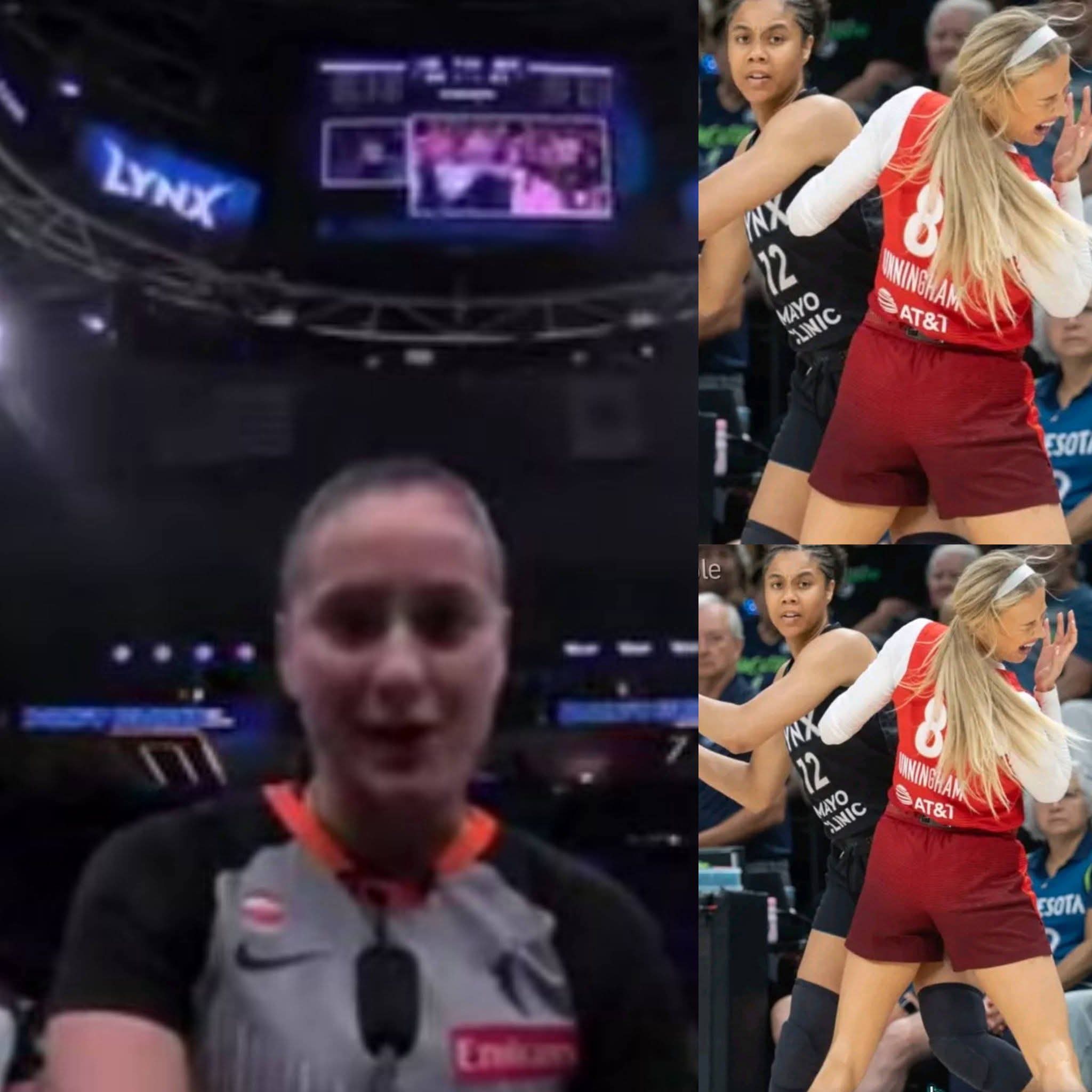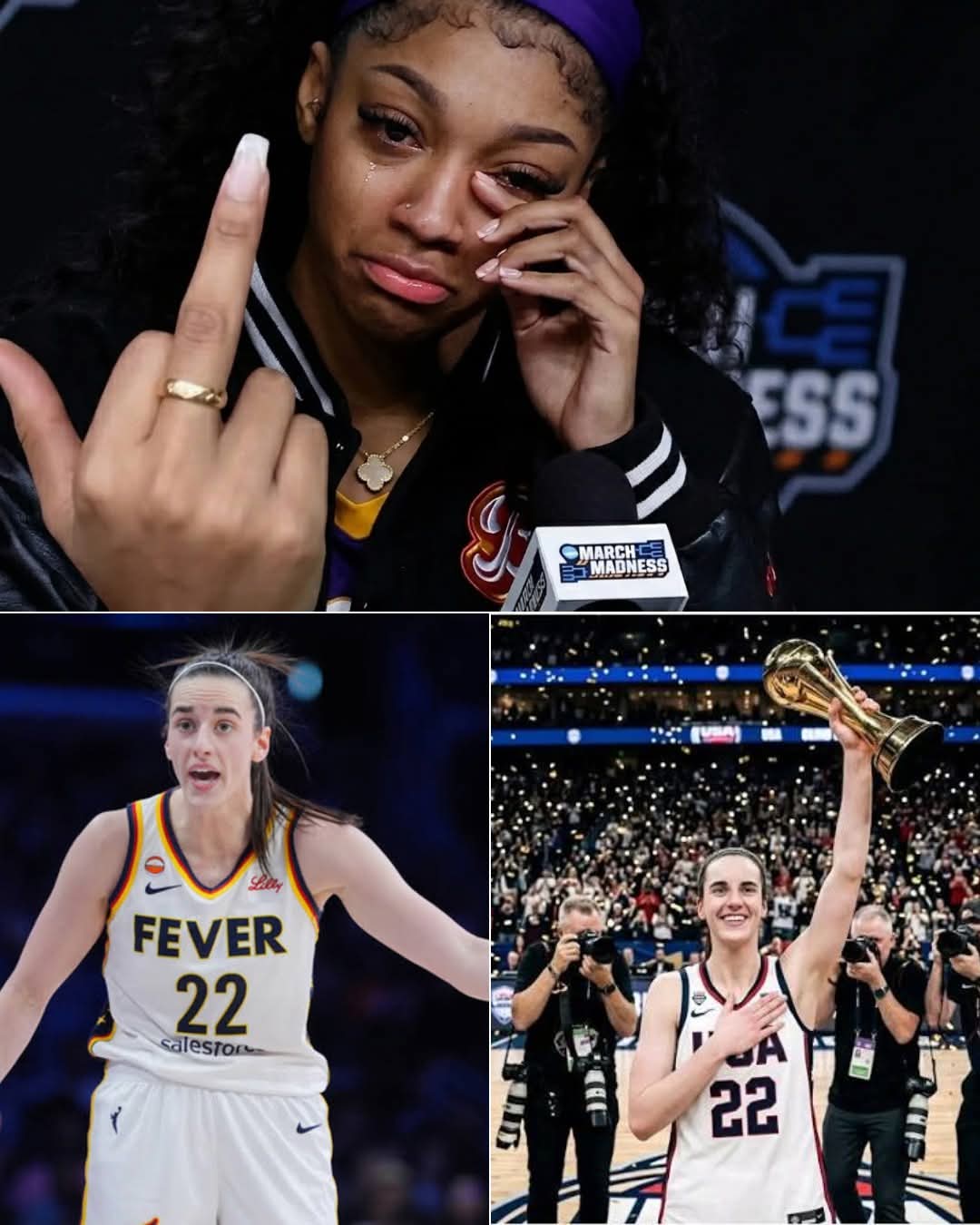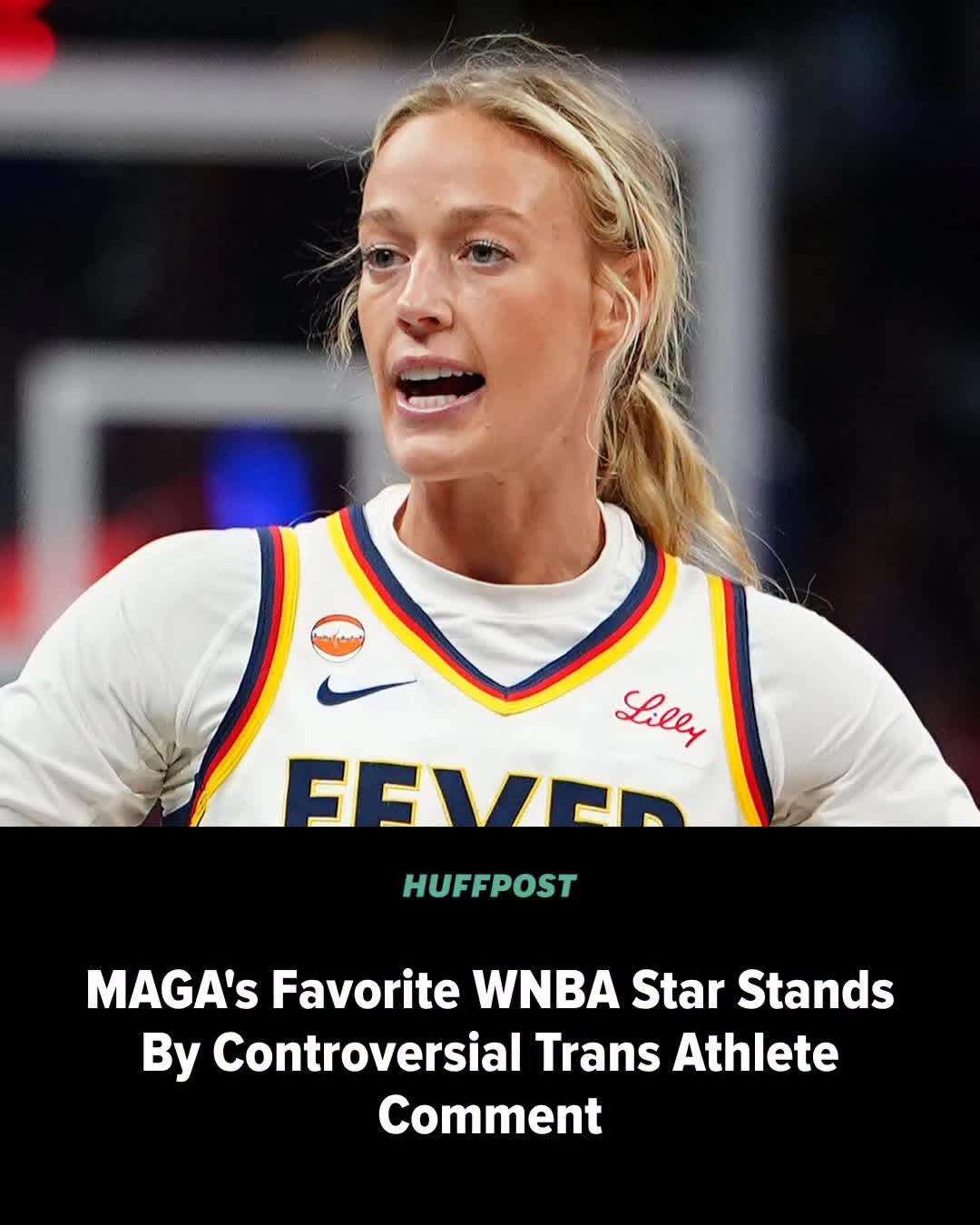
Indiana Fever guard Sophie Cunningham has once again found herself at the center of one of the most polarizing discussions in sports. After reaffirming her views on transgender athletes competing in women’s sports, Cunningham ignited a wave of reactions from across the political spectrum, drawing praise from conservative figures while facing strong criticism from LGBTQ+ advocates and others. The controversy has extended well beyond basketball, highlighting how today’s athletes increasingly find themselves involved in debates that reach far outside the boundaries of competition.
Cunningham’s comments have fueled a national conversation about fairness, inclusion, and the evolving role of professional athletes in public discourse. Whether supporters agree with her position or critics oppose it, the story demonstrates how issues surrounding gender and sports continue to dominate headlines across the United States.
CUNNINGHAM DEFENDS HER POSITION DESPITE BACKLASH
The Indiana Fever veteran addressed the controversy during media interviews, pushing back against accusations that she harbors hostility toward transgender people. Cunningham argued that her position has been mischaracterized, insisting she has never expressed hatred toward the transgender community.
Instead, she said her concerns center on what she believes is protecting fairness and safety in women’s sports, particularly for young female athletes competing in school and amateur competition.
Following the initial interview, Cunningham reiterated her stance before Indiana’s game against the Connecticut Sun, telling reporters she stood by her comments. She later reinforced that message on social media, making it clear she had no intention of walking back her position despite the criticism.
Her remarks have become one of the most talked-about off-court stories involving the WNBA this season.
THE COMMENTS QUICKLY BECAME A POLITICAL FLASHPOINT
The reaction extended far beyond basketball circles.
Several conservative commentators and public figures praised Cunningham for speaking publicly about an issue many believe active professional athletes avoid discussing. Among those voicing support were former collegiate swimmer and activist Riley Gaines and media personality Tomi Lahren, both of whom argued that Cunningham showed courage by expressing her views while still competing professionally.
Members of the Trump administration also weighed in, with White House Press Secretary Karoline Leavitt publicly defending Cunningham’s comments and describing her remarks as truthful while criticizing the backlash she received.
The attention underscores how discussions surrounding transgender participation in sports have become deeply intertwined with American politics, particularly following recent federal and state policy debates on athletic eligibility.
CRITICS ARGUE THE ISSUE REQUIRES GREATER NUANCE
Not everyone welcomed Cunningham’s remarks.
Many LGBTQ+ advocates, activists, and social media users argued that her comments unfairly targeted an already marginalized community. Critics contended that transgender athletes represent only a very small percentage of competitors and warned that broad public statements can contribute to increased hostility toward transgender individuals, particularly young people.
Advocacy organizations have consistently emphasized that discussions surrounding transgender participation should be based on scientific research, medical expertise, and sport-specific policies rather than generalized political rhetoric.
Others argued that the issue is far more complex than simple slogans, requiring governing bodies to balance competitive fairness, athlete safety, and inclusion through evidence-based regulations.
The range of reactions reflects just how emotionally charged the subject has become across both sports and society.
THE WNBA FACES ANOTHER HIGH-PROFILE OFF-COURT DEBATE
For the WNBA, Cunningham’s comments arrive during a period of unprecedented visibility.
The league has experienced record attendance, growing television audiences, expanding sponsorships, and increased media attention in recent years, driven in large part by stars such as Caitlin Clark, Angel Reese, A’ja Wilson, and Breanna Stewart.
With that growth comes greater scrutiny of everything involving the league, including players’ personal opinions on major social and political issues.
Historically, the WNBA has encouraged athletes to speak openly on issues they care about, making it one of the most socially active professional sports leagues in North America. That culture has produced conversations on racial justice, voting rights, gender equality, mental health, and LGBTQ+ inclusion.
Cunningham’s latest comments add another chapter to that tradition, although this particular topic has proven especially divisive among fans.
HOW ATHLETE ACTIVISM CONTINUES TO EVOLVE
Modern athletes increasingly operate as both competitors and influential public figures.
Social media allows players to communicate directly with millions of followers, making every interview and post capable of generating national headlines within hours. As a result, athletes often face pressure from supporters and critics alike to speak—or remain silent—on controversial issues.
For Cunningham, the reaction illustrates both the opportunities and challenges of expressing personal beliefs in today’s sports environment. While her comments have strengthened support among some audiences, they have also generated criticism from others who disagree with her position.
That balancing act has become part of professional sports, where public opinion can shape sponsorships, fan engagement, and media narratives almost as much as on-court performance.
WHAT THIS MEANS FOR SOPHIE CUNNINGHAM AND THE INDIANA FEVER
From a basketball perspective, the Indiana Fever remain focused on competing for postseason success. Cunningham continues to provide veteran leadership and defensive intensity alongside one of the league’s most talented rosters.
Whether the controversy affects public perception of Cunningham personally remains to be seen, but it is unlikely to change her role within Indiana’s rotation in the short term.
More broadly, the discussion highlights how women’s sports have become an increasingly important part of national cultural conversations. Topics that once remained largely within athletic circles now regularly attract attention from politicians, advocacy groups, media outlets, and fans across the ideological spectrum.
As governing bodies continue reviewing eligibility rules and competitive policies, debates over transgender participation in sports are unlikely to disappear anytime soon. Instead, they will probably remain one of the defining issues facing sports organizations in the years ahead.
For now, Sophie Cunningham has made one thing clear: despite the criticism and widespread attention, she is standing by her comments. How that decision shapes her public profile—and influences future conversations inside and outside the WNBA—will continue to be closely watched.