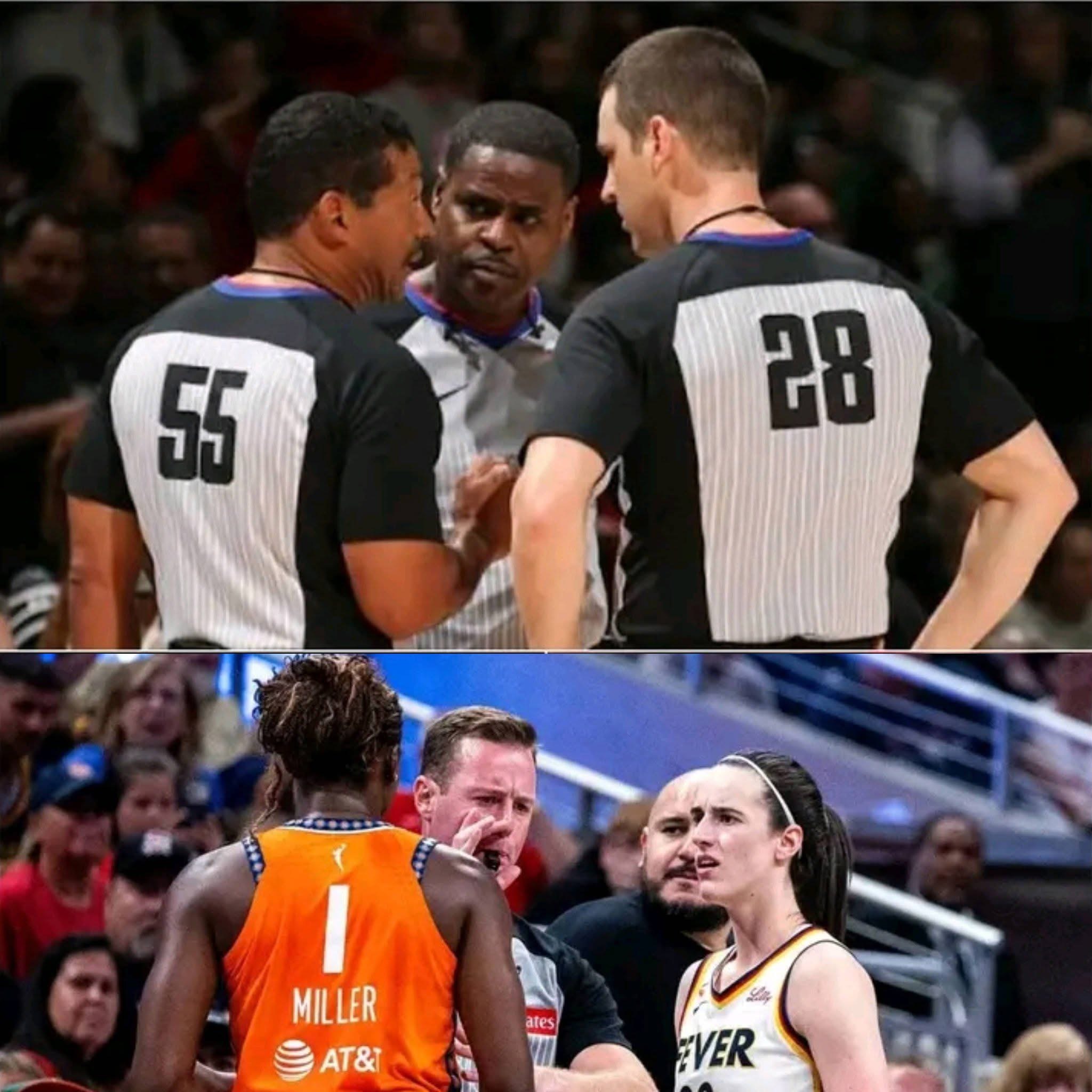
The WNBA has been thrust into one of the most sensitive integrity investigations in recent league history after reports emerged that the officiating crew from the Indiana Fever’s game against the Connecticut Sun is under review following unusual betting activity centered on Caitlin Clark receiving a technical foul. While no official has been accused of misconduct, the investigation has immediately captured the attention of fans, sportsbooks, and basketball insiders because it touches on one of the most important issues in modern professional sports: maintaining public trust in the game.
With legalized sports betting becoming increasingly intertwined with professional leagues, any irregular wagering patterns involving specific in-game events are treated with extreme caution. The WNBA’s response demonstrates just how seriously the league views any situation that could potentially undermine confidence in its officiating, especially during a season when women’s basketball continues to enjoy record-breaking popularity.
UNUSUAL BETTING ACTIVITY TRIGGERED THE INVESTIGATION
According to reports, integrity monitoring systems detected an unexpected surge in wagers predicting that Indiana Fever superstar Caitlin Clark would receive a technical foul during the matchup against the Connecticut Sun. The size and timing of those bets reportedly raised concerns significant enough to trigger a formal review involving the entire three-person officiating crew assigned to the game.
At this stage, investigators are examining betting patterns alongside game-related evidence to determine whether there is any indication of improper influence or whether the betting activity can be explained by legitimate factors.
Importantly, no findings have been announced, and no referee has been publicly identified or accused of wrongdoing. The officials have reportedly been sidelined while the investigation proceeds, a precaution that reflects standard integrity procedures rather than proof of misconduct.
In today’s sports landscape, leagues routinely work with betting-monitoring services that analyze millions of wagers in real time. When betting activity falls outside expected patterns, automated alerts are designed to notify integrity officials before any conclusions are drawn.
WHY CAITLIN CLARK BECAME THE CENTER OF ATTENTION
Since entering the WNBA, Caitlin Clark has become the league’s biggest attraction, transforming attendance figures, television ratings, merchandise sales, and overall fan engagement. Every possession involving Clark attracts extraordinary attention, making virtually every aspect of her performance a potential betting market.
Technical fouls, however, represent a unique category because they are subjective decisions made by officials rather than statistical outcomes such as points, rebounds, or assists.
Clark’s competitive personality and emotional style of play have occasionally sparked heated exchanges with referees and opponents, making technical foul markets more attractive to bettors. That popularity, combined with her massive fan following, means betting markets involving Clark naturally receive higher attention than those involving most other players.
Nevertheless, integrity experts often focus less on what was wagered and more on how much, when, and whether betting behavior differs from normal market trends. Those factors appear to be at the heart of the current review.
THE WNBA CANNOT AFFORD QUESTIONS ABOUT ITS INTEGRITY
The investigation comes during one of the most successful periods in WNBA history.
The league has experienced unprecedented growth thanks to increased media coverage, expanding sponsorships, sold-out arenas, and record television audiences. Much of that momentum has been fueled by Clark’s arrival, alongside a new generation of talented stars who have elevated interest in women’s professional basketball.
That rapid growth also brings greater scrutiny.
Sports betting has become an important commercial partner for many professional leagues, but it also creates additional risks. Even the appearance of questionable officiating can damage public confidence if not addressed swiftly and transparently.
By opening a formal investigation before reaching conclusions, the WNBA is signaling that protecting competitive integrity remains a top priority. Acting quickly helps reassure fans, players, teams, and commercial partners that unusual activity will not be ignored.
WHAT INVESTIGATORS ARE LIKELY REVIEWING
Modern sports integrity investigations are comprehensive and data-driven.
Officials reviewing the case are expected to analyze betting activity across multiple sportsbooks, looking for unusual wagering volumes, timing, account histories, and whether similar bets originated from connected locations or individuals.
They may also examine game footage, officiating decisions, communication records, and any available digital evidence to determine whether the events on the court matched normal officiating standards.
Such investigations often conclude without finding evidence of misconduct. Betting markets can sometimes experience sudden spikes because of rumors, social media speculation, or coordinated betting strategies that ultimately have no connection to participants in the game.
For that reason, sports leagues generally avoid making public accusations until all available evidence has been thoroughly examined.
WHAT THIS MEANS FOR CAITLIN CLARK AND THE INDIANA FEVER
Although Clark’s name sits at the center of the story, there is no indication that she is the subject of the investigation.
Instead, she once again finds herself connected to a headline simply because of her enormous influence on the sport. Whether discussing television ratings, attendance records, endorsement deals, or betting markets, Clark has become one of the most impactful athletes in American sports.
For the Indiana Fever, the priority remains keeping distractions away from a team focused on competing for postseason success. Any prolonged off-court controversy has the potential to shift media attention away from basketball, but experienced organizations often work to ensure players remain focused on their performance.
If the investigation concludes without evidence of wrongdoing, the story may ultimately serve as an example of the league’s integrity systems functioning exactly as intended—identifying unusual activity, reviewing it thoroughly, and providing transparency where appropriate.
THE BIGGER PICTURE FOR WOMEN’S BASKETBALL
The intersection of sports betting and professional basketball will continue to become more significant as wagering expands across North America and beyond. That reality places increasing responsibility on leagues to strengthen integrity programs, educate participants, and respond rapidly whenever suspicious betting activity emerges.
For the WNBA, maintaining credibility is just as important as sustaining its remarkable growth. Fans, sponsors, broadcasters, and betting operators all depend on confidence that every game is decided solely by the players and officials acting independently.
As this investigation continues, it is essential to remember that a formal review does not establish guilt. Until the WNBA completes its investigation and releases its findings, the focus should remain on verified facts rather than speculation.
Regardless of the outcome, this case highlights how modern sports have entered an era where every major event—especially those involving stars like Caitlin Clark—is monitored more closely than ever before. Protecting the integrity of the game will remain essential if the WNBA hopes to build on its historic momentum and continue attracting new generations of fans.