The WNBA has reportedly reviewed the controversial technical foul issued to Indiana Fever superstar Caitlin Clark during the Fever’s emphatic victory over the Connecticut Sun, adding another chapter to one of the league’s most discussed officiating decisions this season. The incident quickly became a talking point across the basketball world, with fans, analysts, and former players questioning whether the call accurately reflected the events that unfolded on the court.
Beyond the immediate controversy, the review underscores the increasing scrutiny surrounding officiating standards in the WNBA as the league continues to attract record-breaking audiences. With Clark serving as one of the league’s biggest attractions, every whistle involving the Indiana Fever guard now generates national attention and sparks wider conversations about consistency, fairness, and player discipline.
THE INCIDENT THAT TRIGGERED THE CONTROVERSY
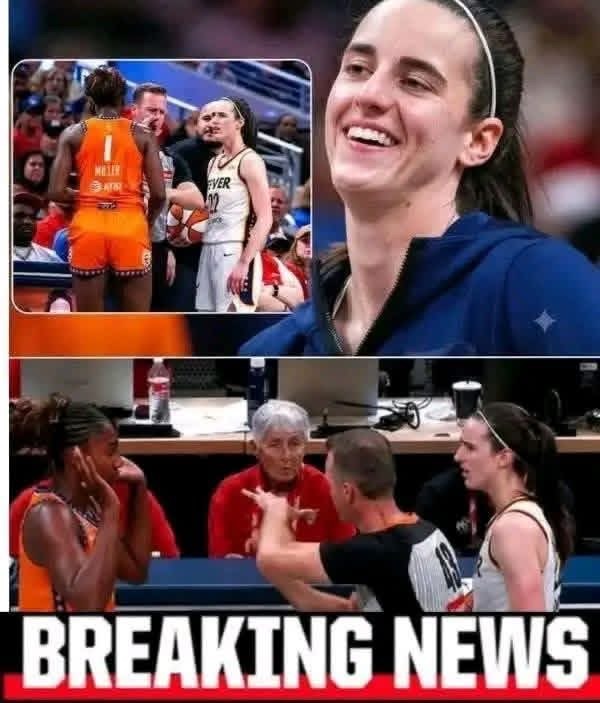
The disputed technical foul occurred during Indiana’s dominant victory over the Connecticut Sun after emotions flared following a physical sequence of play.
Clark became involved in a verbal exchange with Connecticut guard Saniya Rivers after a foul was called. Officials immediately assessed technical fouls to both players, a decision that drew mixed reactions from those watching the game live.
The moment quickly spread across social media, where multiple video angles were analyzed by fans attempting to determine whether the double technicals were justified or whether the situation could have been handled differently.
While heated exchanges are common in professional basketball, the significance of Clark’s technical foul total elevated this particular incident far beyond a routine in-game disagreement.
WHY THE REVIEW MATTERS
The controversy gained additional momentum because the technical foul moved Clark closer to the WNBA’s automatic suspension threshold.
League rules impose a one-game suspension once a player accumulates a specified number of technical fouls during the regular season, meaning every subsequent infraction carries greater importance.
As a result, supporters argued that the league had an obligation to carefully evaluate whether the officials correctly interpreted the incident before allowing the penalty to stand.
Others defended the referees, maintaining that technical fouls exist to prevent escalating confrontations regardless of a player’s status or popularity.
The review demonstrates that the league recognizes the importance of ensuring disciplinary decisions are both accurate and consistent.
OFFICIATING REMAINS UNDER THE SPOTLIGHT
The incident has reignited ongoing discussions about officiating standards throughout the WNBA.
As the league’s popularity continues to surge, referees are operating under unprecedented levels of public scrutiny. Every close call is dissected almost instantly across television broadcasts, replay clips, and social media platforms.
Clark’s enormous profile has intensified that spotlight even further. Whether she draws fouls, receives technicals, or becomes involved in physical play, officials know their decisions will likely dominate headlines long after the final buzzer.
For the WNBA, maintaining confidence in officiating has become increasingly important as fan engagement reaches new heights.
CLARK KEPT HER FOCUS ON THE GAME
Despite the controversy surrounding the technical foul, Clark delivered another outstanding performance on the court.
The Fever guard finished with an impressive 27 points and 11 assists, leading Indiana to a convincing victory over Connecticut while once again demonstrating why she remains one of the league’s premier playmakers.
Her ability to remain productive despite the emotional intensity of the contest reinforced one of the defining characteristics of her game: competitiveness without allowing distractions to completely derail her performance.
Throughout her career, Clark has embraced high-pressure moments, and this game proved no different.
THE FEVER’S PLAYOFF PUSH COULD MAKE EVERY DECISION CRUCIAL
For Indiana, the technical foul discussion extends beyond a single game.
With the Fever battling for playoff positioning, losing Clark for even one contest through suspension could significantly impact the team’s postseason ambitions.
That reality explains why every disciplinary decision involving the franchise star receives such close attention from coaches, teammates, and supporters alike.
As the regular season enters its decisive stretch, Indiana will hope Clark can continue playing with her trademark intensity while avoiding unnecessary technical fouls that could jeopardize her availability.
THE BIGGER PICTURE FOR THE WNBA
The league’s reported review reflects a broader challenge facing modern professional sports.
Officials must balance enforcing rules consistently with allowing players to express emotion during highly competitive contests. Every judgment call now unfolds under the watchful eyes of millions of viewers equipped with instant replay, slow-motion analysis, and endless online discussion.
As the WNBA continues its rapid growth, transparency and consistency in officiating will remain essential to maintaining trust among players and fans alike.
Whether the review ultimately changes the outcome or simply reaffirms the original decision, the incident highlights how much the league has evolved. Games involving stars like Caitlin Clark now generate the kind of national conversation once reserved for the biggest moments in professional sports, making every whistle—and every review—matter more than ever.