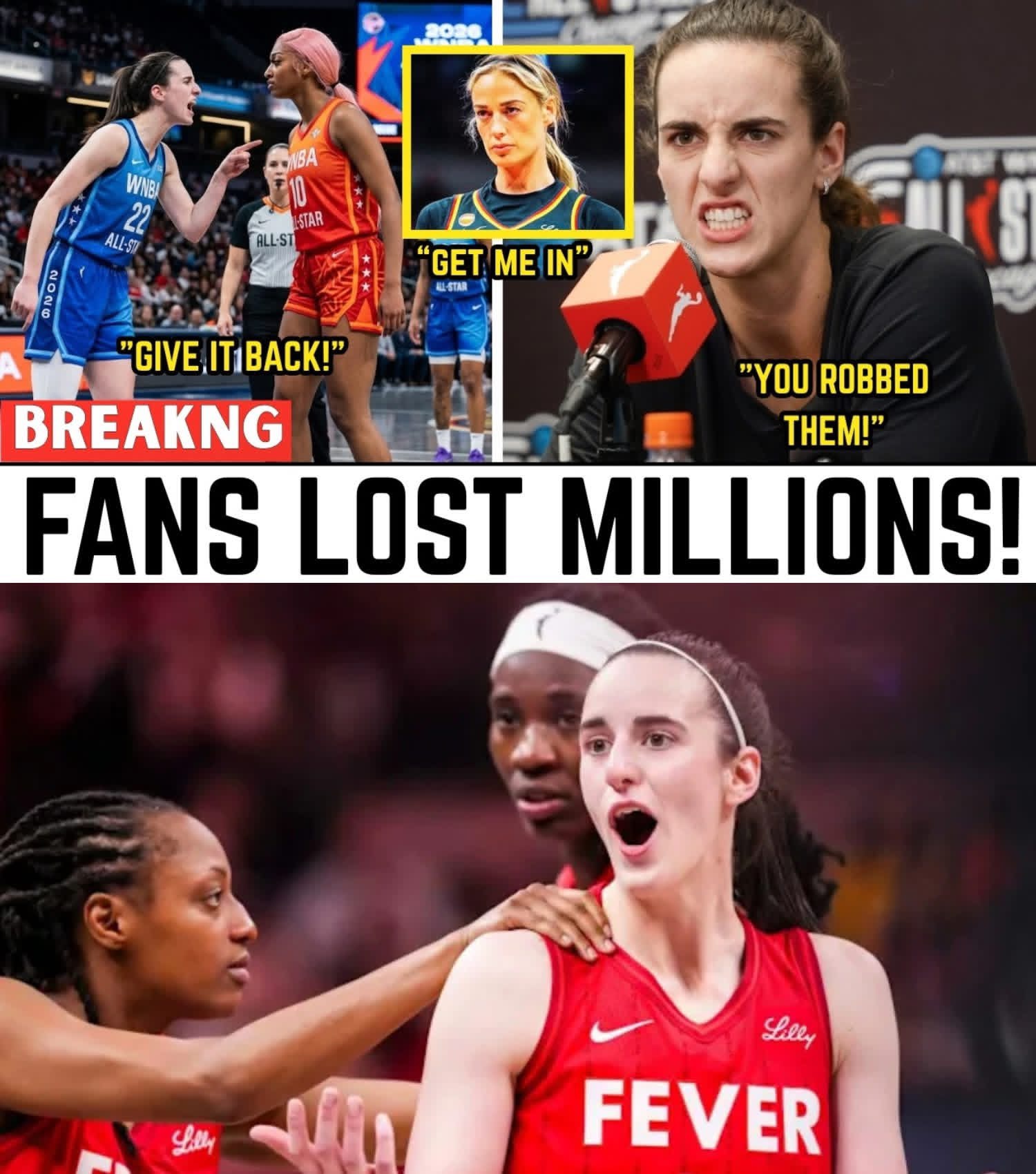
The 2026 WNBA All-Star Game was promoted as one of the league’s biggest celebrations yet—a showcase of the sport’s brightest stars, intense competition, and unforgettable entertainment. Instead, a significant number of fans left disappointed, arguing that the exhibition lacked the competitive edge they expected after months of marketing and anticipation. While the game generated impressive television ratings and social media engagement, criticism quickly emerged over the effort level displayed on the court.
One undeniable highlight did emerge from the weekend, however. Indiana Fever superstar Caitlin Clark added another milestone to her remarkable career by setting a new WNBA All-Star record, further cementing her status as one of the league’s biggest attractions. At the same time, comparisons between Clark and fellow All-Star Angel Reese once again dominated online conversations, reigniting one of basketball’s most talked-about rivalries.
CAITLIN CLARK CONTINUES TO REWRITE THE RECORD BOOK
Every major basketball stage seems to produce another milestone for Clark, and the 2026 All-Star Game was no exception.
The Fever guard once again demonstrated why she has become the face of the WNBA’s rapid growth, delivering another record-breaking performance while showcasing the elite shooting and playmaking abilities that have captivated fans since entering the league.
Although All-Star games traditionally emphasize entertainment over defense, Clark still managed to leave a lasting impression by extending her growing collection of league records.
Her ability to perform under the brightest spotlight continues to strengthen her reputation as one of the most influential players in women’s basketball history.
ANGEL REESE FACES ANOTHER TOUGH NIGHT
While Clark celebrated another historic accomplishment, Angel Reese endured a much quieter outing.
The Atlanta Dream forward struggled to make a major offensive impact during her limited minutes, and social media users were quick to compare the performances of the two stars.
The rivalry between Clark and Reese has evolved beyond individual matchups. Every appearance involving either player now becomes a national storyline, with fans often measuring one performance directly against the other—even in exhibition contests where winning is not the primary objective.
Despite the criticism, Reese remains one of the WNBA’s premier rebounders and emotional leaders. One difficult All-Star performance does little to diminish the outstanding season she continues to build.
WHY MANY FANS FELT DISAPPOINTED
The strongest criticism surrounding the All-Star Game centered on the overall competitiveness.
Supporters who purchased expensive tickets expected an intense showcase featuring the league’s elite talent battling for pride. Instead, many believed the game resembled a glorified scrimmage, with minimal defensive pressure and little urgency until the closing stages.
That frustration was amplified by the extensive promotional campaign leading into the weekend. Sponsors invested heavily in marketing, broadcasters presented the event as must-watch television, and ticket prices reflected the enormous demand generated by Clark, Reese, and the league’s growing popularity.
When expectations rise to historic levels, even a solid exhibition can leave portions of the audience wanting more.
THE WNBA’S GROWTH CREATES NEW EXPECTATIONS
Ironically, the criticism also reflects how much the league has evolved.
Only a few years ago, attracting this level of attention for an All-Star Game would have been considered a major success. Now, fans expect every nationally televised event to deliver playoff-level excitement.
That is largely due to stars like Clark, Reese, A’ja Wilson, Sabrina Ionescu, Napheesa Collier, and Breanna Stewart, whose popularity has dramatically expanded the league’s audience.
The WNBA is no longer simply trying to gain attention—it is now trying to consistently exceed expectations.
THE CLARK-REESE RIVALRY REMAINS THE LEAGUE’S BIGGEST STORY
Whether fans support Clark or Reese, one fact remains undeniable: their rivalry continues to drive conversation unlike anything else in women’s basketball.
From their NCAA battles to their professional careers, every matchup, statistic, and highlight becomes fuel for passionate debate across social media.
Clark’s latest record will undoubtedly strengthen arguments from supporters who view her as the league’s most impactful player, while Reese’s fans will point toward her overall body of work rather than a single exhibition performance.
The rivalry benefits the WNBA by keeping fans engaged throughout the season, creating compelling narratives that extend beyond individual games.
WHAT THE LEAGUE CAN LEARN FROM THIS YEAR’S ALL-STAR WEEKEND
If there is one takeaway from this year’s event, it is that fans now expect more than highlight plays and entertainment.
As the WNBA continues its rapid commercial growth, future All-Star Games may need to find a better balance between fun and genuine competition. Small adjustments—such as incentive-based prize structures, revised game formats, or fourth-quarter scoring targets—could increase intensity without sacrificing entertainment value.
Other professional leagues have successfully experimented with new All-Star concepts, and the WNBA now has an opportunity to innovate in ways that match its growing audience.
THE BIGGER PICTURE
Despite mixed reactions to the game itself, the 2026 WNBA All-Star Weekend still demonstrated just how far the league has come.
Record attendance, major sponsorships, expanding television audiences, and unprecedented interest continue to push women’s basketball into new territory.
Caitlin Clark’s record-breaking performance will remain one of the defining memories of the weekend, while Angel Reese’s quieter outing is unlikely to overshadow her outstanding season.
For the WNBA, the challenge moving forward is not attracting attention—it is consistently delivering events that live up to the enormous expectations created by the league’s rapidly rising profile.