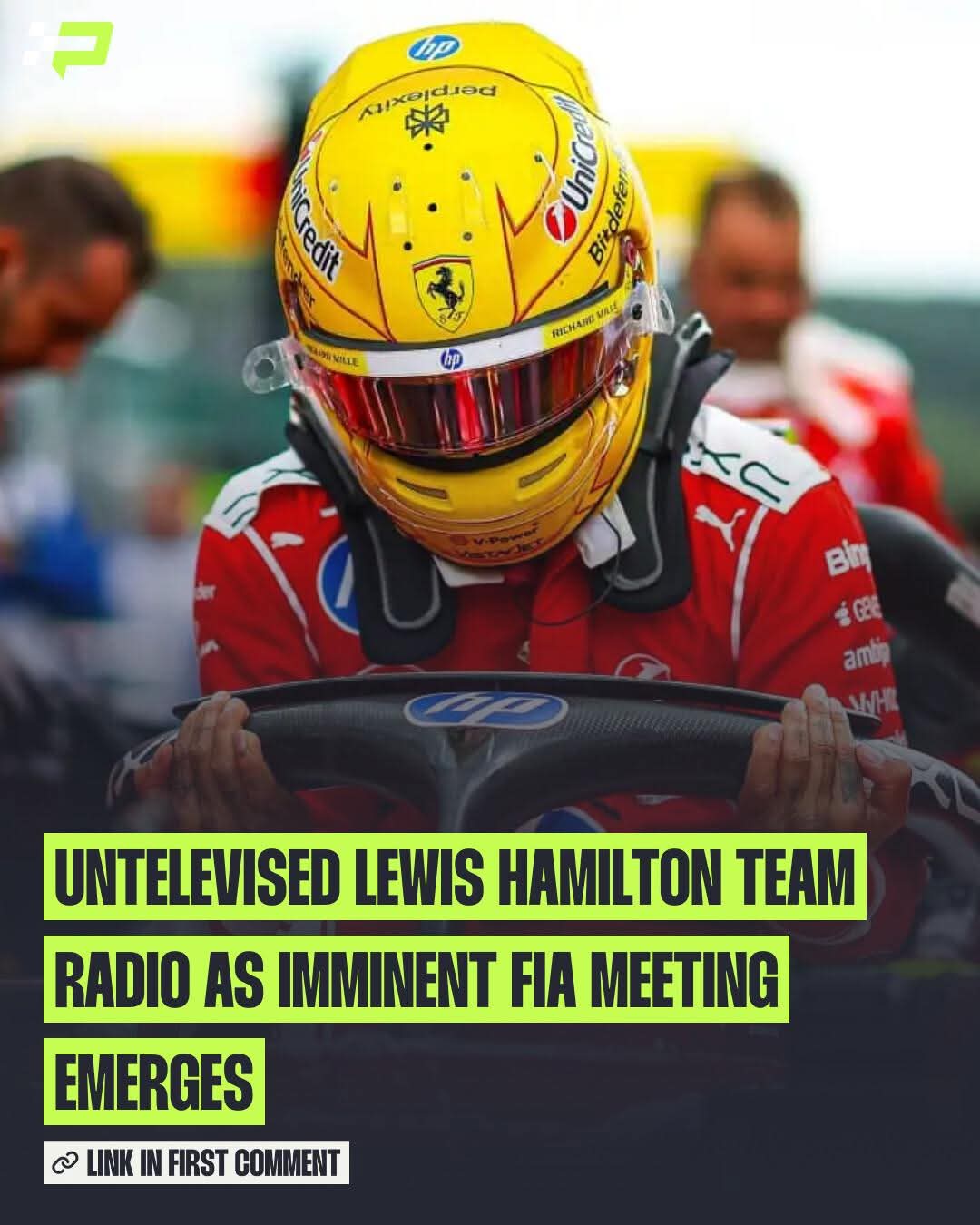
Lewis Hamilton’s controversial opening-lap collision with George Russell at the 2026 Belgian Grand Prix has taken another dramatic turn after previously unheard Ferrari team radio revealed exactly what the seven-time Formula 1 world champion thought moments after the incident. The newly released audio offers fresh insight into Hamilton’s defense, with the Ferrari driver insisting he was placed in “an impossible position” before receiving the five-second penalty that ultimately cost him a podium finish.
The timing of the radio release is significant. Formula 1 drivers are expected to meet with the FIA ahead of the Hungarian Grand Prix to discuss several recent stewarding decisions, with Hamilton’s penalty and other controversial rulings from Spa expected to be high on the agenda. As scrutiny over consistency in race officiating continues to grow, Hamilton’s comments could fuel an already heated debate across the paddock.
HAMILTON BELIEVED HE HAD NOWHERE TO GO
The Belgian Grand Prix unraveled for Hamilton almost immediately after lights out.
As the field charged into Les Combes, Hamilton made contact with former Mercedes teammate George Russell, sending Russell spinning into the gravel and ending his race before it had properly begun. Stewards judged Hamilton predominantly responsible and handed him a five-second time penalty.
However, the untelevised Ferrari radio paints a more complicated picture.
Immediately after the collision, Hamilton informed his race engineer that another car had crossed in front of him while he was tucked closely behind traffic, leaving him without front-end grip or any realistic opportunity to avoid contact.
Rather than admitting fault, Hamilton repeatedly stressed that the situation had developed into what he described as “an impossible position.”
Those comments support the view shared by several drivers that the incident was far less clear-cut than the final penalty suggested.
FERRARI FACED UNCERTAINTY AFTER THE COLLISION
The opening-lap contact created immediate uncertainty inside the Ferrari garage.
Hamilton reported seeing debris fly from the front of his SF-26 and questioned whether his front wing had survived the incident. Ferrari engineers initially reassured him that television cameras showed no major wing damage while continuing to inspect the floor remotely through available data.
That communication highlights one of Formula 1’s modern realities. Teams now rely on an enormous volume of telemetry and onboard camera feeds to evaluate damage before deciding whether an emergency pit stop is necessary.
Fortunately for Ferrari, Hamilton’s car remained competitive enough to continue without immediate repairs.
THE FIVE-SECOND PENALTY CHANGED FERRARI’S ENTIRE STRATEGY
One of the most interesting revelations from the radio exchange is that Ferrari initially chose not to inform Hamilton about his penalty.
Instead, the team focused on race strategy before finally revealing the sanction much later during the opening stint. By that stage, Hamilton was already questioning why Ferrari had not followed the strategy he originally requested.
Only then did his engineer explain that the team was deliberately managing the gap behind because the five-second penalty still had to be served during his pit stop.
Hamilton’s brief response — “Ah, another one…” — reflected his growing frustration after also receiving a five-second penalty at Silverstone just one race earlier.
Those consecutive penalties have raised wider questions about whether current stewarding standards are being applied consistently across the grid.
THE FIA NOW FACES GROWING PRESSURE
Hamilton’s incident is no longer simply about one penalty.
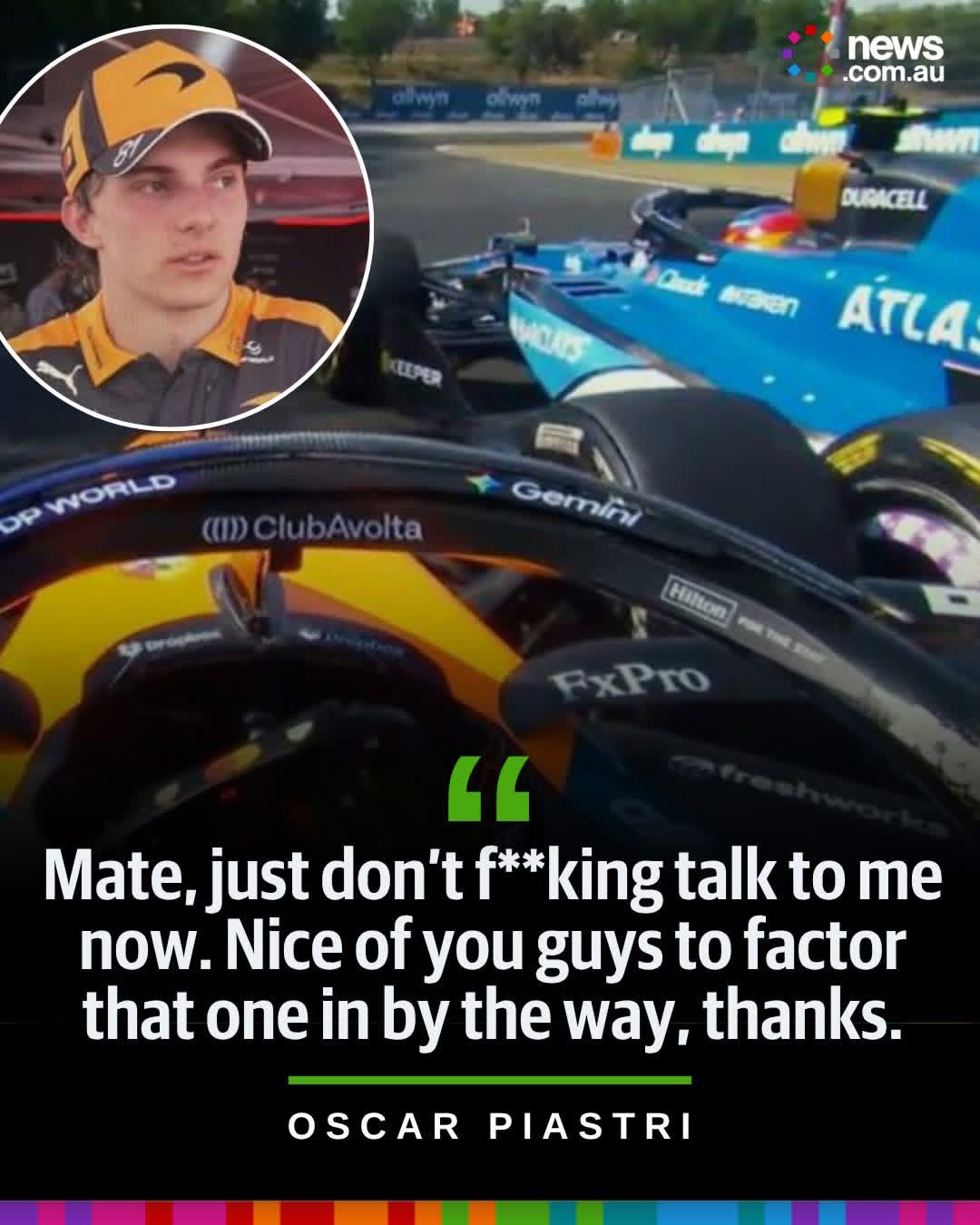
Reports indicate that Formula 1 drivers will raise the Spa decisions directly with the FIA during meetings at the Hungarian Grand Prix. Alongside Hamilton’s punishment, discussions are also expected to include Charles Leclerc’s collision with Oscar Piastri and broader concerns over stewarding consistency.
Interestingly, George Russell himself publicly argued after the Belgian Grand Prix that Hamilton should not have been penalized, describing the incident as a racing accident rather than reckless driving.
When both drivers involved in a collision question the stewarding outcome, it inevitably increases pressure on Formula 1’s governing body to explain its interpretation of the rules.
Greater transparency has become one of the sport’s biggest talking points, and this latest controversy only reinforces that demand.
HAMILTON REFUSED TO BLAME THE TEAM
Despite his frustration, Hamilton’s post-race radio carried a very different tone.
After finishing fourth, Ferrari informed him that without the penalty he would almost certainly have stood on the podium. Rather than criticizing the team, Hamilton accepted responsibility for mistakes made earlier in the weekend while maintaining that the Russell collision itself was not his fault.
He acknowledged that his difficult Belgian weekend began with his own crash during final practice, which compromised Ferrari’s preparation before qualifying.
His closing message thanked the team for continuing to fight despite the setbacks, demonstrating the calm leadership Ferrari hoped to gain when signing one of Formula 1’s most successful drivers.
WHY THIS CONTROVERSY COULD SHAPE THE SECOND HALF OF THE SEASON
With the Hungarian Grand Prix marking the final race before Formula 1’s summer break, the outcome of the FIA discussions could have lasting consequences.
If drivers succeed in pushing for greater consistency or clarification regarding racing incidents, future wheel-to-wheel battles may be judged differently during the championship run-in.
For Hamilton, every point now matters as he attempts to chase Mercedes rookie Andrea Kimi Antonelli in the Drivers’ Championship. Losing a podium because of a disputed five-second penalty could ultimately prove costly if the title battle remains close in the closing months of the season.
The newly released team radio does not erase the FIA’s decision, but it does offer valuable context. Rather than showing a driver making excuses, it reveals Hamilton genuinely believed he had been left with no realistic escape route. Whether the FIA maintains its position after the Hungarian discussions remains one of the most intriguing storylines heading into the second half of the 2026 Formula 1 season.