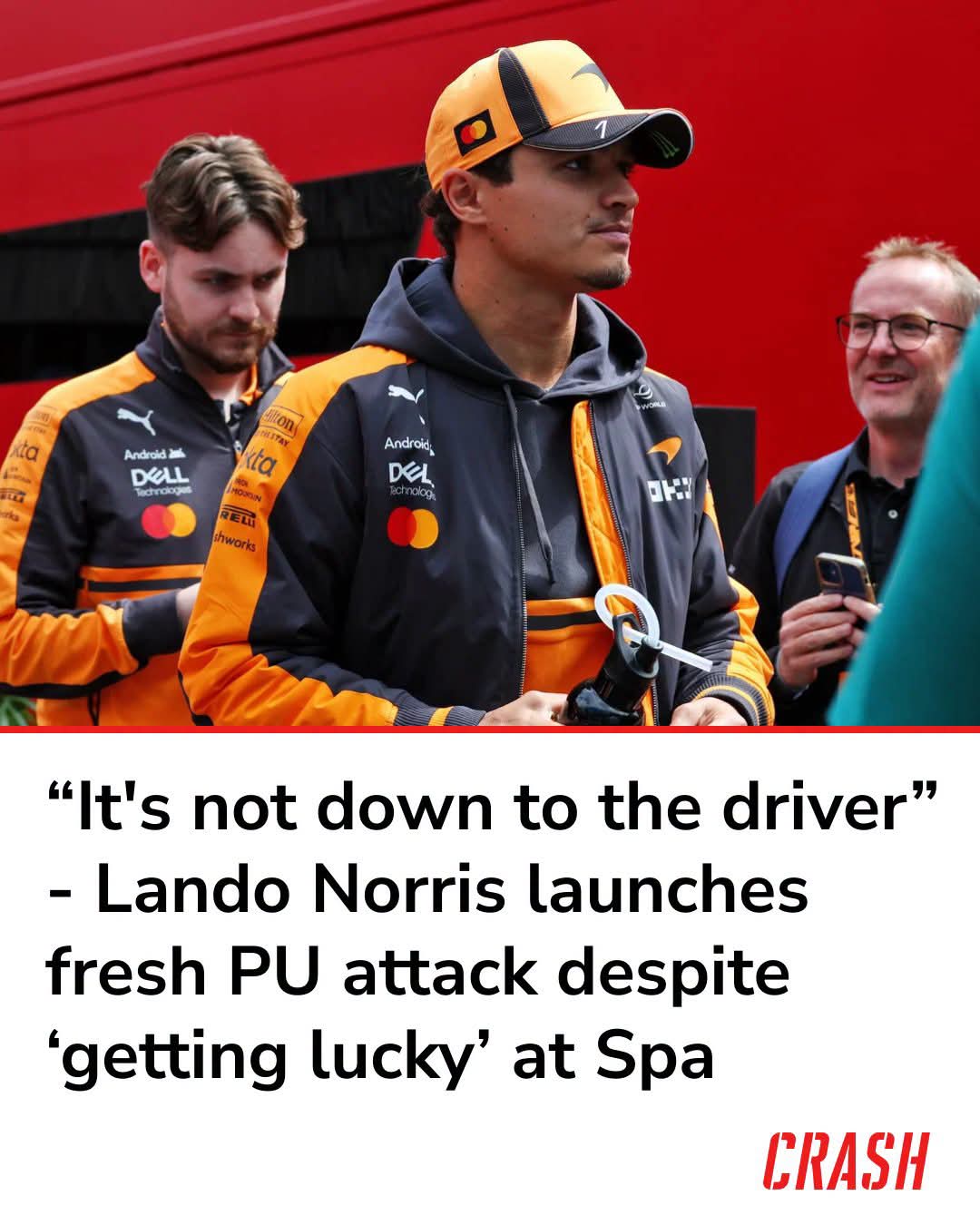
The debate surrounding Formula 1’s controversial 2026 power unit regulations has intensified after Lando Norris delivered one of the strongest criticisms yet, arguing that driver performance is increasingly being overshadowed by unpredictable engine behavior rather than talent behind the wheel. Following another dramatic Belgian Grand Prix weekend, the McLaren driver questioned whether modern Formula 1 is allowing drivers to determine their own destiny, suggesting that too many race-defining variables are now beyond their control.
Norris’ comments arrive at a time when dissatisfaction with Formula 1’s latest hybrid power unit era continues to spread across the paddock. Drivers, team principals, engineers, and former racers have all voiced concerns over complex energy management systems, inconsistent deployment, and “superclipping” that can dramatically alter a driver’s competitiveness from one lap to the next.
NORRIS BELIEVES THE DRIVER IS NO LONGER THE BIGGEST FACTOR
After qualifying third at Spa before serving a 10-place grid penalty and recovering to seventh during the Belgian Grand Prix, Norris reflected on what he believes has become Formula 1’s biggest competitive flaw.
According to the McLaren star, qualifying pace and race performance are no longer determined primarily by driving ability. Instead, he argues that the behavior of increasingly complex power units has become the deciding factor.
Norris explained that while drivers can still influence certain aspects of performance, there are now far too many variables outside their control. He believes competitors are often left hoping their power units operate correctly rather than relying solely on their own execution.
His frustration reflects a growing feeling throughout Formula 1 that technology has begun limiting the influence of elite driving talent.
THE 2026 REGULATIONS CONTINUE TO DIVIDE THE PADDOCK
Formula 1 introduced radically different power units for the 2026 season, placing nearly equal emphasis on electrical deployment and internal combustion power.
While the regulations were designed to improve efficiency and sustainability, they have created entirely new challenges for teams and drivers.
Energy deployment has become a critical element of lap time, with drivers often forced to manage battery output rather than attack corners naturally. In several races this season, competitors have experienced sudden deployment losses, leaving them vulnerable on long straights despite having competitive cars.
The result has been a return of “yo-yo racing,” where cars repeatedly gain and lose performance depending on battery availability rather than pure speed.
For many within Formula 1, this has fundamentally changed the character of racing.
SPA AND SILVERSTONE HAVE EXPOSED THE BIGGEST WEAKNESSES
The criticism has become particularly loud following back-to-back races at Silverstone and Spa-Francorchamps—two circuits traditionally celebrated for rewarding driver bravery through high-speed corners.
Former Formula 1 driver Martin Brundle recently lamented that several iconic corners have effectively disappeared as genuine driving challenges because the new regulations force teams to prioritize energy management instead of outright performance.
Drivers have echoed those concerns.
Max Verstappen described sections of Spa where Formula 3-style engine performance combines with Formula 1 levels of aerodynamic grip, while other competitors admitted famous corners that once demanded commitment have become almost flat-out exercises.
Norris believes these changes reduce opportunities for drivers to make the difference.
MCLAREN HAS EXPERIENCED BOTH SIDES OF THE PROBLEM
Ironically, Norris admitted Belgium marked the first weekend all season where he finally felt competitive on the straights.
Throughout much of 2026, he believes McLaren’s power unit behavior has repeatedly cost him performance relative to rivals.
This time, however, teammate Oscar Piastri found himself affected by deployment issues during qualifying while Norris benefited from improved straight-line speed.
Rather than celebrating the advantage, Norris argued the situation actually proves the larger issue.
He stressed that neither driver should have their performance determined by unpredictable power unit behavior. Instead, qualifying battles should reward precision, confidence, and execution—not software decisions or energy deployment characteristics that fluctuate throughout a weekend.
THE GROWING LIST OF CRITICS CONTINUES TO EXPAND
Norris is far from alone in questioning Formula 1’s current direction.
Martin Brundle has openly argued that the sport should move away from the existing concept as quickly as possible.
Fernando Alonso previously warned about the complications created by energy management, while George Russell, Lewis Hamilton, and several other experienced drivers have expressed frustration over deployment limitations throughout the season.
Even Mercedes recently acknowledged that an engine deployment issue affected all of its customer teams during the Belgian Grand Prix, further illustrating how reliability and software management can dramatically influence race outcomes.
The consensus appears to be growing that Formula 1’s technological complexity is beginning to overshadow the human element.
WHY THIS DEBATE COULD SHAPE FORMULA 1’S FUTURE
The criticism comes as Formula 1’s leadership continues discussing the sport’s long-term engine direction.
FIA President Mohammed Ben Sulayem has already expressed support for introducing naturally aspirated V8 engines powered by sustainable fuels before the end of the decade.
If driver dissatisfaction continues to increase, pressure could mount on Formula 1 and the FIA to accelerate those discussions.
While manufacturers have invested heavily in hybrid technology, fans consistently rank wheel-to-wheel racing and driver skill above technical complexity when evaluating the sport’s entertainment value.
Finding the right balance between innovation and competition may become one of Formula 1’s defining challenges over the coming years.
MCLAREN’S CHAMPIONSHIP HOPES DEPEND ON FINDING CONSISTENCY
For Norris and McLaren, solving power unit inconsistencies remains essential if they hope to challenge Mercedes and Ferrari over the remainder of the season.
Oscar Piastri has also experienced reliability setbacks despite remaining one of the grid’s strongest performers, highlighting that the issue extends across both sides of the garage.
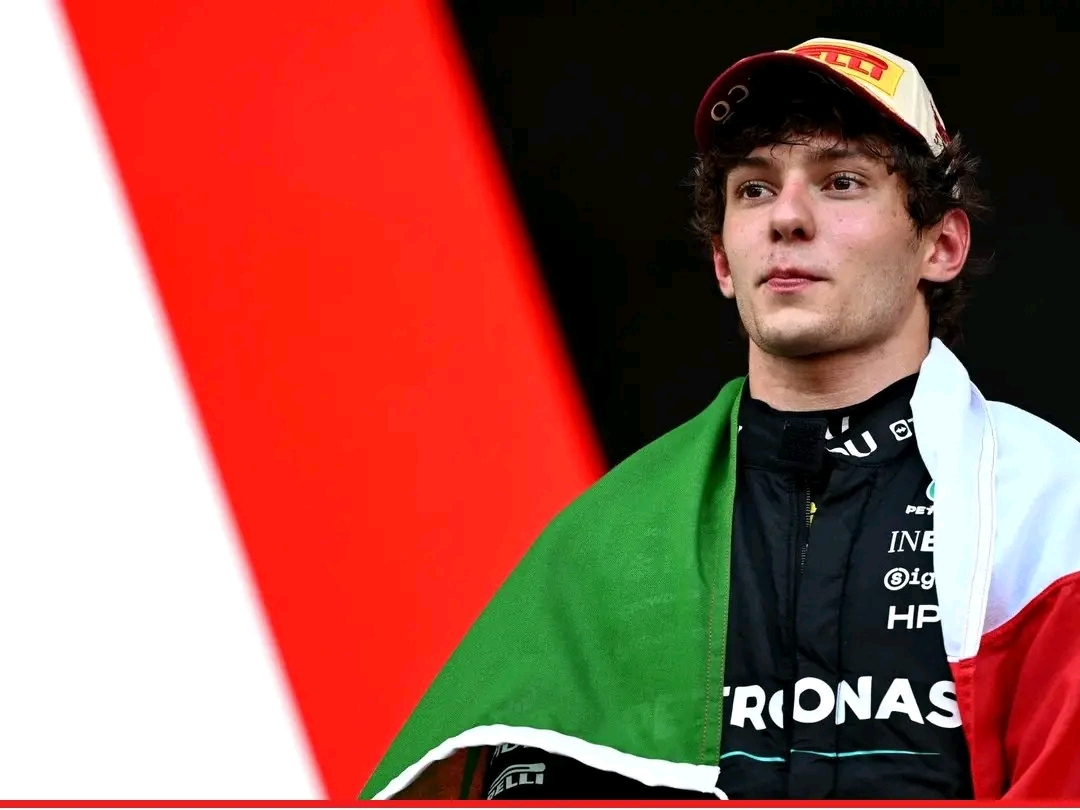
With Andrea Kimi Antonelli continuing to strengthen his lead in the Drivers’ Championship and Mercedes maintaining control of the Constructors’ standings, every qualifying session and every deployment advantage could determine the outcome of the title fight.
Norris’ frustration ultimately reflects a broader concern shared by many inside Formula 1: when championships are on the line, the world’s best drivers want races decided by courage, precision, and talent—not by whether a power unit chooses the perfect moment to deliver its full potential.