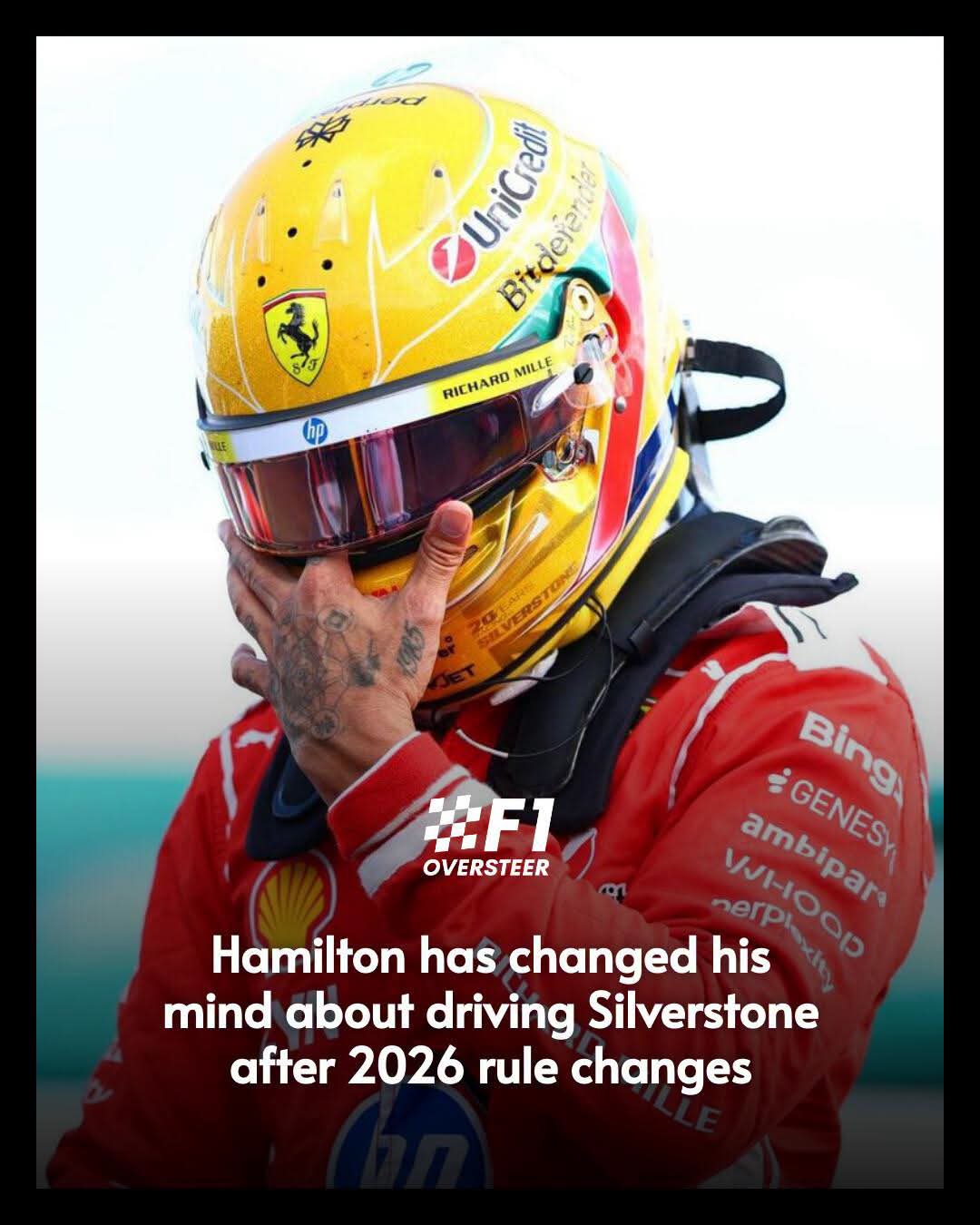
The arrival of Formula 1’s 2026 technical regulations sparked widespread concern long before the British Grand Prix weekend began. Drivers, engineers, and fans feared that the new power unit formula would fundamentally change the way one of the sport’s most iconic circuits, Silverstone, could be raced. Few voiced those concerns more openly than Lewis Hamilton, who predicted that the famous British venue could lose much of its magic because of aggressive energy management.
Yet after qualifying near the front and experiencing the circuit under competitive conditions, Hamilton admitted reality had turned out far differently than expected. Instead of confirming his worst fears, the seven-time world champion walked away impressed by how enjoyable the new-generation cars remained around Silverstone, offering Formula 1 an encouraging sign as it continues adapting to its biggest regulatory overhaul in years.
WHY THE 2026 RULE CHANGES CREATED SO MUCH CONCERN
Formula 1’s latest regulations dramatically altered how power is distributed between the internal combustion engine and the electrical system. The increased reliance on battery deployment has forced teams to rethink energy harvesting, particularly on circuits that feature long periods of sustained high speed with few heavy braking zones.
Silverstone fits that description perfectly.
Corners such as Maggots, Becketts and Copse demand maximum commitment while offering little opportunity to recover electrical energy. Before the weekend, many feared drivers would have to lift off the throttle or coast through these legendary sections simply to preserve battery charge for the straights.
Hamilton himself described the weekend as potentially “unprecedented” regarding power deployment, while several drivers reportedly discussed similar concerns privately before arriving in Britain.
HAMILTON’S OPINION CHANGED AFTER HITTING THE TRACK
Once the action began, however, Hamilton’s outlook shifted significantly.
Despite acknowledging that energy management remains an important factor, the Ferrari driver admitted the actual driving experience exceeded expectations. Rather than feeling limited by the new regulations, he found the circuit remained every bit as thrilling as before.
Hamilton explained that the cars were much more enjoyable than many within the paddock had anticipated.
For a driver who has enjoyed extraordinary success at Silverstone—including a record nine victories at the circuit—that endorsement carries considerable weight. Few understand the unique rhythm and challenge of Silverstone better than Hamilton, making his positive assessment especially encouraging for Formula 1 officials.
THE ENERGY CHALLENGE HASN’T COMPLETELY DISAPPEARED
Hamilton’s optimism does not mean the new regulations are flawless.
The Sprint race highlighted several moments where battery deployment influenced overtaking opportunities. Hamilton himself lost position to Mercedes star Andrea Kimi Antonelli after appearing to run out of available electrical power on Hangar Straight.
Throughout the field, fans also noticed situations where cars gained and lost momentum depending on how effectively they managed their battery reserves. Some described the racing as exciting because it created fresh strategic possibilities, while others felt the fluctuating speeds occasionally resembled a video game more than traditional Formula 1.
These differing opinions suggest the sport may still need to fine-tune the regulations as teams continue learning how to maximize performance.
SILVERSTONE REMAINS ONE OF FORMULA 1’S GREATEST TESTS
Although lap times have slowed noticeably compared to the previous generation of cars, Silverstone continues to reward driver confidence and precision.
Pole position this year came several seconds slower than last season’s benchmark, illustrating how much the 2026 cars have sacrificed outright cornering speed. Even so, the circuit continues to separate the elite from the rest through its demanding sequence of high-speed corners and technical transitions.
Hamilton’s comments reinforce the idea that while the stopwatch tells one story, the actual driving experience can tell another.
Formula 1 has repeatedly evolved over its history, from naturally aspirated engines to turbo hybrids and now to the latest power unit era. Each major transition has been met with skepticism before eventually finding its place within the sport.
WHAT THIS MEANS FOR FORMULA 1’S FUTURE
Hamilton’s revised assessment provides valuable reassurance for Formula 1 as it navigates one of its most ambitious technical transformations.
The championship remains committed to making its power units more sustainable while maintaining the excitement that has defined Grand Prix racing for decades. If one of the sport’s most experienced drivers now believes Silverstone still delivers the thrill fans expect, it suggests the regulations may be proving more successful than initially feared.
That said, improvements are still likely.
The FIA and Formula 1 have already indicated they are evaluating ways to optimize future power deployment, potentially increasing the role of the combustion engine in coming seasons. Those adjustments could further reduce the energy management compromises without abandoning the sustainability goals behind the regulations.
LOOKING AHEAD
Hamilton’s encouraging verdict does not eliminate every concern surrounding the 2026 rule package, but it offers an important reminder that first impressions are not always accurate.
As teams continue unlocking performance from the new cars, the racing should only become more competitive. Engineers will better understand energy deployment, drivers will adapt their techniques, and Formula 1 itself will continue refining the regulations where necessary.
For now, Silverstone appears to have passed one of the biggest tests of the new era. Instead of becoming a victim of Formula 1’s technical revolution, the legendary British circuit has shown it can still deliver fast, demanding, and entertaining racing—even under a completely different set of rules.