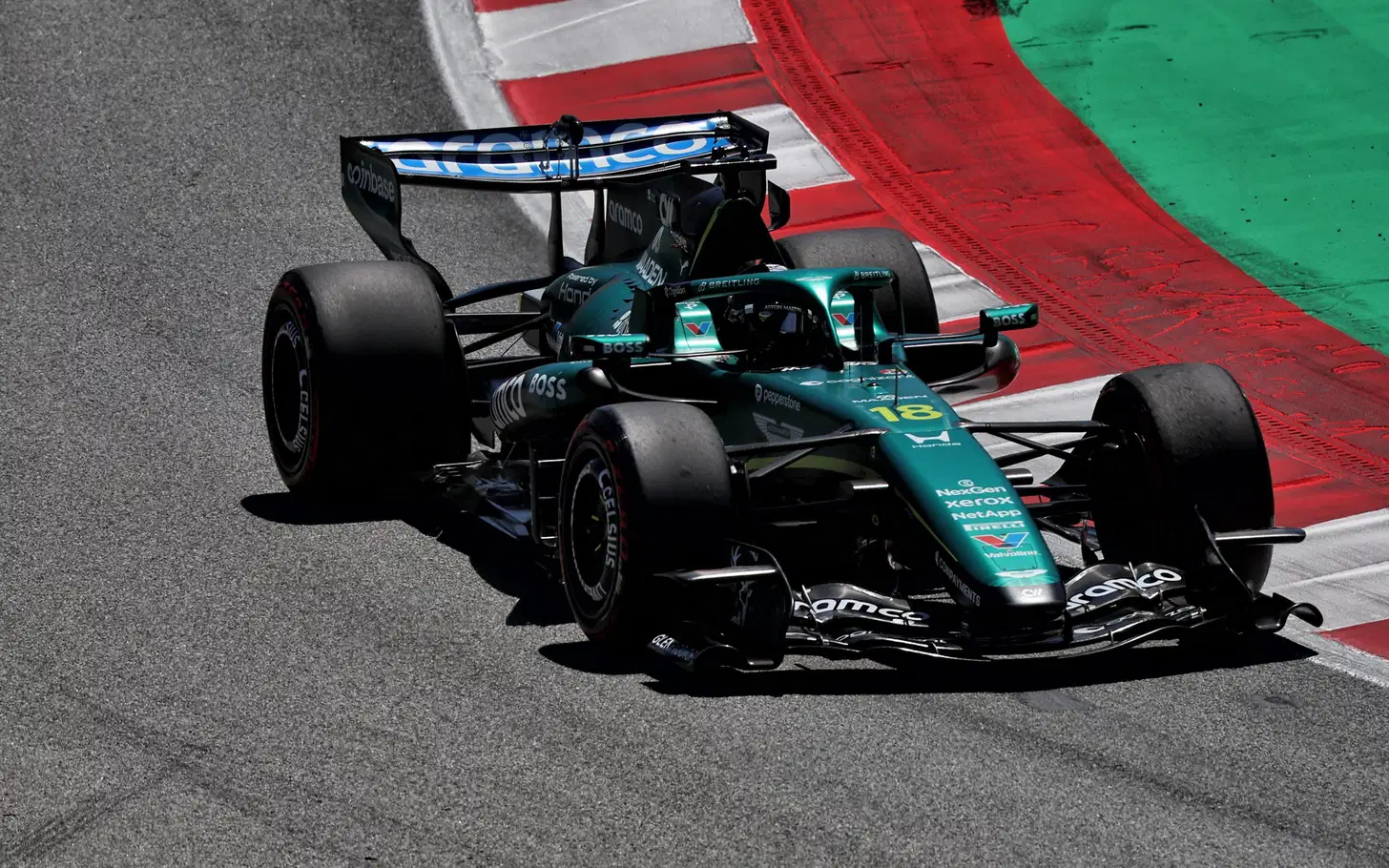
Aston Martin have confirmed that young American driver Jak Crawford will take part in Free Practice 1 at the upcoming Austrian Grand Prix, stepping into the car of Lance Stroll for the opening session at the Red Bull Ring.
The move is part of Formula 1’s mandatory rookie running regulation, which requires teams to give young drivers at least two FP1 outings per car across the season. For Aston Martin, this latest appearance marks another step in completing those obligations while also continuing Crawford’s development within their driver program.
WHY JAK CRAWFORD’S FP1 OPPORTUNITY MATTERS
Jak Crawford’s latest outing is not just a routine regulatory session. It is part of a structured evaluation process that could shape his long-term future in Formula 1.
The American has already been gaining steady mileage in the 2026 car through simulator work and private testing, including a recent Pirelli tyre test in Barcelona. Each session strengthens his case as a serious contender for a full-time F1 seat in the coming years.
For Aston Martin, this is a low-risk, high-value opportunity. FP1 sessions allow teams to gather useful data while also assessing how junior drivers adapt to live race weekend conditions, including pressure, track evolution, and setup sensitivity.
HOW ASTON MARTIN IS MANAGING DRIVER DEVELOPMENT
Crawford’s appearance in Austria will be his fourth FP1 outing with Aston Martin, following previous runs at Mexico City, Abu Dhabi, and Suzuka. This consistent exposure is significant because many junior drivers only receive occasional practice chances without continuity.
Mike Krack highlighted that Crawford’s involvement is part of a broader development pathway. His simulator contributions and tyre testing role have made him an increasingly integrated part of the team’s technical ecosystem.
Meanwhile, both race drivers, Lance Stroll and Fernando Alonso, will still need to complete their own remaining rookie-car obligations later in the season. This means Aston Martin must carefully plan FP1 distribution across upcoming race weekends without disrupting their competitive preparations.
IMPACT ON LANCE STROLL AND FERNANDO ALONSO
For Lance Stroll, missing FP1 in Austria is unlikely to have a major performance impact. However, it does slightly reduce his available track time on a circuit where precision is crucial due to the Red Bull Ring’s short layout and high-speed braking zones.
For veteran teammate Fernando Alonso, the focus remains on maximizing race weekend efficiency. At this stage of his career, Alonso’s experience means teams often prioritize data collection over extra practice laps, especially when junior drivers can contribute meaningful feedback.
The key trade-off here is simple: lost track time for race drivers versus long-term performance gains through junior driver development.
WHAT THE AUSTRIAN GRAND PRIX FP1 SESSION WILL REVEAL
The Red Bull Ring is a deceptively challenging circuit. While it is short in lap distance, it demands precision under braking, strong traction out of slow corners, and confidence through rapid elevation changes.
For Crawford, this session will test several critical areas:
Consistency over short lap cycles
Ability to adapt quickly to evolving track conditions
Feedback quality on tyre behavior and setup balance
Mental control under live F1 weekend pressure
Teams often pay close attention not just to raw lap times, but to how well a rookie integrates feedback with engineering direction. That is where FP1 sessions can make or break long-term F1 prospects.
THE BIGGER PICTURE FOR ASTON MARTIN’S FUTURE LINEUP
Crawford’s increasing involvement suggests Aston Martin is investing in internal talent development rather than relying solely on external driver markets.
While the current pairing of Alonso and Stroll remains intact, Formula 1’s long season and rising technical complexity mean teams need prepared reserve drivers who can step in if required.
If Crawford continues to impress, he could position himself as a serious candidate for future race seat consideration or at minimum secure a long-term reserve role.
PREDICTIONS: WHAT COMES NEXT FOR CRAWFORD
If his Austrian FP1 performance follows the pattern of previous outings, Crawford’s next steps could include:
More FP1 sessions later in the 2026 season
Increased simulator responsibility for race weekend setup direction
Potential full race weekend reserve role in case of driver absence
Long-term evaluation for a 2027 or beyond race seat opportunity
A strong showing at the Red Bull Ring would not guarantee anything immediately, but it would strengthen his standing inside the team at a crucial development stage.
FINAL THOUGHTS
Aston Martin’s decision to field Jak Crawford in Austria is more than a regulatory checkbox. It reflects a wider strategy of building depth, testing future talent, and ensuring long-term competitiveness in an increasingly demanding Formula 1 environment.
For Crawford, it is another step closer to proving he belongs at the highest level. For Aston Martin, it is another data point in shaping the team’s future direction beyond its current driver lineup.