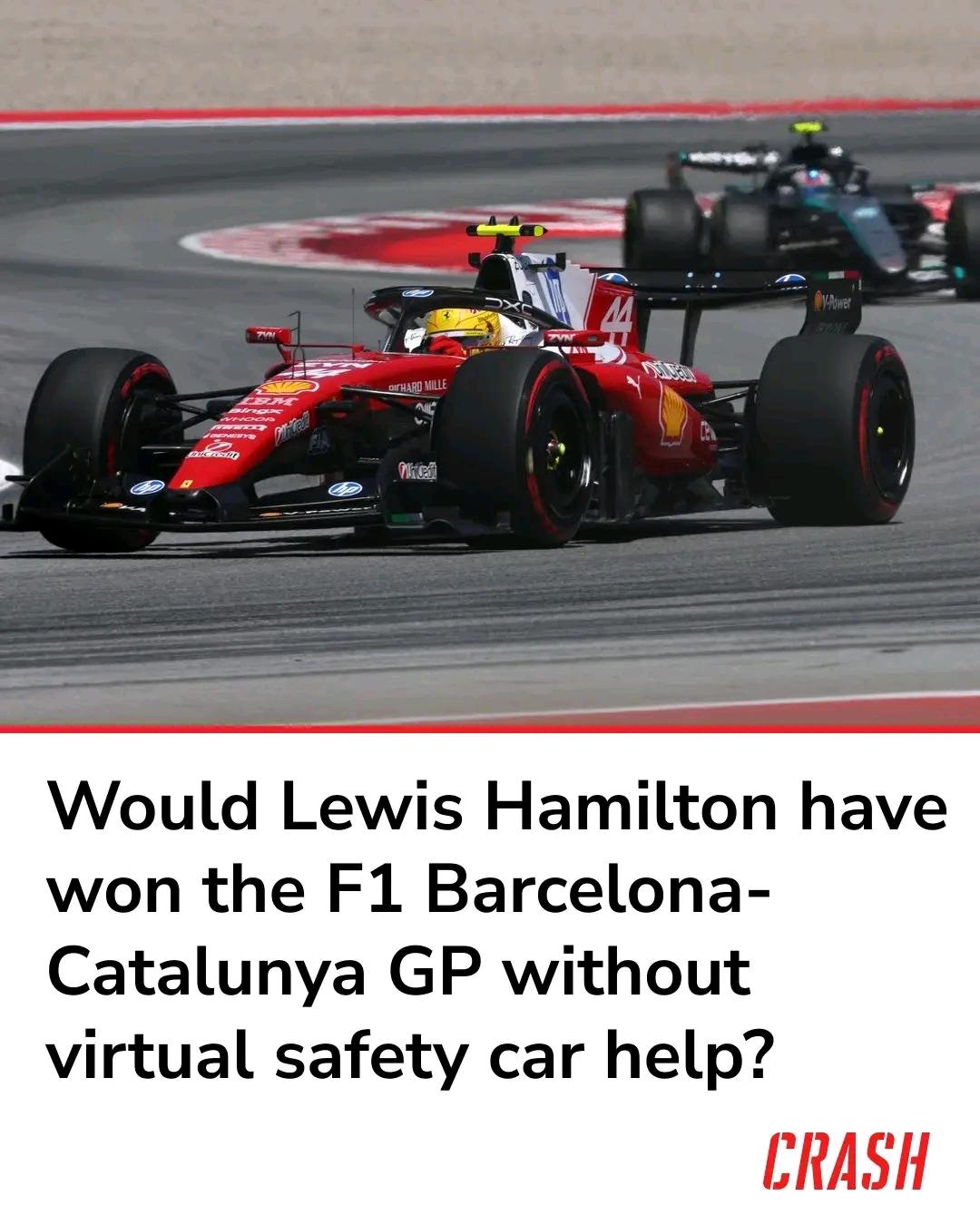
Hamilton’s first victory in Ferrari red finally arrived at the Spanish Grand Prix, and it came with the kind of tactical twist that fuels F1 debates for weeks. The seven-time world champion capitalized on a perfectly timed Virtual Safety Car period at Circuit de Barcelona-Catalunya, but the bigger question is dividing the paddock: was this a masterclass in strategy and execution, or did Hamilton simply get lucky?
Let’s break down what really happened, why it matters for the 2026 championship fight, and what this means for Ferrari’s resurgence.
THE RACE DEFINING MOMENT: HOW THE VSC CHANGED EVERYTHING
The Virtual Safety Car was deployed on lap 34 after a mechanical issue sidelined an Alpine in the final sector. At that moment, Hamilton was running P3 behind Max Verstappen and Lando Norris, roughly 4.2 seconds off the lead. Ferrari’s pit wall rolled the dice and called him in immediately.
That single lap under VSC conditions cut Hamilton’s pit loss from the usual 22 seconds to just under 14. Verstappen and Norris, who had already pitted, suddenly saw their advantage wiped out. When racing resumed, Hamilton emerged with fresh mediums and track position — something Ferrari has struggled to secure all season.
Did the VSC win it outright? Not entirely. But it turned a podium scrap into a race-winning opportunity. Without it, Hamilton likely finishes P3. With it, he controlled the final stint and managed his tires to the flag.
WHY THIS WIN MATTERS MORE THAN THE 25 POINTS
On paper, it’s Hamilton’s 104th career win. In reality, it’s Ferrari’s statement of intent for 2026.
For 18 months since his blockbuster move from Mercedes, the narrative has been “when, not if” Hamilton wins in red. The pressure from the Tifosi, Italian media, and Ferrari’s own drought since 2022 has been relentless. Getting that first win removes a psychological barrier for both driver and team. It proves the Hamilton-Ferrari project can deliver under pressure.
For the championship, the impact is just as big. This cuts Verstappen’s lead and throws momentum behind Ferrari heading into the summer stretch. More importantly, it gives Ferrari’s engineers and strategists belief. They’ve been criticized for hesitation on strategy calls since 2022. Barcelona showed they can be aggressive and get it right.
COULD HAMILTON HAVE WON WITHOUT THE VSC?
Here’s the honest analysis: probably not.
Before the VSC, Verstappen’s Red Bull had 0.2s per lap pace advantage on the hard tire. Norris’s McLaren was also matching Hamilton on outright speed. The SF-26’s race pace has improved, but it still isn’t the fastest car in clean air.
Where Hamilton made the difference was tire management and positioning. He kept the gap to Norris under the 5-second undercut threshold, forcing McLaren to pit early and cover Ferrari. That put him in the window to benefit when the VSC appeared. Great drivers create their own luck — and Hamilton’s pressure on Norris helped create this scenario.
So no, the VSC didn’t drive the car. But it was the multiplier Hamilton and Ferrari needed to convert P3 pace into P1 silverware.
IMPACT ON THE DRIVERS: CONFIDENCE SHIFT IN THE PADDOCK
FOR LEWIS HAMILTON: This is vindication. After two tough years at Mercedes and a slow start at Ferrari, questions about age and motivation were getting louder. Barcelona answers them. Expect a more aggressive Hamilton now that the “first win” pressure is gone.
FOR MAX VERSTAPPEN: A reminder that Red Bull isn’t untouchable. He lost a race he led because of strategy, not pace. Red Bull’s pit wall will review why they didn’t mirror Ferrari’s gamble.
FOR LANDO NORRIS: A tough one. McLaren had the pace for victory but lost out on strategy. Norris is driving brilliantly, but these marginal calls are costing him titles. He’ll be frustrated, and that can go two ways — either sharper focus or mounting pressure.
FERRARI’S BIGGER PICTURE: TITLE CREDIBILITY RESTORED
Fred Vasseur’s Ferrari has been methodical about 2026. The car is kinder on tires, the strategy group is sharper, and Hamilton’s feedback is accelerating development.
This win validates that approach. Ferrari didn’t have the fastest car in Spain, but they had the best Sunday execution. That’s how championships are won in the cost cap era — maximize every opportunity, because dominant cars are rare.
The bigger test is consistency. Can Ferrari replicate this in Austria and Silverstone, where Red Bull and McLaren will be strong? If yes, we’ve got a three-team title fight. If not, Barcelona risks looking like a one-off aided by circumstance.
UNIQUE INSIGHT: THE 2026 REGULATION FACTOR
One angle most reports miss: Barcelona is the ultimate aero-efficiency test. The fact Ferrari was close enough to capitalize suggests their 2026 development direction is working. With new power unit and chassis rules next year, the teams who understand current ground-effect behavior will have a head start.
Hamilton’s win tells Ferrari’s engineers their simulations correlate. That’s worth more than 25 points long-term. It means the SF-26 isn’t just a good car — it’s the right concept for the next era.
PREDICTIONS: WHAT HAPPENS NEXT
1. Hamilton becomes a consistent podium threat: The confidence boost + Ferrari’s upward trend means he’s in the mix every weekend now, not just on “special” tracks.
2. Strategy wars intensify: Red Bull and McLaren won’t get caught out by a VSC again. Expect more aggressive undercuts and earlier pit calls to avoid losing track position.
3. Ferrari vs McLaren for P2 heats up: This result puts Ferrari right back into the constructors fight. With both teams taking points off Red Bull, the title could get very messy.
FINAL VERDICT: LEGACY OR LUCK?
Did the Virtual Safety Car hand Lewis Hamilton his first Ferrari win? It played a huge role. Would he have won without it? Unlikely.
But F1 has never been about pure pace alone. It’s about being in position when opportunity knocks, then executing perfectly. Hamilton and Ferrari did exactly that in Barcelona. They were good enough to be close, brave enough to gamble, and clinical enough to close it out.
That’s not luck. That’s how legends and teams become champions. And after Barcelona, the Hamilton-Ferrari fairytale suddenly feels very real.