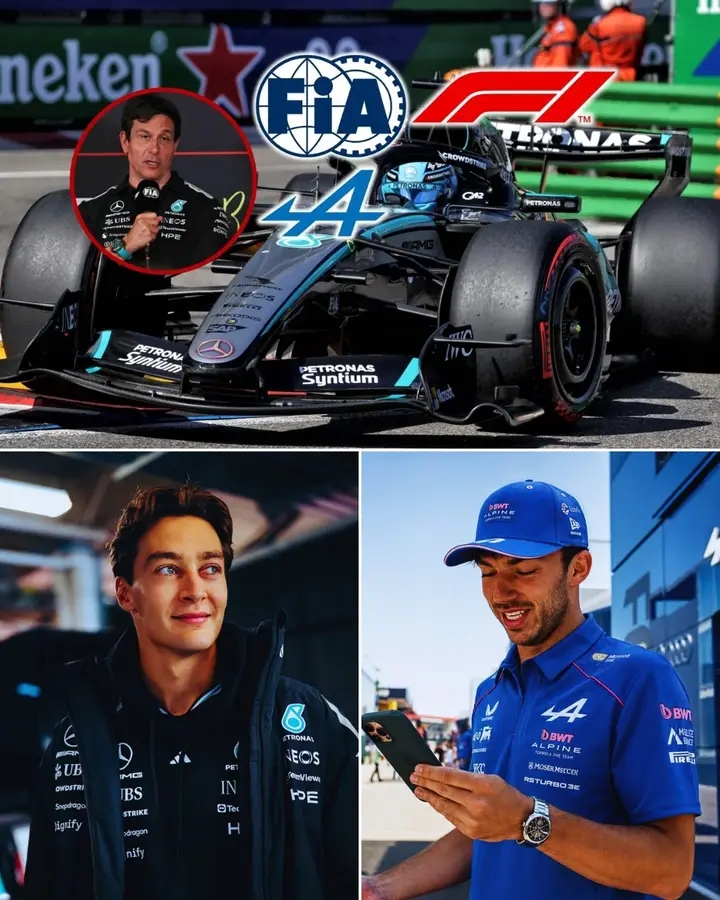
Formula 1 is no stranger to controversy, but the latest dispute emerging from the Monaco Grand Prix could become one of the most consequential regulatory battles in recent years.
Reports circulating within the paddock suggest Mercedes is considering legal options following allegations that a pit lane speed monitoring issue may have led to incorrect penalties during the race. If the claims are ultimately substantiated, the fallout could stretch far beyond Monaco, potentially affecting championship standings, FIA procedures, and the integrity of race officiating itself.
At the center of the storm is Mercedes driver George Russell, whose race was significantly compromised by a penalty that the team believes was based on flawed data. The situation has intensified after renewed scrutiny over race classifications and post-race reviews involving several competitors.
With tensions rising between teams and the FIA, Formula 1 may be facing a defining moment in how technology-driven decisions are handled.
THE INCIDENT THAT SPARKED THE CONTROVERSY
Modern Formula 1 relies heavily on electronic monitoring systems to enforce regulations. From track limits to pit lane speed restrictions, races are increasingly governed by sophisticated technology designed to eliminate human error.
However, when technology itself becomes the source of a potential mistake, the consequences can be enormous.
According to reports, concerns emerged regarding the reliability of pit lane speed detection equipment used during the Monaco Grand Prix. The alleged malfunction reportedly affected penalty decisions issued during the race, prompting questions about whether certain drivers were unfairly punished.
For Mercedes, the primary concern centers on George Russell’s race result. The team believes that an incorrectly applied penalty cost the British driver valuable time and potentially a much stronger finishing position.
While the full details remain under review, the possibility that an official FIA system may have produced inaccurate readings has raised alarm throughout the paddock.
WHY MERCEDES IS FIGHTING BACK
Mercedes has endured a challenging period in recent seasons as it attempts to return to consistent championship contention.
Every point matters in an increasingly competitive Formula 1 landscape, particularly when the margins between teams can determine millions of dollars in prize money and influence championship outcomes.
If Russell was indeed penalized incorrectly, Mercedes’ frustration is understandable.
A drive-through penalty is among the most severe sanctions that can be issued during a race. Unlike smaller time penalties that can sometimes be absorbed through strategy, a drive-through often destroys a driver’s competitive position instantly.
From Mercedes’ perspective, losing approximately 20 seconds in Monaco—a circuit where overtaking is notoriously difficult—effectively eliminates any realistic opportunity to recover.
That is why reports suggesting possible legal action have attracted so much attention.
The team appears determined to ensure that every aspect of the incident is thoroughly investigated.
THE FIA FACES TOUGH QUESTIONS
Regardless of the final outcome, the controversy places the FIA under intense scrutiny.
Formula 1’s governing body has spent years promoting technological precision as a cornerstone of modern officiating. Teams invest hundreds of millions of dollars based on the assumption that regulations are enforced consistently and accurately.
If a technical fault contributed to a race-altering decision, critics will inevitably ask how such a failure occurred and whether sufficient safeguards were in place.
The FIA’s challenge extends beyond Monaco itself.
The governing body must maintain confidence among teams, drivers, sponsors, and fans. Any perception that race results can be influenced by faulty systems threatens the credibility of the championship.
Transparency will therefore be critical.
Teams are likely to demand detailed explanations regarding testing procedures, backup systems, and how any potential errors were identified.
THE GEORGE RUSSELL FACTOR
For George Russell, the controversy arrives during a crucial phase of his Formula 1 career.
The Mercedes driver has consistently demonstrated his speed and racecraft, but opportunities to secure major results remain incredibly valuable in a tightly contested field.
A revised classification—or even confirmation that a penalty was issued incorrectly—would inevitably spark debate about what might have been possible without the setback.
Drivers build momentum through strong results, and a podium finish in Monaco remains one of the most prestigious achievements in Formula 1.
Even if standings are not ultimately revised, the incident highlights how quickly fortunes can change in a sport decided by fractions of a second.
COULD THIS OPEN A PANDORA’S BOX FOR FORMULA 1?
Perhaps the most significant aspect of the controversy is the precedent it could establish.
If teams begin challenging race outcomes based on technological failures, Formula 1 could enter a new era of legal and regulatory disputes.
Historically, race results have been considered largely final once official classifications are published. However, proven technical errors could encourage teams to revisit previous incidents where data reliability was questioned.
That prospect worries many within the sport.
Formula 1 depends on clear regulatory authority. Endless post-race challenges would create uncertainty for competitors and fans alike.
Yet teams also expect accountability when mistakes occur.
Finding the balance between finality and fairness may become one of the FIA’s biggest challenges moving forward.
WHAT IT MEANS FOR THE CHAMPIONSHIP
Championship battles are often decided by surprisingly small margins.
A single podium, fastest lap, or strategic decision can influence both Drivers’ and Constructors’ Championship outcomes.
That reality explains why every disputed point attracts enormous attention.
If Monaco’s results become the subject of further reviews, rival teams will watch developments closely. Any adjustment, no matter how small, could affect championship calculations later in the season.
The financial implications are also substantial.
Constructors’ Championship positions determine significant prize money distributions, making every result critical from both a sporting and business perspective.
PADDOCK REACTION GROWS AS PRESSURE MOUNTS
Unsurprisingly, the controversy has become one of the dominant talking points throughout the Formula 1 paddock.
Teams generally support the use of advanced technology because it improves consistency and reduces subjective decision-making. However, confidence in those systems depends entirely on their reliability.
Many insiders believe the FIA will face increasing pressure to provide a comprehensive explanation, regardless of whether any official results are ultimately changed.
The situation has also reignited broader discussions about transparency, governance, and the role of technology in modern Formula 1.
WHAT HAPPENS NEXT?
The coming days could prove crucial.
Mercedes is expected to continue examining all available evidence while seeking clarification from the FIA regarding the circumstances surrounding the disputed penalty.
Whether the matter develops into a formal legal challenge remains to be seen, but one thing is certain: the controversy is unlikely to disappear quickly.
Formula 1 thrives on competition, precision, and trust in the rulebook. When questions emerge about any of those foundations, the entire sport pays attention.
As the championship battle intensifies, all eyes will remain on Mercedes, the FIA, and George Russell to see whether Monaco becomes merely a controversial footnote—or a landmark moment that reshapes how Formula 1 handles officiating disputes in the future.