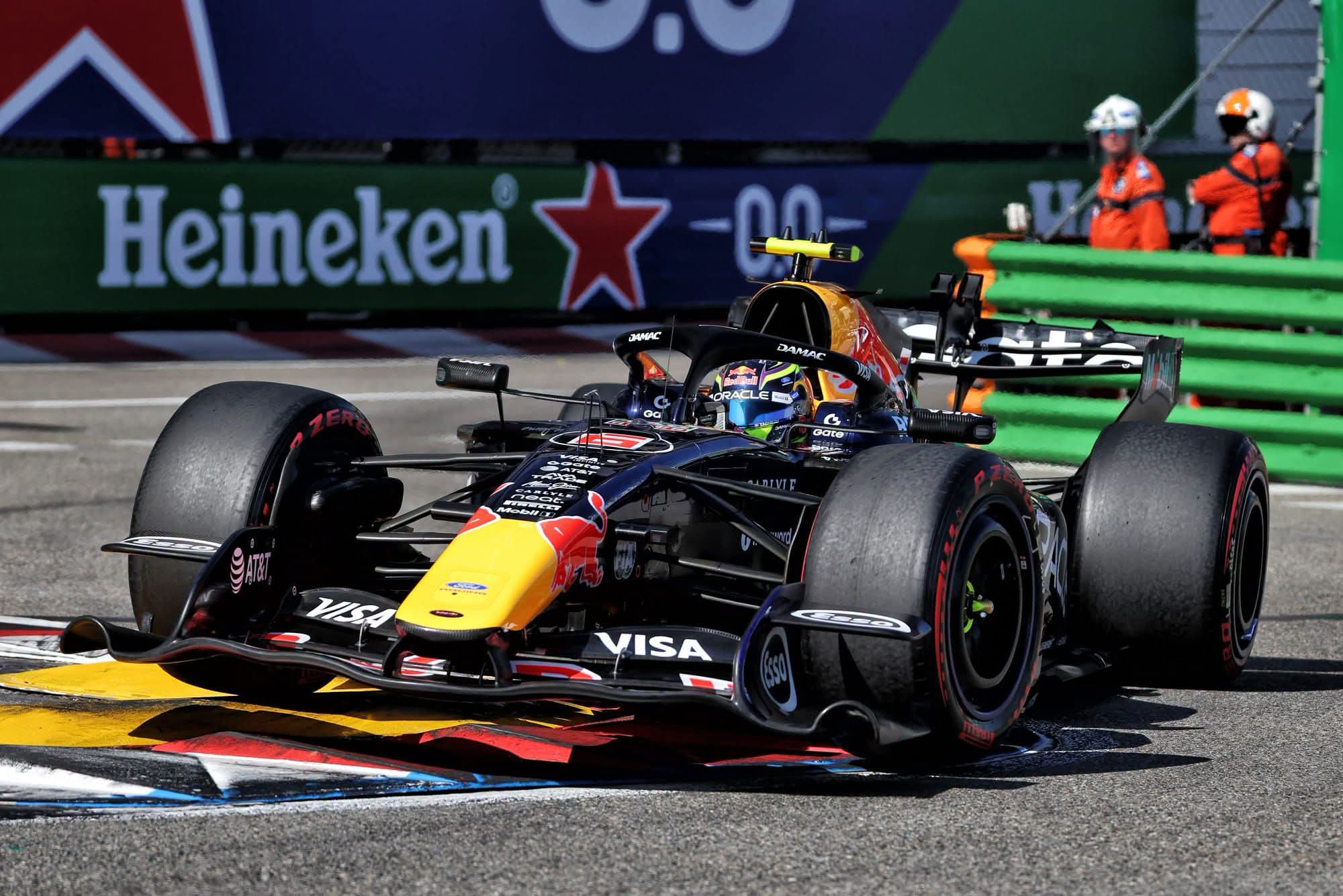
Formula 1 is once again heading toward a major philosophical debate about what the cars should look and feel like in the future. FIA president Mohammed Ben Sulayem has set out an ambitious goal to significantly reduce the weight of F1 cars, a move that could reshape performance, racing style, and even the direction of the sport’s technical regulations.
While Formula 1 has always evolved through technology, one of the biggest modern criticisms is that the cars have become too heavy. Current machines are among the heaviest in the sport’s history, driven by hybrid power units, safety structures, and increasingly complex aerodynamics. Ben Sulayem’s latest comments signal that the governing body is aware of the issue and wants to reverse that trend.
WHY CAR WEIGHT HAS BECOME A BIG F1 PROBLEM
Over the past decade, F1 cars have grown significantly in size and mass. Modern regulations prioritise safety and hybrid efficiency, but the trade-off has been agility.
Heavier cars generally mean:
Slower direction changes in corners
More tyre degradation
Reduced overtaking opportunities in tight sections
Less responsiveness for drivers
Drivers have repeatedly expressed frustration that today’s cars feel less nimble compared to earlier generations. Even when lap times remain fast due to power and downforce, the “feel” of racing has changed.
This is why the FIA’s push is gaining attention. Reducing weight is not just a technical adjustment, it is a potential shift in how Formula 1 racing looks on track.
WHAT THE FIA IS TRYING TO ACHIEVE
Ben Sulayem’s ambition is not just about shaving a few kilograms off the cars. The broader goal is to improve racing quality.
A lighter F1 car would likely bring:
Faster cornering response
Shorter braking distances
Improved racing battles in tight circuits
Less stress on tyres and brakes
More driver-focused performance instead of purely aero-dependent speed
However, achieving this is far from simple. Modern F1 cars are built around multiple layers of safety systems, hybrid components, and aerodynamic structures that all add weight but also serve critical purposes.
THE CHALLENGE FOR TEAMS UNDER NEW RULES
For teams like Red Bull, Ferrari, Mercedes, and McLaren, any weight reduction target immediately becomes a design challenge. Engineers are already operating within extremely tight margins, and removing weight without sacrificing safety or performance is extremely complex.
Key areas teams would likely target include:
Lighter chassis materials
Simplified hybrid systems
Reduced aerodynamic bulk
Stricter component limits
But every reduction creates trade-offs. Less weight could mean less structural reinforcement or changes in how energy recovery systems function. That is why any regulation shift would need careful balancing.
THE IMPACT ON DRIVERS AND RACING STYLE
Drivers are likely to be among the biggest supporters of lighter cars. A reduction in weight would make cars more reactive, especially in high-speed direction changes and street circuits like Monaco or Singapore.
For racing itself, the effect could be significant. Heavier cars tend to follow predictable racing lines due to their inertia. Lighter cars could allow more aggressive overtaking attempts and better wheel-to-wheel combat, especially in braking zones.
However, some drivers may also face a learning curve. A lighter car is not just faster in feel, it is also more sensitive to mistakes. Small steering errors or throttle inputs could become more costly.
WHY THIS MATTERS FOR THE 2026 ERA
Formula 1 is already preparing for a major regulation reset in 2026, with new power unit rules and aerodynamic changes expected. Adding weight reduction goals into that transition makes the challenge even bigger.
If the FIA succeeds, 2026 cars could represent a philosophical shift rather than just a technical update. Instead of simply faster hybrid machines, the sport could move closer to a balance between efficiency, speed, and driver skill expression.
But if the target proves too difficult, the idea may be pushed further into the future or softened into incremental reductions instead of a dramatic cut.
WHAT HAPPENS NEXT
At this stage, Ben Sulayem’s comments are a long-term direction rather than an immediate rule change. The FIA will need to work closely with teams to determine what is realistically achievable without compromising safety or cost controls.
Expect discussions in technical working groups to intensify over the coming seasons, especially as 2026 regulations are finalised.
For now, the message is clear: Formula 1 wants lighter, more agile cars again, but getting there will require one of the most complex engineering shifts in recent memory.