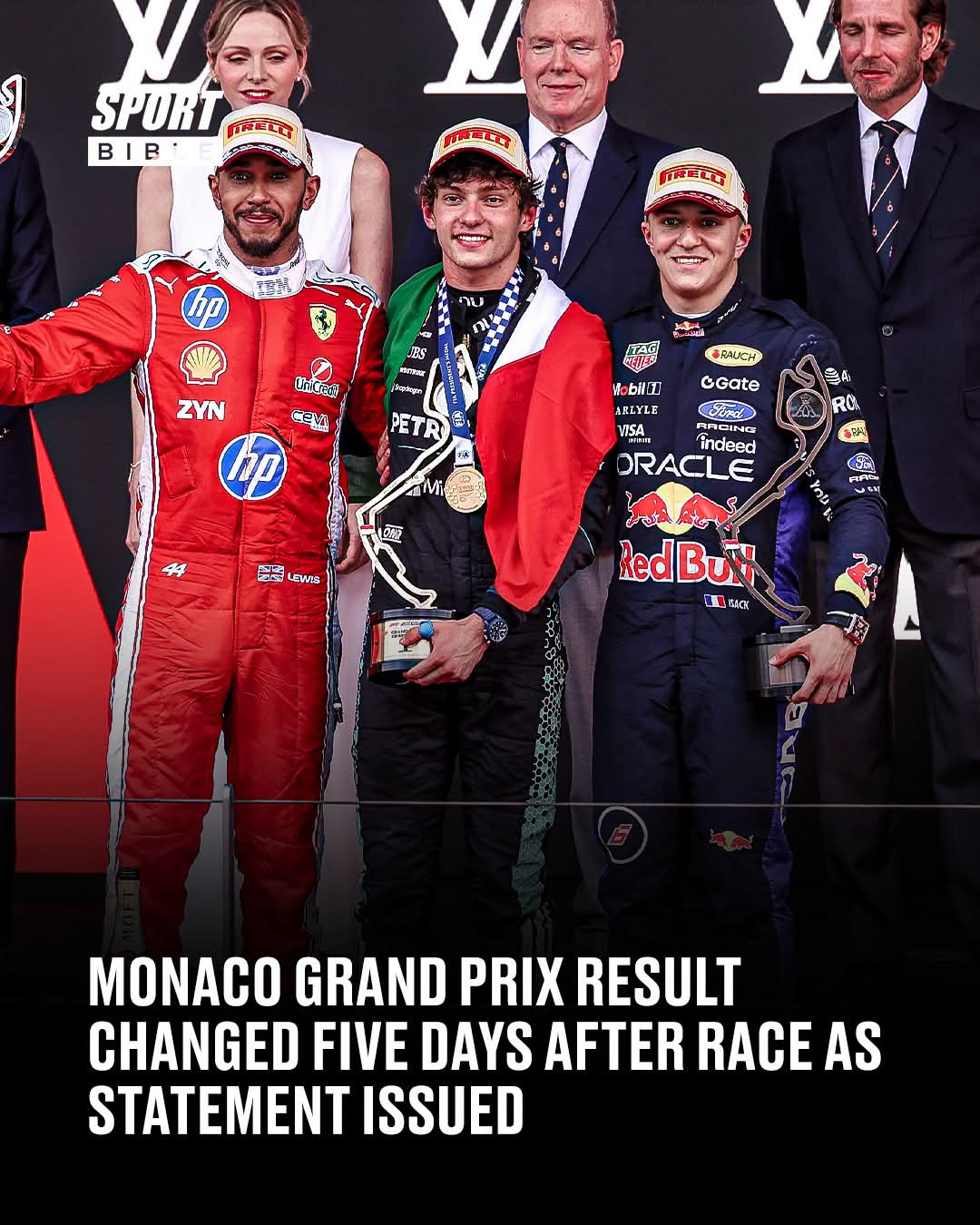
Formula 1 has been rocked by one of the most dramatic post-race reversals of the 2026 season after Pierre Gasly was officially reinstated to third place in the Monaco Grand Prix following a successful Alpine appeal. What initially looked like a heartbreaking loss for the French driver has now become one of the most significant stewarding reversals in recent memory, raising fresh questions about Formula 1’s timing systems and race officiating procedures.
The decision not only changes the final classification of one of the sport’s most prestigious races but could also have important implications for Alpine’s season, the midfield championship battle, and the FIA’s credibility moving forward.
HOW GASLY LOST THE PODIUM IN THE FIRST PLACE
Gasly delivered one of his finest performances of the season around the streets of Monaco. Starting outside the frontrunners, the Alpine driver produced a disciplined and aggressive race to cross the finish line in third place.
However, celebrations were short-lived.
Race officials handed Gasly two separate five-second penalties for alleged pit-lane speeding offences. The penalties dropped him from third to seventh in the final classification, transforming what should have been a career-defining result into a devastating disappointment.
At the time, Gasly openly questioned the ruling, insisting he had engaged the pit-lane limiter before crossing the line and followed the procedures instructed by the team.
His frustration was understandable. In Monaco, where overtaking opportunities are extremely limited, track position is everything. Losing a podium through post-race penalties felt particularly cruel.
THE SHOCK DISCOVERY THAT CHANGED EVERYTHING
The turning point came when Alpine exercised its right to request a review of the decision.
During the hearing, new evidence emerged suggesting that the pit-lane distance used to calculate vehicle speeds had been inaccurate. According to findings presented during the review process, the distance measurement may have overestimated the speed at which Gasly was travelling.
That revelation changed the entire case.
Stewards ultimately concluded that Gasly had not exceeded the 60 km/h pit-lane speed limit after all. As a result, both penalties were rescinded, restoring his original third-place finish.
For Alpine, it was a complete reversal of fortune. For the FIA, it was an uncomfortable reminder that even the smallest technical errors can dramatically affect race outcomes.
WHY THIS DECISION MATTERS FAR BEYOND MONACO
This story is about far more than a single podium finish.
Formula 1 prides itself on precision. Teams invest hundreds of millions of dollars chasing thousandths of a second. Drivers spend years perfecting their craft. In that environment, the accuracy of timing and measurement systems is non-negotiable.
The fact that a potentially inaccurate distance calculation played a role in determining penalties raises legitimate concerns.
Fans, teams, and drivers will now be asking how many other decisions rely on similar calculations and what safeguards exist to prevent comparable situations in the future.
While the FIA deserves credit for allowing the review process to work as intended, the incident highlights the importance of ensuring technical systems are beyond reproach.
A HUGE BOOST FOR ALPINE’S SEASON
For Alpine, the reinstated podium could not have come at a better time.
The team has endured a turbulent campaign filled with inconsistent results, technical setbacks, and growing pressure from rivals in the midfield battle. A Monaco podium instantly changes the narrative.
Instead of leaving Monaco with frustration and unanswered questions, Alpine now walks away with one of its strongest results in years.
The additional points could prove crucial later in the season as teams battle for championship positions that carry significant financial rewards.
Just as importantly, the decision provides a major morale boost inside the team. Drivers, engineers, and management now have tangible proof that their hard work delivered a genuine podium-worthy performance.
THE DRIVERS WHO LOSE OUT
Gasly’s promotion inevitably means others drop down the order.
Isack Hadjar loses a podium finish that initially appeared secured, while several drivers behind him each surrender a position in the final classification.
Although none of those drivers were responsible for the situation, the revised result demonstrates how post-race reviews can have far-reaching consequences.
Hadjar, in particular, will feel disappointed after what was originally celebrated as another breakthrough result. However, the FIA’s responsibility is to ensure the final classification reflects what actually happened on track, regardless of how much time has passed.
WHAT THIS MEANS FOR THE CHAMPIONSHIP
While the Monaco podium does not dramatically alter the drivers’ title fight, it strengthens Alpine’s position in the constructors’ standings and could become increasingly important as the season progresses.
Every point matters in modern Formula 1.
A single result can determine championship positions worth millions of dollars at the end of the year. Teams frequently spend entire seasons fighting for margins smaller than the points gained through Gasly’s reinstatement.
With several teams tightly grouped in the midfield, this ruling may ultimately influence the final championship order.
WHAT HAPPENS NEXT?
The FIA will likely face pressure to review how pit-lane speed calculations are verified moving forward.
Expect teams to seek greater transparency regarding timing systems and measurement methodologies. Nobody wants a repeat of a situation where a podium result is decided by disputed data.
For Gasly, however, the focus can finally return to racing.
After days of uncertainty, the Frenchman gets the reward his Monaco drive deserved. What appeared to be a painful missed opportunity has now become one of the most remarkable podium recoveries Formula 1 has seen in recent years.
And as the championship heads to Barcelona, Alpine suddenly arrives with renewed momentum, renewed confidence, and a freshly restored Monaco trophy result that could prove far more valuable than anyone initially realised.