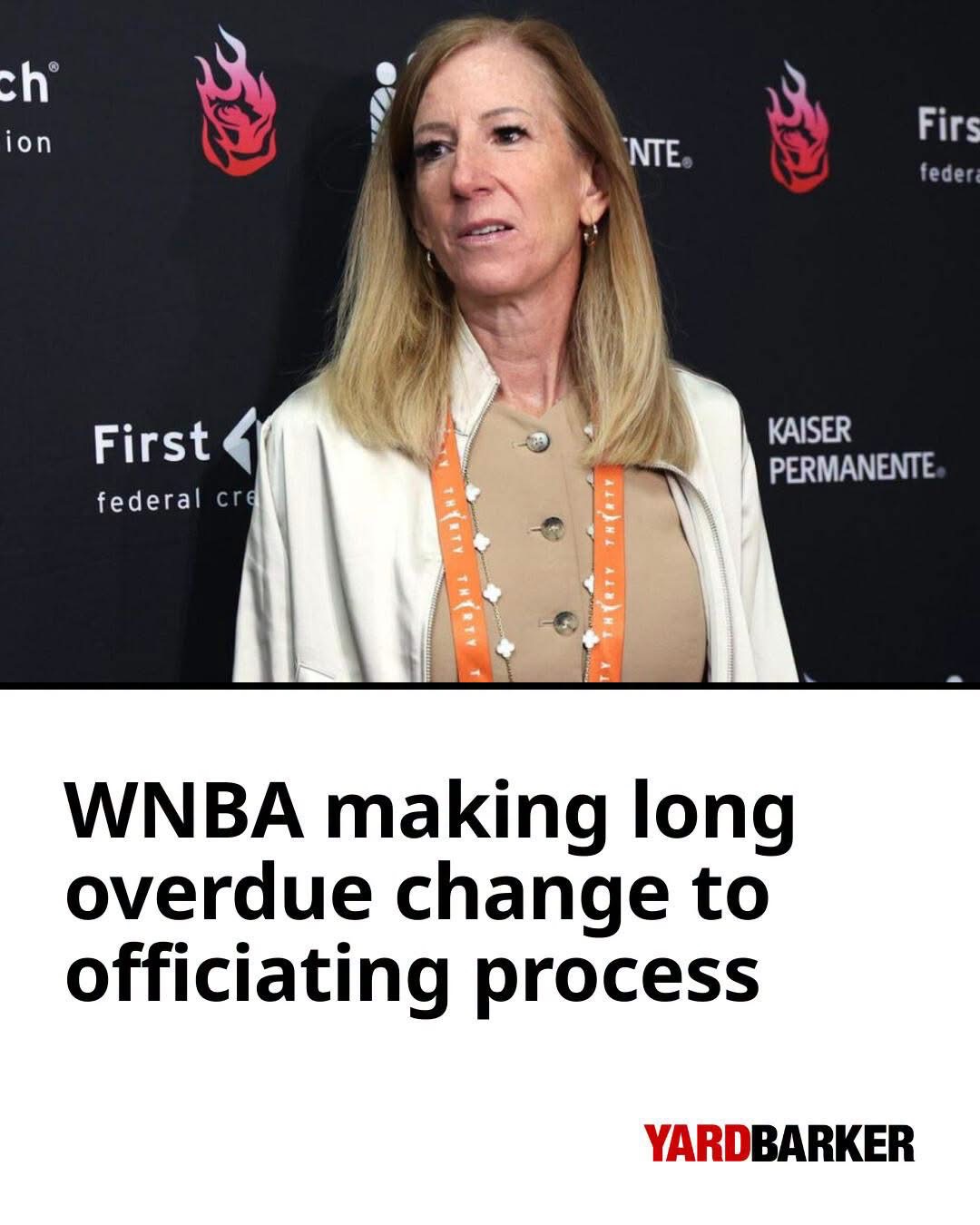
The WNBA is taking one of its biggest steps yet toward modernizing officiating after confirming that a centralized replay center will be introduced beginning with the 2027 season. The announcement, made by Commissioner Cathy Engelbert during All-Star Weekend, comes after years of criticism from players, coaches, fans, and analysts over inconsistent officiating and lengthy replay reviews.
The move represents more than a technological upgrade—it signals the league’s commitment to protecting the integrity of the game as it enters an era of unprecedented popularity. With television ratings, attendance, sponsorships, and global interest reaching historic highs, the WNBA is responding to growing demands for greater accuracy, consistency, and accountability in officiating.
A CENTRALIZED REPLAY CENTER IS FINALLY COMING TO THE WNBA
Beginning in 2027, the WNBA will utilize a centralized replay center designed to assist game officials with reviewing critical plays more efficiently and consistently.
The replay center will leverage the NBA’s existing state-of-the-art replay infrastructure, allowing league officials to assist referees with reviewing disputed calls while ensuring that similar situations are handled uniformly across every game.
According to WNBA Head of League Operations Bethany Donaphin, the investment reflects the league’s broader effort to improve the quality of competition while embracing technology that benefits players, officials, teams, and fans.
The goal is straightforward: reduce inconsistencies, speed up replay reviews, and increase confidence in officiating decisions.
WHY THIS CHANGE MATTERS NOW MORE THAN EVER
The timing of the announcement is no coincidence.
Over the past two seasons, the WNBA has experienced explosive growth fueled by rising television audiences, sold-out arenas, increased media attention, and the arrival of a new generation of superstar players.
With that growth has come greater scrutiny.
Every controversial foul, replay review, technical foul, and late-game decision is now dissected across television broadcasts and social media within minutes. As millions of new fans follow the league, officiating has become one of the most discussed aspects of WNBA basketball.
The league recognizes that maintaining credibility is essential if it wants to sustain its remarkable momentum.
OFFICIATING HAS BEEN A LEAGUE-WIDE CONCERN
Although Indiana Fever star Caitlin Clark has frequently found herself involved in conversations surrounding officiating this season, concerns extend well beyond one player or one franchise.
Players, coaches, and executives across the league have spent years calling for improvements to replay procedures and officiating consistency.
Following last season’s WNBA Finals, Phoenix Mercury head coach Nate Tibbetts publicly criticized officiating standards, while league executives reportedly identified the absence of a centralized replay center as one of the sport’s biggest operational shortcomings.
The issue has affected teams throughout the league, with controversial calls influencing close games, playoff races, and public perception of officiating.
Introducing a centralized replay center addresses one of the most commonly suggested solutions.
WHAT A CENTRALIZED REPLAY CENTER CAN IMPROVE
No replay system can eliminate every officiating mistake, but centralized review significantly reduces the likelihood of inconsistent decisions.
Instead of relying solely on officials working inside the arena, experienced replay personnel can review multiple camera angles in real time while communicating directly with referees on the court.
That process has already become standard practice across several major North American professional sports leagues, helping improve both accuracy and consistency.
Potential benefits include:
- Faster replay decisions during critical moments.
- Greater consistency across every WNBA game.
- Improved communication between on-court officials and league operations.
- Increased confidence from players, coaches, and fans.
- Enhanced transparency surrounding review decisions.
While controversial calls will never disappear completely, centralized oversight provides another layer of accountability.
THE MOVE REFLECTS THE WNBA’S CONTINUED EVOLUTION
The replay center announcement is another example of how rapidly the WNBA is evolving.
In recent years, the league has expanded television partnerships, increased franchise valuations, invested in player facilities, attracted record sponsorship revenue, and welcomed unprecedented fan engagement.
Improving officiating infrastructure fits naturally into that broader strategy.
As the level of competition continues rising, every possession becomes increasingly valuable. Ensuring those moments are judged as accurately as possible benefits everyone involved—from players competing for championships to fans watching around the world.
Modern professional sports increasingly rely on technology not to replace officials, but to support them in making the best possible decisions.
HOW THIS COULD IMPACT PLAYERS AND COACHES
Players may ultimately be among the biggest beneficiaries of the new system.
Greater consistency in officiating allows athletes to better understand how games will be called from one night to the next. Coaches also gain confidence knowing similar situations should receive similar rulings regardless of location or officiating crew.
That predictability can reduce frustration and shift the focus back toward basketball rather than controversial officiating.
For officials themselves, centralized support provides valuable assistance during high-pressure moments, particularly in nationally televised games where every decision receives immediate public scrutiny.
LOOKING AHEAD TO THE 2027 SEASON
The introduction of a centralized replay center will not eliminate every controversial call, nor should fans expect perfection overnight.
Basketball remains a fast-moving sport filled with subjective judgments that technology cannot always resolve. Fouls, physicality, and player intent will still require human interpretation.
However, this announcement represents one of the most meaningful officiating reforms in recent WNBA history.
As the league continues to grow into one of the world’s premier professional basketball competitions, investments in officiating technology are becoming just as important as investments in players, arenas, and broadcasting.
For years, coaches, players, and fans have called for greater consistency in officiating. Beginning in 2027, the WNBA will finally have one of the most important tools needed to deliver it.
The success of the new replay center will ultimately be measured not by the absence of controversy—which is impossible in sports—but by whether games are decided more often by the players on the court rather than debates over officiating after the final buzzer.