Why is the 2026 Bahrain Grand Prix taking place in Malaysia…WHY THE 2026 BAHRAIN GRAND PRIX IS TAKING PLACE IN MALAYSIA
Formula 1 fans are set for an unusual sight in the 2026 championship: the Bahrain Grand Prix will take place in Malaysia. Instead of racing at the Bahrain International Circuit in Sakhir, the championship will visit the Sepang International Circuit from October 2–4, with the event officially titled the Formula 1 Gulf Air Bahrain Grand Prix in Malaysia.
The decision is the result of changes to the 2026 Formula 1 calendar following the situation in the Middle East. Formula 1 and the FIA had already announced in March that the Bahrain and Saudi Arabian Grands Prix would not take place during their originally scheduled April period after evaluating the regional circumstances and prioritizing the safety and wellbeing of everyone involved in the sport.
Rather than simply losing the Bahrain round from the championship, Formula 1 later reached an agreement with Bahrain and Malaysia to stage the Bahrain Grand Prix at Sepang later in the season.
WHY MALAYSIA?
The decision to use Sepang provided Formula 1 with a way to preserve the Bahrain Grand Prix while returning to a circuit with a significant history in the championship.
Formula 1 and the FIA confirmed on July 26 that Sepang International Circuit would host the Bahrain Grand Prix between the Azerbaijan and Singapore Grands Prix. The agreement involved Formula 1, the FIA, the Government of Bahrain and the Government of Malaysia.
According to Formula 1, the arrangement allows the Grand Prix to take place when it otherwise would not have happened. The rest of the 2026 schedule was also kept unchanged.
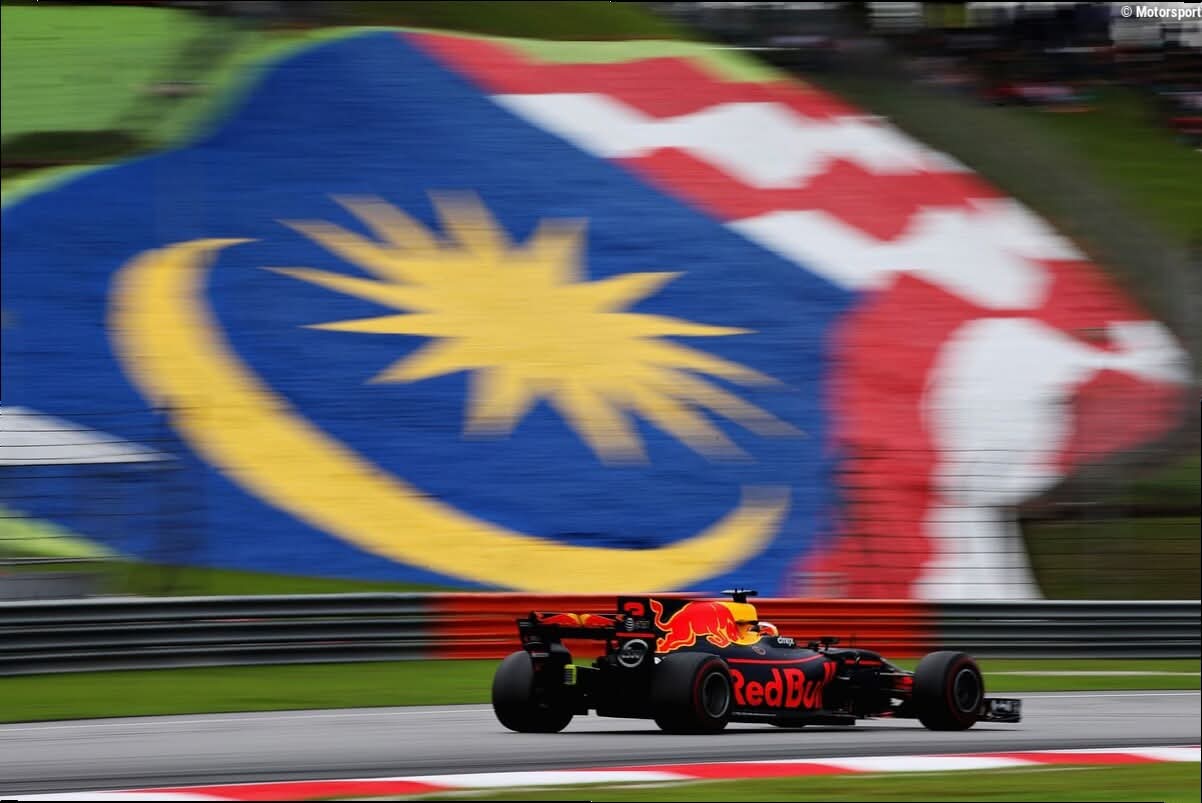
Sepang is not a new venue to Formula 1. The circuit first hosted the Malaysian Grand Prix in 1999 and remained part of the championship until 2017. Its return therefore gives F1 the opportunity to race at a familiar and historically significant venue while maintaining the number of rounds on the 2026 calendar.
The circuit is also regarded as a demanding track for modern Formula 1 cars. Its layout features long straights, heavy braking zones and fast corners, while Malaysia’s heat, humidity and possibility of sudden tropical rain can create additional challenges for drivers and teams.
A BAHRAIN RACE WITH A DIFFERENT LOCATION
One of the most interesting aspects of the arrangement is that this is not simply being promoted as the Malaysian Grand Prix.
The event retains the Bahrain identity and is officially called the Formula 1 Gulf Air Bahrain Grand Prix in Malaysia. Bahrain therefore remains the nominal host of the Grand Prix, while Malaysia provides the circuit and physical location for the event.
This unusual arrangement reflects the circumstances surrounding the 2026 calendar.
Formula 1 wanted to preserve the Bahrain round, while the regional situation meant that holding the event in Bahrain at the original time was not possible. Moving the event to Sepang created a way to keep the race on the championship schedule without sending the Formula 1 community back to Bahrain during the earlier period of uncertainty.
FIA President Mohammed Ben Sulayem said the organizations involved had worked to explore available options while keeping the safety and wellbeing of teams, officials, volunteers and fans as a priority.
WHY THE DATE MATTERS
The Malaysian event is scheduled for October 2–4, placing it directly between the Azerbaijan and Singapore rounds.
The official 2026 calendar lists Azerbaijan as Round 15, followed by Bahrain in Malaysia as Round 16 and Singapore as Round 17. The United States Grand Prix then follows later in October.
That positioning is significant because Formula 1 is dealing with a tightly organized global calendar. Moving a race does not simply involve finding another weekend; the championship must also consider freight, personnel, equipment, travel and the schedule of the teams and support championships.
By placing the Bahrain event at Sepang immediately before Singapore, Formula 1 can continue with the Asian portion of the calendar without removing another round.
SEPANG’S RETURN TO FORMULA 1
For Malaysia, the decision represents the return of Formula 1 to Sepang after the country’s previous Grand Prix was held in 2017.
Sepang has a long association with the championship. The circuit opened in 1999 and immediately became one of the recognizable venues on the F1 calendar. Its wide track, long straights and challenging combinations of corners produced numerous memorable races during its previous period as a Grand Prix venue.
Max Verstappen was the last driver to win a Formula 1 race at Sepang, taking victory in 2017 before the Malaysian Grand Prix was removed from the calendar.
The 2026 event will therefore give a new generation of Formula 1 drivers an opportunity to race at the circuit.
WHAT FANS CAN EXPECT
The 2026 Bahrain Grand Prix in Malaysia will follow a traditional three-day competitive schedule.
Friday, October 2, features the first two Formula 1 practice sessions. Saturday includes the third practice session and qualifying, while the Grand Prix itself is scheduled for Sunday, October 4. The race is set to cover 56 laps of the 5.543-kilometre Sepang circuit, giving a scheduled race distance of 310.398 kilometres.
Weather could become one of the weekend’s major talking points.
Sepang is known for high temperatures, humidity and the possibility of heavy tropical rainfall. A sudden shower can dramatically change track conditions and force teams to rethink tyre strategy, braking points and car setup.
The circuit’s long straights also create opportunities for overtaking, while its wide layout provides drivers with multiple racing lines.
A MAJOR COLLABORATION
The decision also highlights the cooperation between Bahrain and Malaysia.
Bahrain’s Crown Prince and Prime Minister Salman bin Hamad Al Khalifa described the arrangement as reflecting the close relationship between the two countries. Malaysia’s Prime Minister Anwar Ibrahim likewise welcomed the opportunity to host Formula 1 at Sepang and emphasized the country’s readiness to stage a major international sporting event.
Formula 1 CEO Stefano Domenicali also welcomed the solution, describing it as an example of the sport adapting to circumstances and finding a way to maintain its 2026 schedule.
For Malaysia, the event offers a return to the global Formula 1 spotlight. For Bahrain, it allows the country’s Grand Prix to remain part of the championship despite the circumstances that prevented the race from being staged at its traditional venue.
WHAT IT MEANS FOR THE 2026 CHAMPIONSHIP
The most important consequence is that the championship retains its scheduled round.
The official Formula 1 calendar currently lists the Bahrain Grand Prix in Malaysia as Round 16, with Singapore following one week later.
Rather than removing another race from the season, Formula 1 has created an unusual solution that combines Bahrain’s event identity with Malaysia’s circuit.
It means fans will see the Bahrain Grand Prix in a location thousands of kilometres from Bahrain itself, making the 2026 event one of the most distinctive races on the calendar.
Ultimately, the reason the Bahrain Grand Prix is taking place in Malaysia is straightforward: Formula 1 needed a practical way to preserve the Bahrain round while responding to the regional circumstances that affected its original schedule. Sepang offered an established Formula 1 venue capable of stepping into the calendar, and an agreement between Formula 1, the FIA, Bahrain and Malaysia made the unusual arrangement possible.
The result will be a Bahrain Grand Prix unlike any previous edition — carrying Bahrain’s name, taking place in Malaysia and returning Formula 1 to the historic Sepang International Circuit for the first time since 2017.