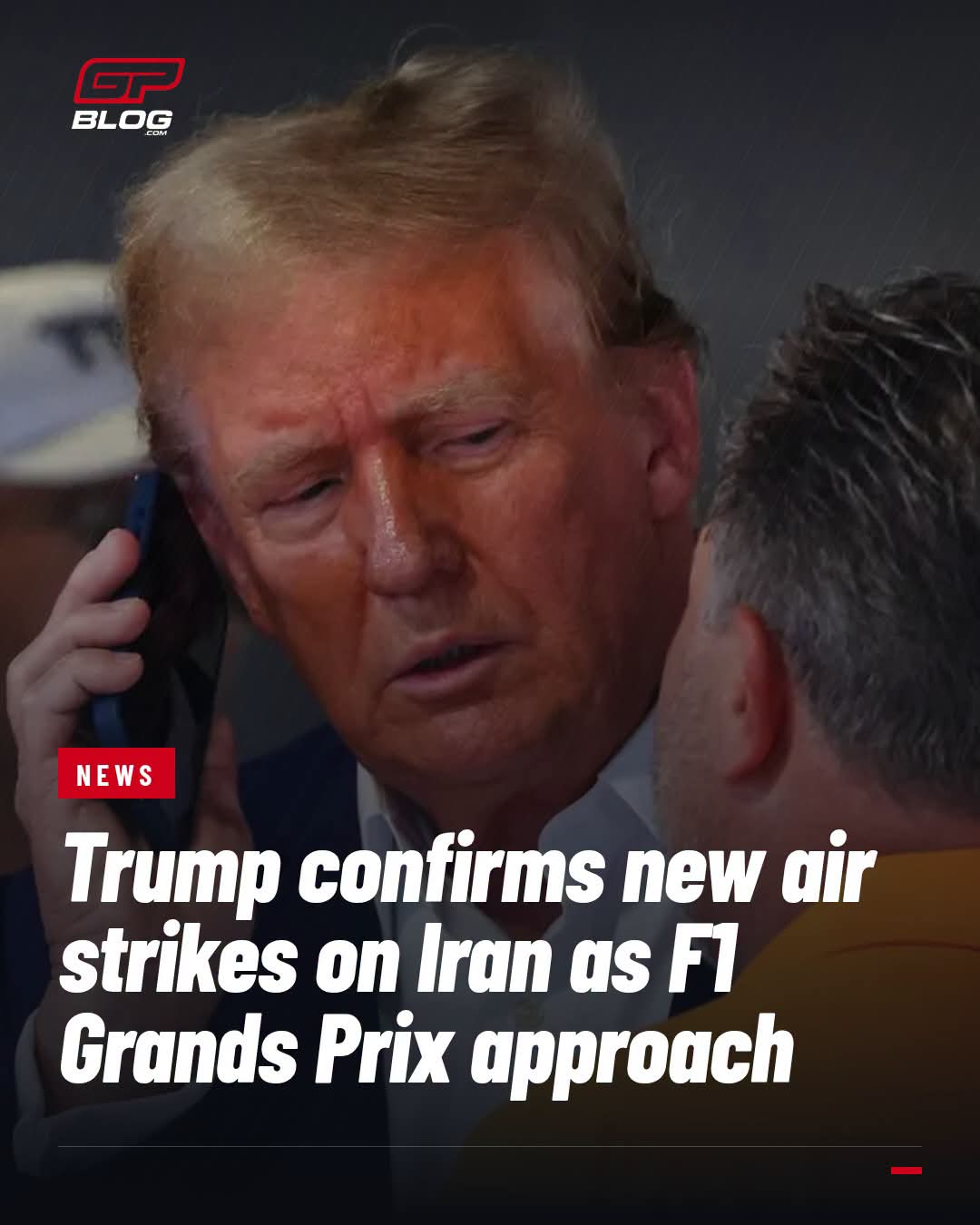
Formula 1 could face another significant challenge away from the racetrack as escalating military tensions between the United States and Iran raise questions about the security and logistics surrounding the championship’s upcoming Middle Eastern races.
With the 2026 Qatar Grand Prix and Abu Dhabi Grand Prix approaching, renewed American military action against Iranian targets has placed the region under increased international scrutiny. The timing is particularly sensitive for Formula 1, which is preparing to bring thousands of personnel, international visitors, sponsors and motorsport enthusiasts to the Gulf for the final stages of the season.
Although there has been no official announcement that either Grand Prix is under threat of cancellation, the developing situation presents a challenge that Formula 1, the FIA and local organisers cannot afford to ignore.
The priority will be ensuring that the championship’s sporting ambitions do not come at the expense of the safety of everyone involved.
RENEWED US MILITARY ACTION INCREASES REGIONAL UNCERTAINTY
The latest developments in the Middle East have intensified concerns about the possibility of a wider confrontation.
According to reports published on November 7, US President Donald Trump said American forces had conducted another limited military operation against Iranian air-defence infrastructure. The reported action follows earlier American strikes around Qeshm Island in the strategically important Strait of Hormuz.
Meanwhile, diplomatic efforts involving Qatar are continuing, with the country’s prime minister expressing optimism that Washington and Tehran could eventually reach an agreement.
However, Iran has warned that further attacks could trigger retaliation against American and Israeli interests in neighbouring countries.
This creates an unpredictable environment for international sporting events scheduled in the region over the coming weeks.
For Formula 1, the concern extends beyond the possibility of direct military confrontation. Aviation restrictions, disrupted flight routes, increased security requirements and uncertainty surrounding regional transportation networks could all affect the championship’s operations.
QATAR GRAND PRIX FACES ATTENTION AS SECURITY CONCERNS GROW
The 2026 Qatar Grand Prix is scheduled to take place from November 27 to 29 at the Lusail International Circuit.
Qatar has established itself as an important destination on the Formula 1 calendar, offering a spectacular night-racing experience and substantial investment in motorsport infrastructure.
However, its geographical position makes the current regional situation particularly relevant.
Recent maritime security incidents have also raised concerns. Reports indicate that a commercial tanker was struck by unidentified projectiles off the Qatari coast on November 4.
Although an incident involving commercial shipping does not automatically translate into a threat to the Grand Prix, it demonstrates how regional instability could create additional complications for transportation and international operations.
Formula 1 will therefore need to pay close attention to developments surrounding Qatar in the weeks leading up to the event.
The championship’s organisers will likely maintain close communication with local authorities, security agencies and international travel partners.
Importantly, there is currently no confirmed announcement that the Qatar Grand Prix will be cancelled or postponed.
ABU DHABI GRAND PRIX ALSO RELEVANT TO THE DEVELOPING SITUATION
The situation does not end with Qatar.
The 2026 Abu Dhabi Grand Prix is scheduled for December 4-6 at the Yas Marina Circuit in the United Arab Emirates.
Traditionally serving as the season finale, the Abu Dhabi race attracts enormous international attention, with championship celebrations, major entertainment events and a substantial global audience.
Its position immediately after the Qatar Grand Prix creates another important consideration for Formula 1.
Teams must transport personnel, cars, equipment and technical infrastructure between the two destinations within a relatively short period.
Any significant disruption to regional aviation or freight transportation could complicate those arrangements.
Furthermore, the UAE’s geographical proximity to the wider Middle Eastern security situation means that organisers will need to monitor developments carefully.
Nevertheless, it would be premature to suggest that the Abu Dhabi event is facing cancellation. The race remains on the official 2026 calendar, and no confirmed postponement has been announced.
FORMULA 1 CANNOT AFFORD TO IGNORE SECURITY RISKS
Formula 1 is one of the world’s most internationally mobile sporting championships.
Every race requires an enormous logistical operation involving thousands of people, multiple freight shipments, broadcasting infrastructure, hospitality arrangements and extensive commercial commitments.
When a regional security crisis develops, the consequences can extend far beyond the host country’s borders.
Airspace restrictions could force airlines to change routes. Increased security requirements could affect airport operations, while insurance costs and transportation uncertainty could create additional financial pressure.
For teams, the biggest challenge would be maintaining operational continuity.
A Formula 1 team cannot simply arrive at a circuit without its essential equipment. Engineers, mechanics, drivers and technical personnel must all reach their destinations on schedule.
Even relatively small logistical disruptions can create complications during a race weekend.
This is why the FIA and Formula 1 management will need to assess the situation continuously rather than waiting until the final days before each event.
THE FIA AND FORMULA 1 FACE AN IMPORTANT DECISION
The responsibility for evaluating the situation will involve several organisations, including the FIA, Formula 1 management, local race promoters and relevant government authorities.
Their decisions must be guided by reliable security assessments rather than commercial considerations or the desire to preserve the published calendar.
Formula 1 has previously demonstrated that geopolitical developments can influence its racing schedule.
The cancellation of the 2022 Russian Grand Prix following Russia’s invasion of Ukraine remains an example of how international events can fundamentally change the championship’s approach to a race destination.
The 2022 Saudi Arabian Grand Prix also highlighted the difficult relationship between motorsport commitments and security concerns after an attack near the Jeddah circuit prompted extensive discussions involving drivers, teams and championship officials.
These experiences underline an important principle: sporting commitments cannot take priority over human safety.
If the current situation deteriorates significantly, the FIA and Formula 1 may have to consider additional security measures, logistical adjustments or, in an extreme scenario, changes to the calendar.
WHAT THIS COULD MEAN FOR THE 2026 CHAMPIONSHIP
The timing of the Qatar and Abu Dhabi races makes the situation particularly important for the sporting competition.
With only a handful of rounds remaining, both events could play decisive roles in determining the 2026 championship standings.
A disruption could affect drivers fighting for the world championship, teams competing for the constructors’ title and organisations hoping to finish the season strongly.
There is also a commercial dimension.
Both Grands Prix attract significant sponsorship, hospitality and international tourism investment. Any uncertainty could affect ticket holders, travel companies, broadcasters and commercial partners.
For fans travelling internationally, changing flight arrangements and monitoring official travel guidance may become increasingly important.
However, it is equally important not to create unnecessary panic. Regional tensions do not automatically mean that sporting events cannot take place safely.
The appropriate response is careful monitoring, transparent communication and preparation for different possible scenarios.
COULD FORMULA 1 CHANGE ITS MIDDLE EASTERN SCHEDULE?
At this stage, a calendar change remains speculation rather than an announced decision.
The most likely immediate response would be increased security coordination and contingency planning.
Formula 1 has considerable experience organising events across different continents, and its logistical operations are designed to accommodate complex international movements.
However, the situation could become more complicated if military exchanges intensify or regional airspace and transportation networks experience significant disruption.
A temporary postponement or cancellation would represent a major operational challenge, particularly so late in the championship.
Moving either event to another destination would also require considerable planning, circuit availability and regulatory approval.
Consequently, Formula 1 will probably prefer to maintain the existing schedule if authorities can establish that the events can proceed safely.
But the final decision must depend on the security situation closer to race weekend.
THE BIGGER PICTURE: SPORT AND GEOPOLITICS COLLIDE AGAIN
The developing situation highlights an uncomfortable reality for international sport.
Formula 1 operates as a global entertainment business, but it cannot completely separate itself from the political, economic and security developments affecting the countries where it competes.
The championship’s Middle Eastern expansion has brought enormous investment, new audiences and commercially important partnerships.
Qatar and Abu Dhabi have become established destinations, contributing significantly to the championship’s international identity.
However, the current uncertainty demonstrates why geographical diversification and effective contingency planning remain essential.
For Formula 1, protecting its global calendar means more than securing circuits and signing commercial agreements. It also requires ensuring that teams, drivers, employees and spectators can travel to and participate in events safely.
WHAT HAPPENS NEXT?
All attention will now turn towards developments in the Middle East and the official responses from Formula 1 and the FIA.
The Qatar Grand Prix is scheduled for November 27-29, while Abu Dhabi will host the season finale from December 4-6.
For now, both events remain on the 2026 calendar.
The coming weeks will be crucial in determining whether diplomatic efforts can prevent further escalation or whether renewed military activity creates additional challenges for international travel and sporting operations.
One thing is certain: Formula 1 will be hoping that the final races of the season are remembered for extraordinary performances on the track rather than security concerns away from it.
The championship has a thrilling conclusion to deliver, but the safety of everyone involved must remain the overriding priority.
What do you think? Should Formula 1 continue with the Qatar and Abu Dhabi Grands Prix if military tensions in the Middle East continue to escalate, or should the FIA consider alternative arrangements?
#F1 #Formula1 #QatarGP #AbuDhabiGP #FIA #USAirStrikes #MiddleEast #MotorsportEDITORIAL NOTE: The Qatar Grand Prix is scheduled for November 27–29, and Abu Dhabi for December 4–6, 2026. Neither race has been officially cancelled or postponed. The article deliberately distinguishes confirmed developments from potential consequences.
Official race calendar: [Formula 1 2026 Calendar](https://www.formula1.com/en/racing/2026?utm_source=chatgpt.com)