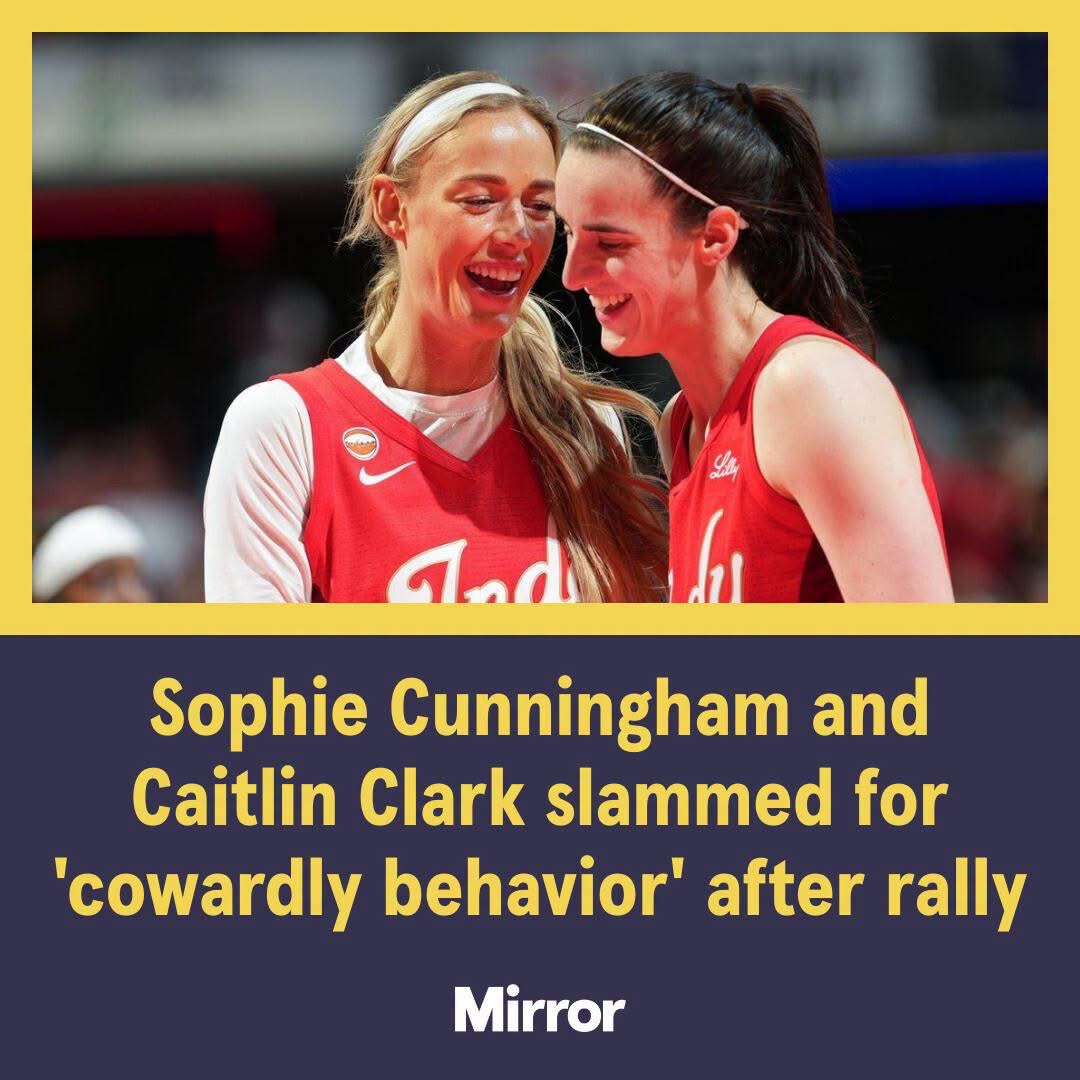
The Indiana Fever’s victory over the Seattle Storm was overshadowed by another chapter in the ongoing debate surrounding transgender athlete participation in women’s sports. Following a week of intense public discussion sparked by Sophie Cunningham’s comments, attention shifted from the court to what happened after the final buzzer, when both Cunningham and teammate Caitlin Clark declined to speak with reporters.
Their decision quickly became a talking point across social media, with some critics accusing the pair of avoiding difficult questions, while others argued the players had every right to remain focused on basketball rather than continuing a politically charged debate. The reaction highlights how rapidly conversations surrounding women’s sports can extend beyond wins and losses into broader cultural discussions.
CUNNINGHAM’S COMMENTS CONTINUE TO DIVIDE OPINION
The controversy began after Cunningham spoke publicly about transgender athletes competing in girls’ and women’s sports.
The Indiana Fever guard said she believes young girls “shouldn’t have to go against biological men” in athletic competition while stressing that she does not hate transgender people. Cunningham also referenced Title IX, arguing that protecting women’s sports has been central to expanding athletic opportunities for female athletes in the United States.
Despite receiving significant criticism online, Cunningham later reaffirmed her position, saying she stood by her remarks and understood that expressing her opinion would generate both support and backlash.
Her comments quickly became one of the biggest off-court stories in the WNBA, drawing reactions from athletes, commentators, advocacy groups, and fans across the political spectrum.
SUPPORTERS AND PROTESTERS MAKE THEIR PRESENCE FELT IN SEATTLE
Before Indiana’s matchup against Seattle, advocacy group Women Are Real organized a rally outside Climate Pledge Arena expressing support for Cunningham’s stance.
Inside the arena, television cameras also captured fans displaying signs with messages supporting Cunningham as well as signs promoting inclusion and opposing hate, reflecting the sharply divided opinions surrounding the issue.
The demonstrations underscored how discussions involving transgender participation in sports have increasingly become part of the atmosphere surrounding major sporting events, particularly when prominent athletes publicly express their views.
CAITLIN CLARK AND SOPHIE CUNNINGHAM CHOOSE NOT TO COMMENT AFTER THE GAME
Following Indiana’s 105-95 victory, reporters requested interviews with both Cunningham and Clark.
Neither player spoke with the media after the game, while head coach Stephanie White was joined at the postgame press conference by Kelsey Mitchell and Monique Billings.
The decision not to address reporters immediately generated debate online. Some critics described the silence as avoiding accountability after days of public discussion, while others defended the players’ choice, arguing that athletes are not obligated to answer every question following an emotionally charged week.
Without comments from either player, speculation filled much of the online conversation, demonstrating how silence itself can become a headline in today’s sports media environment.
WHY THIS STORY EXTENDS BEYOND A SINGLE GAME
The controversy illustrates how professional athletes increasingly find themselves balancing two very different roles: elite competitors and influential public figures.
Every public statement—or decision not to make one—can become part of a much larger national conversation. In Cunningham’s case, her comments reached audiences far beyond basketball, drawing responses from political commentators, advocacy organizations, and social media users with widely differing perspectives.
For Clark, whose popularity has helped fuel unprecedented growth in the WNBA, nearly every action is scrutinized. Whether she speaks, remains silent, or chooses to focus solely on basketball, her decisions often generate headlines because of her profile within the sport.
This level of attention reflects both the opportunities and challenges that come with the league’s growing visibility.
THE FEVER’S PRIORITY REMAINS THE PLAYOFF RACE
While off-court discussions continue to dominate headlines, Indiana’s focus remains firmly on basketball.
The Fever continue pursuing postseason success behind a talented roster featuring Clark, Cunningham, Kelsey Mitchell, Aliyah Boston, and an improving supporting cast. Every victory carries increasing importance as the playoff race intensifies.
However, stories like this demonstrate that today’s WNBA operates in a much larger spotlight than ever before. As television audiences, sponsorships, and media attention continue to grow, players will likely face even greater scrutiny regarding both their performances on the court and their public comments away from it.
Whether the debate surrounding Cunningham’s remarks continues or gradually fades, it has already highlighted how intertwined sports, culture, and public discourse have become. For the WNBA, managing those conversations while maintaining focus on its rapidly improving on-court product will remain one of the defining challenges of this new era of growth.