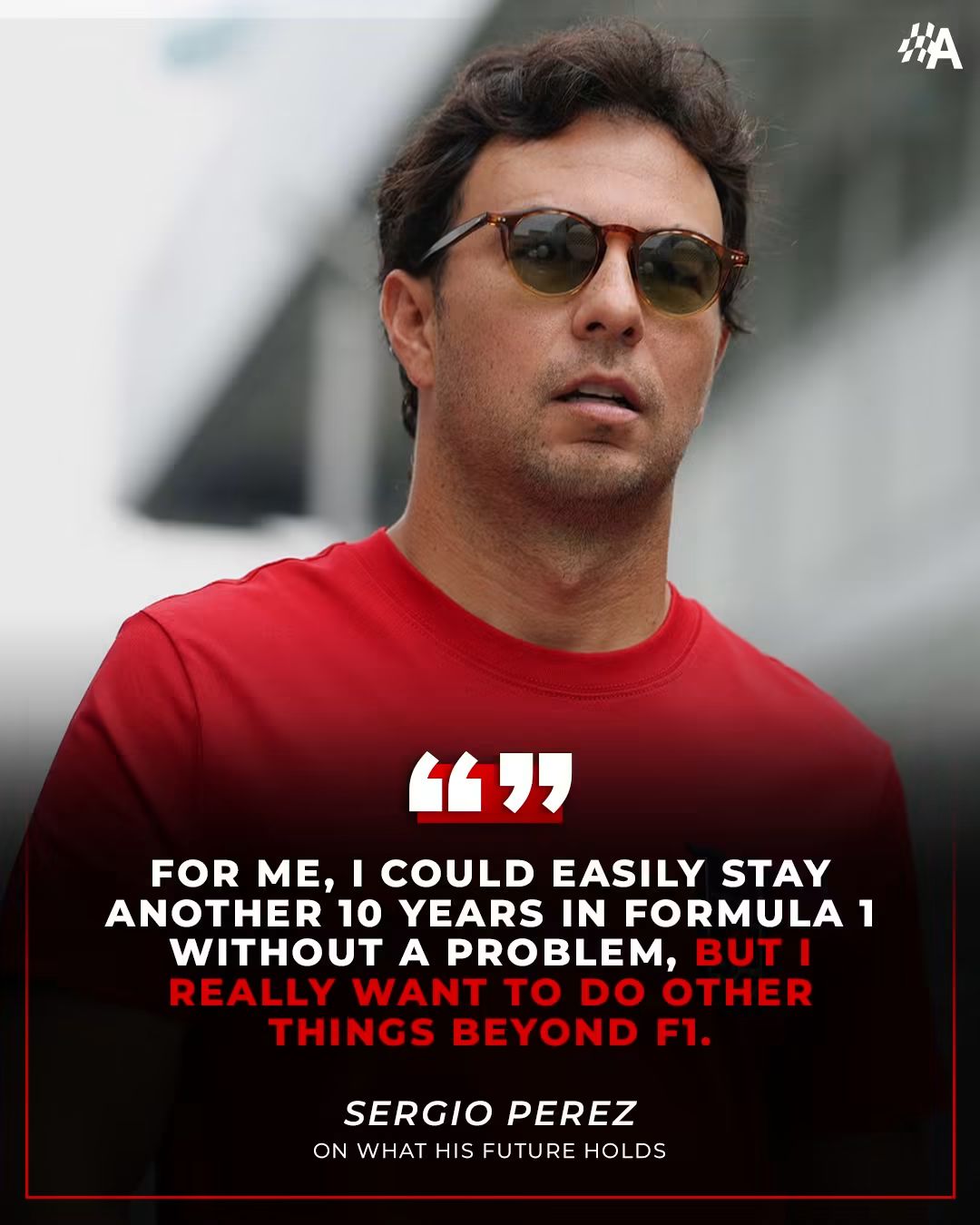
Sergio Pérez has returned to the Formula 1 grid with a quiet determination that feels different from his Red Bull years. After a full season away in 2025, the Mexican driver is back in 2026 as a founding piece of the new Cadillac team. And while many expected him to treat this chapter as a short farewell tour, Pérez has made one thing unmistakable: he is not ready to walk away just yet.
In recent interviews ahead of his home Grand Prix in Mexico City, where he is set to mark his 300th Formula 1 start, Pérez spoke openly about his future. Physically and mentally, he believes he could keep racing for another decade. The limiting factor, he says, is not the car, the competition, or fading motivation. It is his family.
THE REALITY BEHIND THE COMEBACK
Pérez’s return with Cadillac was never just about adding another name to the grid. After four seasons as Max Verstappen’s teammate at Red Bull, the final year of that partnership ended in disappointment and an abrupt exit. He sat out 2025 entirely. When Cadillac, the new American entrant backed by General Motors, came calling with a multi-year project, Pérez saw something more meaningful than a simple second chance.
He has described the Cadillac program as his last major project in the sport. The contract runs through the end of 2027. Beyond that, options remain open, but Pérez has been careful not to lock himself into a long-term commitment. He wants to see how far the team can climb, and he wants to leave on his own terms, ideally when Cadillac is fighting for more than just midfield scraps.
WHAT FAMILY CHANGES FOR A DRIVER AT 36
At 36, Pérez is not old by modern Formula 1 standards. Fernando Alonso continues to race into his mid-40s with the same hunger that defined his championship years. Pérez understands that drive completely. He has said he could stay another ten years without physical issues. The difference is the stage of life his children are entering.
With four kids and a wife, Carola Martínez, who has supported the relentless travel of an F1 career, Pérez is increasingly aware of what the sport costs at home. Constant flights, missed birthdays, and the emotional distance that comes with living on the road are no longer abstract. They are becoming the decisive factor.
This is not a dramatic retirement announcement. It is a measured recognition that the window is finite. “Saying a number is difficult, but it won’t be much longer,” he has noted. The message is clear: the end is closer than the beginning, even if the exact date remains unknown.
WHY THIS MATTERS FOR CADILLAC AND THE WIDER GRID
Cadillac’s first season has been a typical new-team struggle. Points have been hard to come by. Reliability and pace still lag behind the established midfield. Having an experienced, race-winning driver like Pérez on the books gives the American outfit credibility and valuable development feedback. Losing him after 2027, or even earlier if the project stalls, would leave a significant gap in both performance and leadership.
For the broader Formula 1 landscape, Pérez’s situation highlights a quiet shift. The sport continues to attract younger talent, yet experienced drivers still play a critical role in building new teams and stabilizing midfield outfits. If Pérez steps away in the next few years, it opens a seat that could go to a rising star or another veteran looking for one final project. It also removes one of the most popular Mexican drivers from the calendar at a time when F1 is actively growing its fan base in Latin America.
The Mexican Grand Prix itself gains extra weight. Reaching 300 starts in front of his home crowd is more than a personal milestone. It becomes a celebration of longevity in a sport that rarely allows careers to end cleanly. Fans who have followed him since his early days at Sauber and Force India will treat the weekend as both a party and a possible preview of the final chapters.
THE BIGGER PICTURE: MOTIVATION VERSUS LIFE BALANCE
Pérez has been careful to stress that he still loves racing. The Cadillac project has re-energized him. Building something from the ground up offers a different kind of satisfaction than fighting for podiums in a dominant car. That motivation is real and currently strong enough to keep him fully committed through at least 2027.
Yet the honesty about family marks a mature evolution. Many drivers talk about life after racing only after the decision has already been forced on them. Pérez is doing the opposite. He is acknowledging the trade-offs while he still has the performance and the opportunity to choose the timing.
Predictions in Formula 1 are always risky. Cadillac’s rate of progress will influence how long Pérez stays engaged. A sudden jump in competitiveness could extend his interest. Persistent struggle could accelerate the desire to prioritize life outside the cockpit. Either way, the decision will not be driven by speed alone.
WHAT COMES NEXT
For now, the focus remains on the present. The United States Grand Prix and then the home race in Mexico City will give Pérez two high-profile platforms to show what he and Cadillac can still deliver. Beyond that, the 2027 season will likely determine the next chapter.
Sergio Pérez is not ready to walk away from Formula 1. He has the will, the experience, and a project that still excites him. But he has also drawn a clear line. When the balance between the passion of racing and the pull of family tips too far, he will step back. And when that moment arrives, he wants to leave a team that is stronger than the one he joined.
In a sport obsessed with the next young talent and the next technical revolution, Pérez’s measured approach offers something rarer: a driver who understands both the value of staying and the wisdom of knowing when to go.