Lewis Hamilton has built a reputation that extends far beyond his achievements on the Formula 1 circuit. The seven-time world champion is known not only for his extraordinary racing career but also for his bold fashion choices, high-profile lifestyle, and ability to attract attention wherever he goes.
Now, a previously reported remark attributed to former Formula 1 team principal Otmar Szafnauer has resurfaced online, sparking fresh debate among fans about Hamilton’s approach to the spotlight.
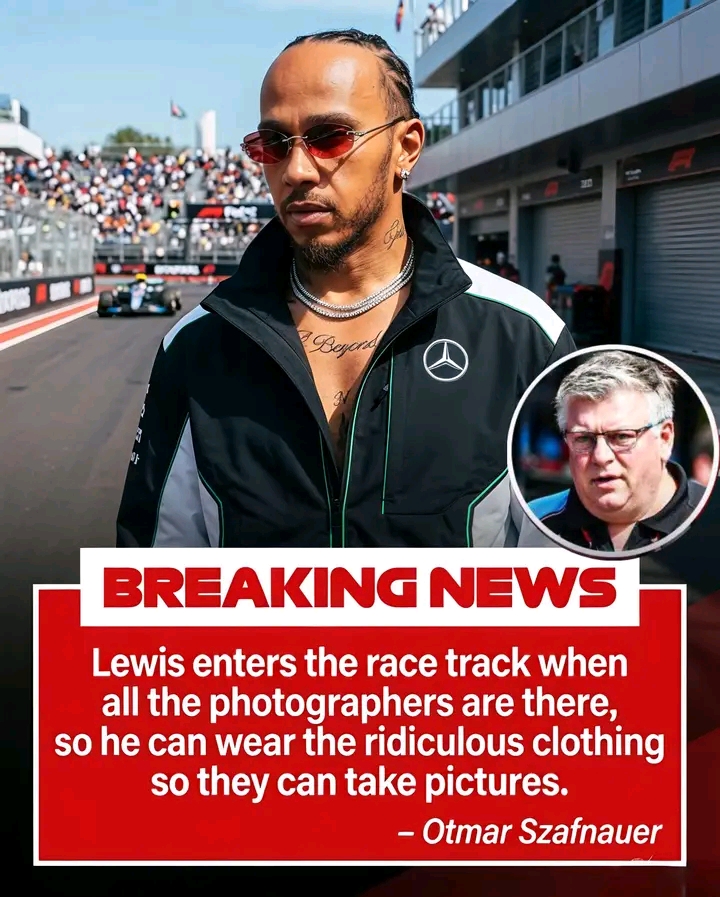
Szafnauer was quoted as saying that Hamilton would arrive at the race track when photographers were present so he could wear eye-catching outfits and have his pictures taken. The comment has divided opinion, with some fans viewing it as criticism of Hamilton’s celebrity status, while others believe it simply highlights the driver’s understanding of how to manage his public image.
Whatever the intention behind the remark, it raises an interesting question about the relationship between Formula 1, celebrity culture, and the modern driver’s responsibility to build a personal brand.
THE QUOTE THAT HAS FANS TALKING
The comment attributed to Szafnauer has gained renewed attention because Hamilton has always been one of the most visible personalities in Formula 1.
Unlike many drivers from previous generations, Hamilton has embraced the world of fashion and entertainment alongside his racing career. His appearances at major fashion events, partnerships with global brands, and distinctive paddock outfits have helped turn him into a global celebrity.
For supporters, that is part of what makes Hamilton unique. They argue that Formula 1 drivers are no longer expected to remain anonymous figures who only appear on television during race weekends. The sport has evolved into a global entertainment platform, and Hamilton has arguably been one of the most successful drivers at taking advantage of that transformation.
Critics, however, have sometimes questioned whether the attention surrounding his lifestyle distracts from his sporting achievements.
That debate is unlikely to disappear anytime soon.
LEWIS HAMILTON HAS ALWAYS UNDERSTOOD THE POWER OF IMAGE
Whether fans agree with his fashion choices or not, there is little doubt that Hamilton understands the importance of personal branding.
Formula 1 is a sport where image matters. Drivers are constantly surrounded by cameras, sponsors, journalists, photographers, and millions of fans watching from around the world. Every appearance can become a headline, and every social media post can generate international discussion.
Hamilton has consistently used that environment to his advantage.
His arrival at the circuit can sometimes attract almost as much attention as the racing itself. That may frustrate some traditionalists, but from a marketing perspective, it is difficult to argue with the results.
Hamilton’s global profile has helped Formula 1 reach audiences that might not previously have followed the sport. His influence has extended into fashion, music, film, and popular culture, making him one of the most recognizable athletes of his generation.
In that sense, the controversial remark attributed to Szafnauer could be interpreted in two very different ways. It can be seen as a criticism of Hamilton’s desire for attention, or as an acknowledgment that Hamilton understands exactly how the modern media ecosystem works.
THE BIGGER QUESTION IS WHETHER FAME HELPS OR HURTS A DRIVER
The real issue goes beyond Hamilton’s clothing.
Formula 1 drivers operate in an environment where commercial value is increasingly important. Teams need sponsors, sponsors need exposure, and the sport itself needs personalities capable of attracting new audiences.
Drivers who develop strong personal brands can become valuable assets to their teams and the championship as a whole.
Hamilton is arguably the clearest example of this phenomenon.
His enormous following means that anything associated with him can receive significant attention. Whether he is celebrating a victory, arriving at the paddock, attending a fashion event, or speaking about an issue outside motorsport, his actions can generate headlines.
That visibility can benefit Formula 1 because it keeps the sport in the public conversation even when cars are not on track.
At the same time, there is a potential downside. When a driver becomes such a massive celebrity, every decision is analyzed. Fashion choices can become news stories. Social media activity can become controversial. Personal opinions can generate debates that have nothing to do with racing.
Hamilton has learned to operate within that environment better than almost anyone.
WHY THE COMMENT MATTERS IN MODERN FORMULA 1
The resurfacing of Szafnauer’s remark is interesting because it highlights how much Formula 1 has changed.
Drivers are no longer simply athletes competing for points and trophies. They are also entertainers, influencers, brand ambassadors, and global personalities.
The modern F1 paddock is increasingly connected to Hollywood, fashion, music, and social media. The sport’s popularity has expanded significantly, particularly among younger audiences, and personalities like Hamilton have played a major role in that growth.
From this perspective, arriving at the circuit in a memorable outfit is not necessarily a distraction from the sport. It can be part of the broader entertainment package that makes Formula 1 attractive to millions of fans.
The key question is whether the driver’s performance on track matches the level of attention generated away from it.
For Hamilton, his record speaks for itself.
Seven world championships, more than 100 Grand Prix victories, and numerous records have already established his sporting legacy. That gives him considerable freedom to express himself in ways that previous generations of drivers may not have been able to.
HAMILTON’S FASHION HAS BECOME PART OF HIS IDENTITY
For years, Hamilton has treated fashion as an important part of his identity.
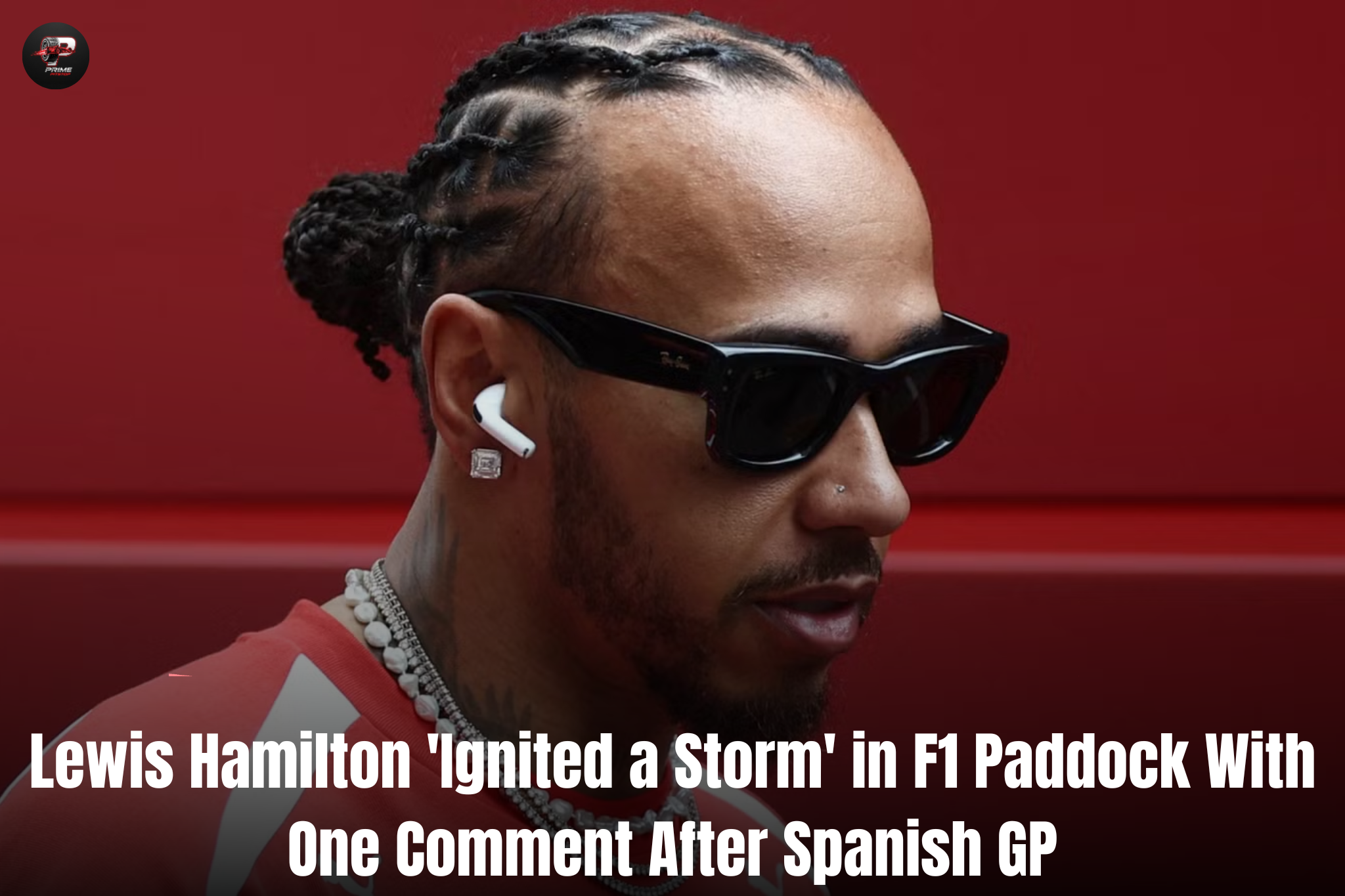
His paddock appearances often feature bold designs, unconventional combinations, and outfits that deliberately challenge traditional expectations of how a racing driver should look.
Some fans love it. Others do not.
But the most important point is that Hamilton has made the style his own.
In a sport where drivers can sometimes appear interchangeable to casual viewers, individuality can be a powerful tool. Hamilton’s distinctive appearance helps reinforce his identity and makes him immediately recognizable.
That has obvious commercial value.
Brands want to work with personalities who command attention, and Hamilton’s ability to generate discussion makes him attractive to companies looking to reach audiences beyond traditional motorsport fans.
THE IMPACT ON THE F1 GRID
Hamilton’s influence also affects his fellow drivers.
The current generation of F1 competitors operates in a world where personal branding is almost unavoidable. Drivers are expected to engage with fans on social media, participate in promotional campaigns, and build identities beyond the cockpit.
Hamilton helped accelerate that shift.
Younger drivers now have greater freedom to express their personalities, experiment with fashion, and develop their own brands. The sport is increasingly comfortable with drivers being individuals rather than simply representatives of their teams.
That evolution can be beneficial for the entire grid.
A more diverse range of personalities gives fans more reasons to follow individual drivers, while teams can use those personalities to strengthen their commercial appeal.
However, it also creates a new challenge. Drivers must find the right balance between being visible and maintaining focus on performance.
Ultimately, no amount of fashion or social media attention can compensate for poor results on the track.
COULD THIS EVER BECOME A PROBLEM FOR HAMILTON?
The answer depends largely on performance.
If a driver is winning races and fighting for championships, bold fashion choices are usually celebrated as part of their personality. But if results decline, the same behavior can be interpreted differently.
Critics may begin to argue that the driver is more interested in celebrity status than competition.
That is the risk that comes with becoming a global icon.
Hamilton has faced versions of this criticism throughout his career, particularly during periods when his performance was not at the level expected of a seven-time world champion. Yet he has repeatedly demonstrated that he remains intensely competitive.
The strongest response to critics has always been delivered on the circuit.
If Hamilton continues to perform at a high level, his fashion choices will likely remain a harmless and entertaining part of his public persona.
THE CHAMPIONSHIP IMPACT IS INDIRECT BUT SIGNIFICANT
At first glance, a discussion about Hamilton’s clothing appears to have little connection to the Formula 1 championship.
However, the relationship is more significant than it might seem.
The popularity of individual drivers influences the commercial strength of teams and the overall growth of the sport. A highly marketable driver can attract sponsors, increase media attention, and expand the audience that follows the championship.
Hamilton’s global profile therefore has value beyond his individual results.
For his team, having a driver capable of generating headlines can be a major commercial advantage. For Formula 1, having recognizable personalities helps create storylines that keep fans engaged throughout the season.
The championship is ultimately decided by lap times and points, but the business surrounding it is powered by personalities.
Hamilton understands that better than most.
MY TAKE ON SZAFNAUER’S REMARK
The statement attributed to Szafnauer is certainly provocative, but it should be viewed in context.
It is possible to interpret the comment as a criticism of Hamilton’s desire for attention. It is equally possible to see it as an observation about a driver who understands the media better than most of his competitors.
Personally, I believe Hamilton’s ability to attract attention is one of his greatest strengths.
Formula 1 needs personalities. It needs drivers who create conversations, generate headlines, and bring new audiences into the sport.
Hamilton has done exactly that.
Of course, there is nothing wrong with debating whether a particular outfit is stylish or excessive. Fashion is subjective. But reducing Hamilton’s public presence to a desire for photographs ignores the much bigger picture.
He has spent years building a global identity that has helped him become one of the most influential figures in modern motorsport.
WHAT HAPPENS NEXT FOR HAMILTON?
The most interesting part of Hamilton’s story is not what he wears when he arrives at the circuit. It is what he does once the helmet goes on.
As his career moves into its later stages, every season carries additional significance. His legacy is already secure, but the desire to add more victories and potentially another championship remains a major part of his competitive motivation.
That means the ultimate measure of Hamilton will always be his performance.
If he continues to fight at the front, his fashion, celebrity status, and media presence will remain part of the spectacle that surrounds one of Formula 1’s biggest stars.
And if he struggles, the same spotlight that helped elevate him will inevitably become more critical.
That is the price of being one of the most famous drivers in the history of the sport.
FINAL VERDICT
Otmar Szafnauer’s reported comment may have been intended as criticism, but it also unintentionally highlights one of Lewis Hamilton’s defining characteristics: he understands how to command attention.
Love his style or dislike it, Hamilton has mastered the art of making an entrance.
But the real reason he remains one of Formula 1’s biggest attractions is not the outfit he wears before a race. It is the extraordinary career that has made people care about what he does both inside and outside the cockpit.
In modern Formula 1, where sport and entertainment increasingly overlap, Hamilton’s ability to turn a simple paddock arrival into a talking point is not necessarily a weakness.
It may simply be another example of why his influence extends far beyond the race track.