Audi has become the latest manufacturer to shift its position on Formula 1’s long-term engine future, withdrawing its opposition to a potential return of V8 twin-turbo power units around 2030. The change of heart, reported in the wake of technical problems at the Bahrain Grand Prix in Malaysia, removes one of the final major obstacles to a concept that FIA president Mohammed Ben Sulayem has been actively promoting.
The development signals growing acceptance that the current regulatory direction has created more problems than it has solved.
### WHY THE 2026 REGULATIONS ARE UNDER INTENSE PRESSURE
The 2026 power unit rules were designed to increase the role of electrification and improve sustainability messaging. In practice they have drawn heavy criticism from drivers, teams and observers. Battery deployment characteristics, energy management complexity and the artificial nature of some on-track behaviour have been frequent talking points throughout the season.
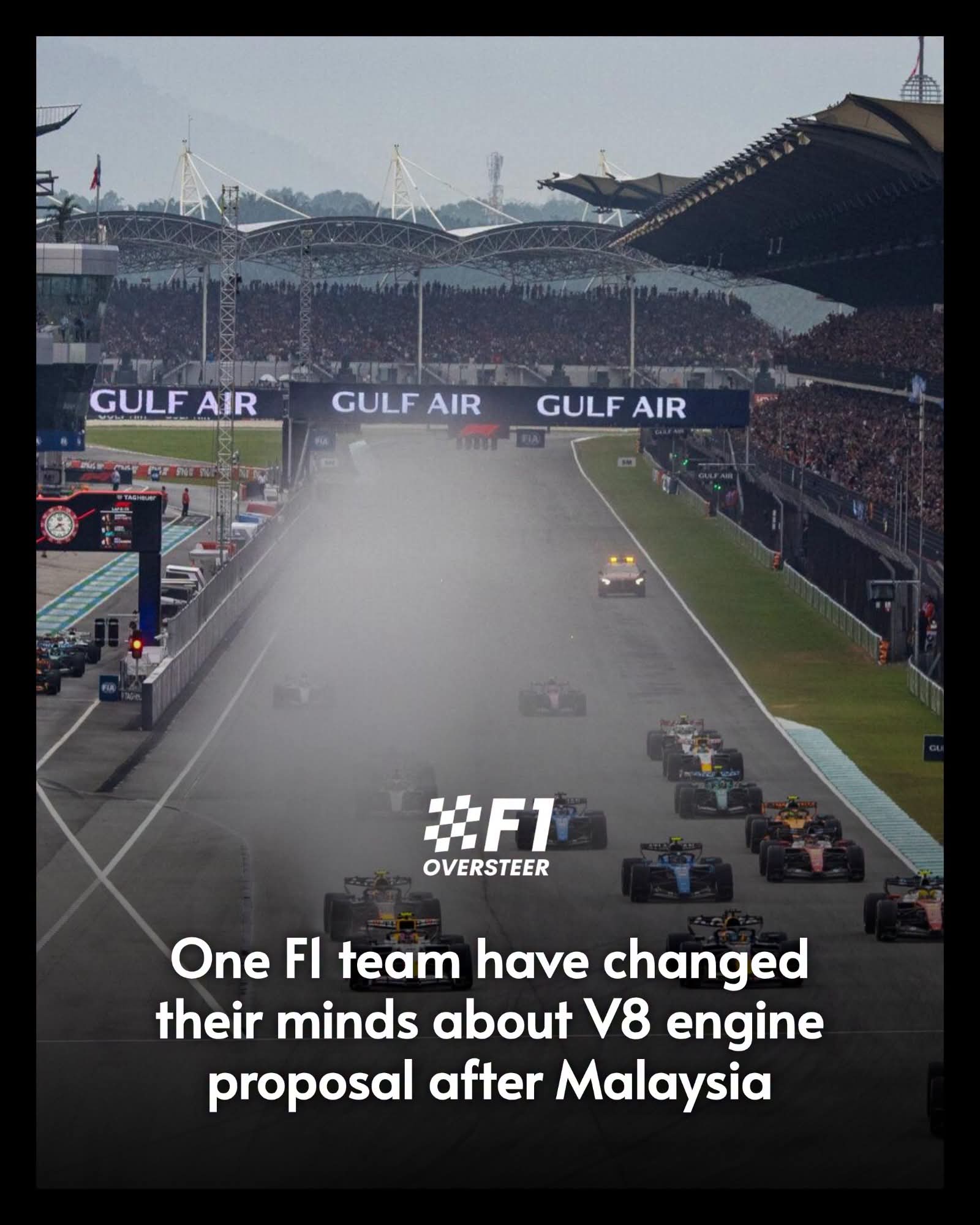
Those concerns reached a new peak in Malaysia, where multiple cars suffered software-related issues while circulating at low speed in wet conditions on the way to the grid. The spectacle of modern Formula 1 cars struggling with basic functionality in the rain has strengthened the argument that the technical direction needs fundamental re-examination.
### AUDI’S PREVIOUS STANCE AND WHY IT MATTERED
Audi entered Formula 1 with a clear emphasis on electrification and advanced hybrid technology. The manufacturer had been one of the most consistent voices against any rapid retreat from that philosophy, including opposition to the planned 2027 shift toward a 60/40 internal-combustion-to-electric split. Cost-cap implications of major power-unit redesigns were also cited as a practical concern.
Because manufacturer consensus carries significant weight in Formula 1’s governance processes, Audi’s resistance had been a meaningful barrier to more radical long-term proposals.
### THE TWIN-TURBO COMPROMISE THAT CHANGED THE CONVERSATION
According to reporting by journalist Ralf Bach, Audi has now accepted the principle of a twin-turbo V8 architecture for the next generation of engines. The key factor appears to be marketability. A twin-turbo V8 running advanced bio-fuel blends can still be presented as a progressive, lower-carbon technology while delivering the sound, response and character that many believe the sport has lost.
Bach noted that the manufacturer had concluded it could “somehow sell” the concept once the twin-turbo and sustainable-fuel elements were included. The difficult scenes in Malaysia are understood to have accelerated the internal rethink.
### WHAT A V8 RETURN WOULD ACTUALLY MEAN
A move back toward high-revving or high-character V8 engines would represent one of the most significant technical resets in modern Formula 1 history. Supporters argue it would restore the emotional connection between the cars and the audience, simplify certain aspects of energy management, and reduce the perception that races are being decided by software and deployment maps.
Critics will counter that abandoning the electrification pathway risks undermining the sport’s environmental credentials and the investments manufacturers have already made. The inclusion of advanced sustainable fuels is clearly intended to bridge that gap.
### MANUFACTURER POLITICS AND THE ROAD TO 2030
Ferrari has also expressed reservations about the 2027 60/40 split, while most other power-unit suppliers have been more supportive of greater internal-combustion emphasis. With Audi now reportedly aligned on a longer-term V8 concept, the balance of opinion inside the manufacturer group appears to be shifting.
Any formal regulation change would still require extensive negotiation, cost analysis and approval through the FIA and Formula 1’s governance structures. The fact that discussions have reached this stage, however, shows how far sentiment has moved in a single season.
### THE BIGGER PICTURE FOR FORMULA 1’S IDENTITY
Engine formulas do more than define performance. They shape the sound, the spectacle and the public’s emotional relationship with the sport. The hybrid era delivered impressive efficiency and technological relevance, yet many fans and drivers feel something essential has been lost in the process.
The emerging V8 conversation is less about nostalgia for its own sake and more about whether Formula 1 can recover a stronger sense of identity without abandoning its sustainability commitments. Audi’s change of position suggests that even manufacturers who arrived with an electrification-first mindset are beginning to accept that the current path is unsustainable in sporting terms.
Malaysia may be remembered as the weekend that crystallised the problem. The response now taking shape could define the sound and character of Formula 1 into the next decade.