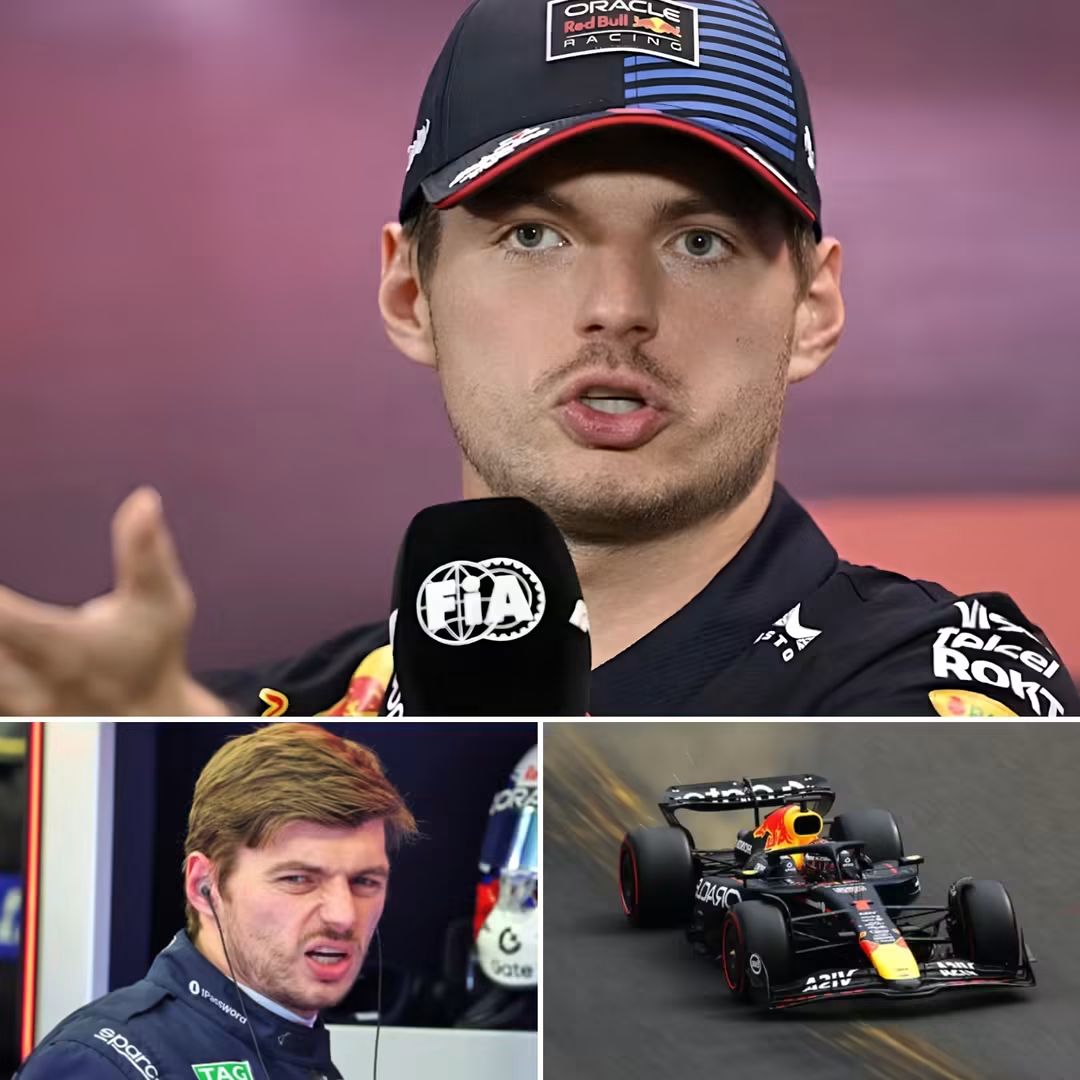
Max Verstappen does not do vague feelings. When the four-time world champion says he started to realize something was not right with his Red Bull, it means the data, the seat-of-the-pants feedback, and the race results had finally lined up in a way that could no longer be ignored.
In the middle of a season that began with dominance and slowly turned into a fight for survival, Verstappen noticed aerodynamic shifts on corner entry, unexpected changes in ride height, and a balance that simply did not match the previous year’s car. He raised it with the engineers. The team confirmed what he had seen. After the Italian Grand Prix at Monza, every planned upgrade for the rest of the year was effectively thrown out. Red Bull started from scratch.
That moment remains one of the clearest examples of how a driver at the absolute peak of his powers can force a technical reset that the factory itself had not yet fully diagnosed.
THE MOMENT THE GRAPHS TOLD THE TRUTH
Verstappen has described looking at the telemetry and seeing lines that did not exist on the previous car. The aero platform was moving differently under load. Ride heights were shifting in ways that affected the floor’s performance. The car still had enough raw speed early in the year to win races, so the issues were easy to paper over. Once rivals closed the gap, those same issues became the difference between fighting for wins and fighting for second or third.
What made the story striking was not just the diagnosis. It was that the driver spotted it first. Engineers live in the data every day. Verstappen lives in the car. When those two perspectives finally aligned after Monza, the team had no choice but to abandon the development path they had been following.
That decision carried real cost. Development time is the most precious resource in Formula 1. Throwing away planned parts means months of work and wind-tunnel hours are lost. It also means the car you race for the rest of the season is a compromised version of what it could have been.
WHY THIS STORY STILL MATTERS LONG AFTER THE TITLE WAS WON
Red Bull and Verstappen still delivered the championship that year. That fact has sometimes been used to downplay how serious the underlying problems were. The truth is more complicated. Winning while the car is fundamentally off-balance is an extraordinary achievement, but it also masks the depth of the technical debt being built up.
The same sensitivity that allowed Verstappen to identify the problem early is the same sensitivity that makes him brutal when the car is not right. Years later, under completely new regulations, echoes of that same complaint have returned. Verstappen has spoken repeatedly about performance that degrades through a session or a race — something he has described as “car degradation” rather than simple tyre wear. Team principal Laurent Mekies has acknowledged the issue exists, that it is not new, and that a complete fix is unlikely before the following season.
When a driver of Verstappen’s calibre keeps returning to the same theme across different car generations, it stops being a one-off development glitch and becomes a characteristic of how the team designs and develops its cars. That has consequences for everyone involved.
IMPACT ON THE DRIVER, THE TEAM, AND THE CHAMPIONSHIP PICTURE
For Verstappen himself, these periods create a unique kind of frustration. He has said openly that he can accept finishing seventh or eighth if the car is simply not fast enough. What he struggles with is when the car feels wrong under him and the team cannot immediately explain or fix it. That combination erodes confidence in the process even when the results are still respectable.
For the team, the pressure is enormous. Red Bull’s entire modern identity was built on giving Verstappen the best possible car and letting him deliver. When that car develops mysterious behaviours that only the driver fully feels, the organisation is forced into a difficult position: trust the driver’s feedback completely, or risk appearing slow to react. History shows they usually choose the former, but the delay between recognition and solution can still cost races and, in tighter seasons, titles.
The broader championship impact is obvious. A team that has to “start from scratch” mid-season loses ground that is almost impossible to recover in the same year. Rivals who are on a clean development path can stretch their advantage. In seasons where the field is closer, that lost time can decide who fights for the title and who is left explaining why the car never quite came good.
THE BIGGER INDUSTRY LESSON
Formula 1 teams talk constantly about the importance of driver feedback. In practice, that feedback is often filtered through simulation models, correlation exercises, and organisational inertia. Verstappen’s intervention showed what happens when a driver with both the technical understanding and the political weight to force change decides the models are incomplete.
It also highlighted a structural tension that still exists. The more sophisticated the tools become, the more some teams risk trusting the tools over the person who has to drive the result. Verstappen has never been willing to accept that hierarchy. His willingness to say the quiet part out loud — that something was wrong, that the planned updates were the wrong direction, that the team needed to reset — remains rare at this level.
WHAT COMES NEXT
The underlying issues Verstappen first flagged have not fully disappeared. Under the current regulations the symptoms look different, but the pattern of performance that drops away through a session or race continues to surface. Red Bull has made progress in understanding it. A complete solution, by the team’s own admission, is still some way off.
That reality forces an uncomfortable question for the organisation: how much of the next car’s concept will be shaped by finally solving the problems the current generation cannot fully fix? And how long will a driver of Verstappen’s standards tolerate a car that still carries the DNA of those earlier compromises?
The moment he first realised something was not right was never just about one season’s development path. It was an early warning that the relationship between driver sensitivity and technical process at Red Bull was more fragile than the results suggested. Years later, that warning still echoes every time the car starts to fall away under him.