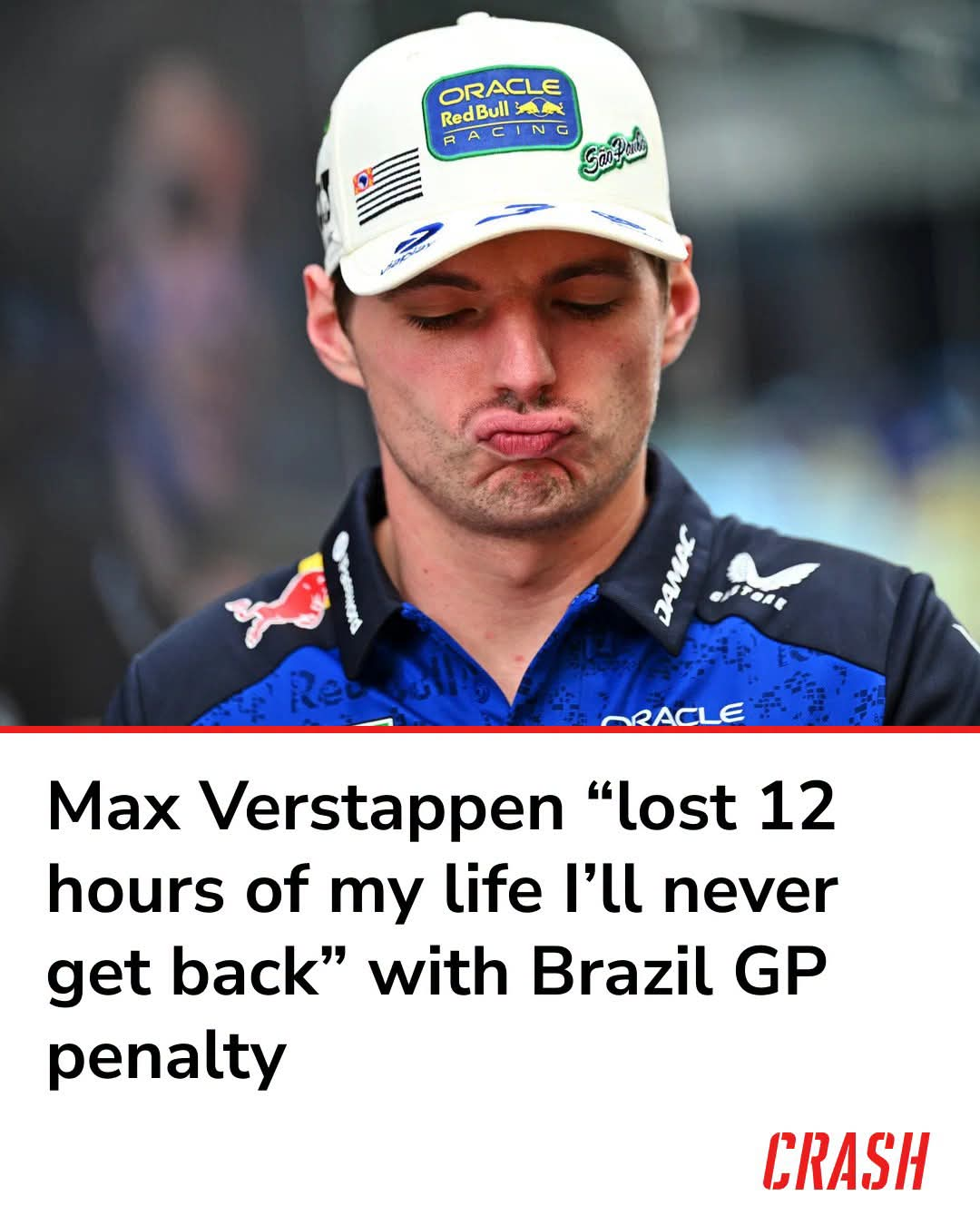
Max Verstappen has delivered a brutally honest assessment of his frustrating Brazilian Grand Prix qualifying experience after admitting that his substantial grid penalty effectively robbed him of any meaningful enjoyment during the rain-soaked session at Interlagos. The four-time Formula 1 world champion was left questioning the value of participating in an exhausting qualifying session after already knowing that he would start Sunday’s race from the back of the grid.
Verstappen’s frustration comes after Red Bull introduced an entirely new power unit into his RB22, triggering a back-of-the-grid penalty for the Sao Paulo Grand Prix. Although the Dutchman progressed into Q2 during Saturday’s heavily delayed qualifying, he ultimately decided against continuing his participation, choosing to preserve valuable wet-weather tyres ahead of Sunday’s race.
The decision reflects a growing concern for Verstappen, who believes Formula 1’s current overtaking limitations could make recovering positions considerably more difficult than during his previous spectacular comeback at Interlagos.
VERSTAPPEN DELIVERS BRUTAL VERDICT ON BRAZIL GP QUALIFYING
Verstappen made little effort to hide his frustration after an exhausting qualifying session interrupted by torrential rain and multiple delays.
The Dutchman revealed that he had spent part of the waiting period watching Nottingham Forest take on Manchester City in the Premier League.
He explained that the football match was already 3-1 when he returned to the car, adding that he had witnessed an excellent goal immediately before getting back into action.
However, his mood quickly returned to frustration when discussing the consequences of his grid penalty.
Verstappen admitted that he had effectively lost 12 hours of his life that he would never recover, highlighting how little enjoyment he had experienced during the session.
His comments were particularly revealing because they demonstrated the psychological challenge of participating in qualifying when the result carries limited consequences for Sunday’s starting position.
For a driver accustomed to competing for pole positions and victories, the experience was understandably frustrating.
WHY MAX VERSTAPPEN DECIDED TO ABANDON Q2
Although Verstappen managed to reach Q2, the Red Bull driver eventually decided that continuing to push during qualifying was unnecessary.
With his back-of-the-grid penalty already confirmed, there was little incentive to risk damaging the car or exhausting his remaining wet-weather tyres.
The decision was also influenced by the possibility of rain affecting Sunday’s Grand Prix.
Wet tyres could become extremely valuable if conditions deteriorate during the race, particularly for a driver attempting to recover positions from the rear of the field.
Verstappen therefore focused on completing his laps without taking unnecessary risks.
He explained that he was not fighting for anything during qualifying and had already turned his attention towards Sunday’s race.
The approach demonstrated a practical understanding of the circumstances surrounding his penalty, even though it left him frustrated with the overall experience.
VERSTAPPEN QUESTIONS WHETHER INTERLAGOS STILL OFFERS THE SAME OVERTAKING OPPORTUNITIES
One of Verstappen’s biggest concerns concerns the current Formula 1 overtaking system.
The Dutchman believes the absence of traditional DRS and the limitations surrounding the overtake mode could make passing significantly more difficult at Interlagos.
According to Verstappen, drivers are now heavily dependent on battery deployment, particularly along the circuit’s long straight.
When several competitors are using their electrical energy simultaneously, the speed differences between cars become smaller.
That could make it difficult for Verstappen to gain positions even if his Red Bull possesses competitive pace.
His assessment suggests that the recovery challenge will depend heavily on strategic timing, energy management and finding opportunities when competitors are unable to defend effectively.
The situation is particularly frustrating because Interlagos has traditionally offered exciting overtaking opportunities, especially around the opening corners and the approach to Turn 1.
However, Verstappen believes the current regulations could reduce the effectiveness of those opportunities.
THE 2024 BRAZILIAN GP COMEBACK WILL BE DIFFICULT TO REPEAT
Verstappen’s concerns are particularly interesting because of his extraordinary performance at Interlagos in 2024.
During that race, the Dutchman started from 17th position and produced a remarkable drive through the field to claim victory in difficult wet conditions.
That performance became one of the defining moments of his championship campaign, demonstrating his ability to combine exceptional pace with intelligent race management.
Naturally, comparisons have emerged ahead of Sunday’s race.
However, Verstappen himself has played down the possibility of repeating that achievement.
He believes the current overtaking limitations could make the recovery considerably more difficult than it was during his previous Interlagos triumph.
The difference is important.
A driver can possess exceptional race pace and still struggle to overtake when the cars ahead have sufficient battery energy to defend their positions.
Verstappen’s previous success therefore cannot guarantee another victory from the back of the grid.
LANDO NORRIS AND KIMI ANTONELLI HAVE A MAJOR ADVANTAGE
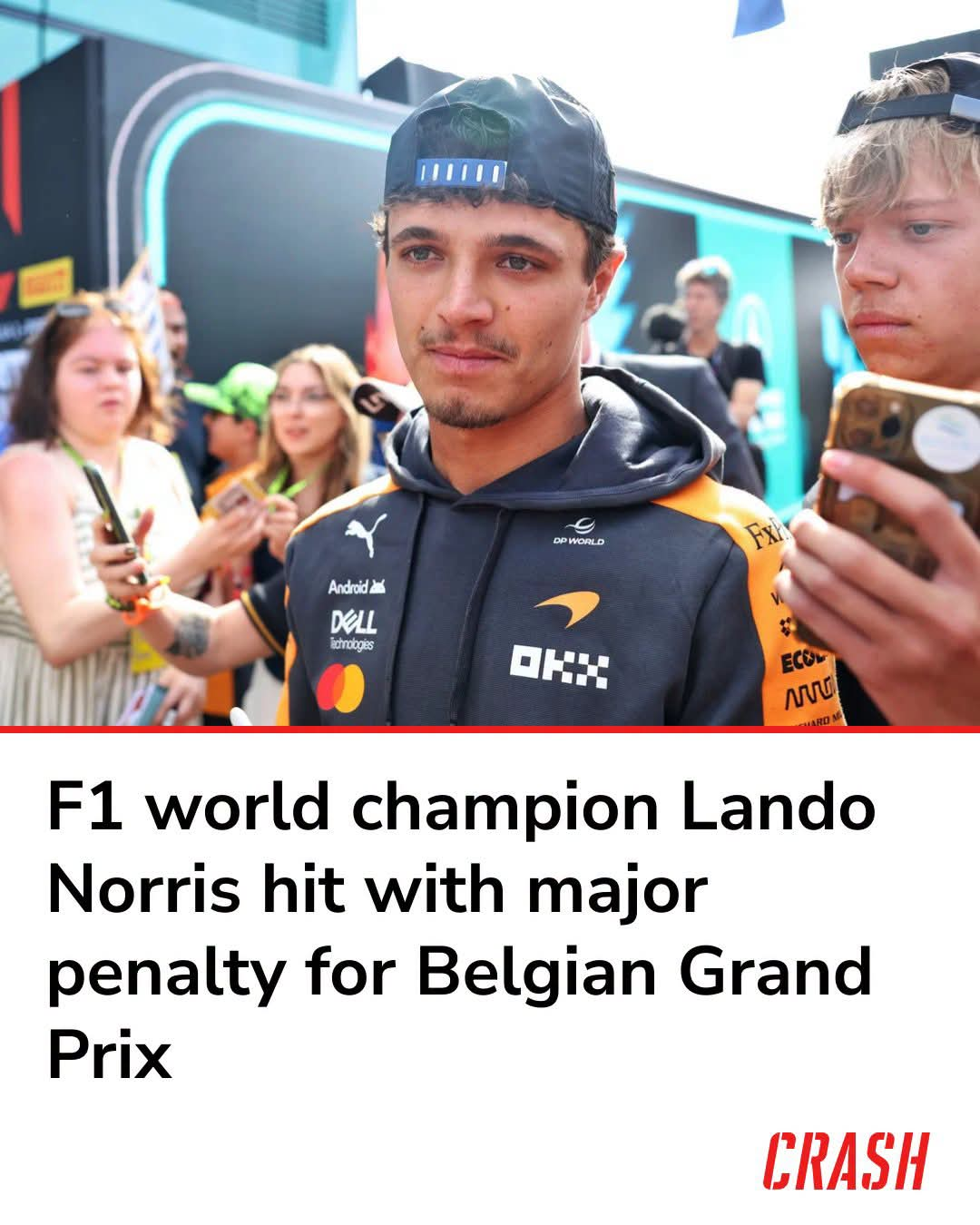
While Verstappen prepares for another recovery challenge, Lando Norris has secured pole position for Sunday’s Brazilian Grand Prix.
The McLaren driver will start ahead of newly crowned world champion Andrea Kimi Antonelli, who occupies the front row for Mercedes.
That starting position gives both drivers an opportunity to establish control over the race before the midfield battles develop.
Norris will be particularly motivated to convert his qualifying performance into a victory, especially with McLaren showing competitive pace throughout the weekend.
Antonelli, meanwhile, will be looking to continue his impressive championship-winning campaign with another strong result.
Their front-row positions could become even more valuable if Verstappen and several other leading drivers struggle to make progress through the field.
However, Interlagos remains a circuit where changing weather conditions can quickly transform the competitive order.
BRAZIL GP COULD BECOME A STRATEGIC NIGHTMARE FOR RED BULL
Red Bull now faces an unusually complicated race strategy.
Verstappen’s penalty means the team cannot rely on a conventional starting position to establish its competitive advantage.
Instead, the priority will be finding ways to maximise his progress while avoiding unnecessary risks.
Tyre management, pit-stop timing and battery deployment could become decisive factors.
If rain arrives, the situation could become even more unpredictable.
Wet conditions would potentially provide Verstappen with additional opportunities to demonstrate his pace, but they would also increase the risks associated with overtaking and tyre selection.
Red Bull must therefore balance aggressive recovery strategies against the possibility of compromising its driver’s race through poor timing or unnecessary incidents.
The team’s experience with Verstappen’s previous comeback performances could prove valuable, but the current circumstances are significantly different.
MAX VERSTAPPEN’S FRUSTRATION REFLECTS A BIGGER F1 REGULATIONS DEBATE
Verstappen’s comments also highlight a broader discussion about the relationship between Formula 1 penalties, qualifying participation and the effectiveness of overtaking.
Grid penalties are designed to discourage teams from exceeding power unit component limits and to maintain the technical framework governing the championship.
However, when multiple drivers receive penalties during the same weekend, qualifying can become less straightforward from a competitive perspective.
Drivers may find themselves participating in sessions without realistic opportunities to improve their starting positions.
That can influence how teams approach tyre allocation, qualifying strategy and the risks they are willing to take.
Verstappen’s frustration therefore extends beyond the inconvenience of starting last.
His comments suggest that the current system can create situations where drivers feel that qualifying has little meaningful value, particularly when penalties have already determined their starting positions.
VERSTAPPEN FACES ANOTHER INTERLAGOS TEST
Despite his frustration, Verstappen remains one of the most dangerous drivers on the grid when conditions become unpredictable.
His ability to manage tyres, identify overtaking opportunities and make rapid decisions could still help Red Bull recover valuable positions.
However, the Dutchman will need more than raw pace to produce another memorable result.
With Norris starting from pole position, Antonelli alongside him and several other competitors occupying favourable positions, Verstappen faces a difficult challenge.
The biggest question is whether Red Bull can provide the strategy and race pace necessary to turn a frustrating qualifying session into a competitive Sunday.
For Verstappen, the Brazilian Grand Prix has already become a weekend he would rather forget.
But if he manages another impressive recovery, the 12 hours he believes he has lost could ultimately become the beginning of another unforgettable Interlagos story.