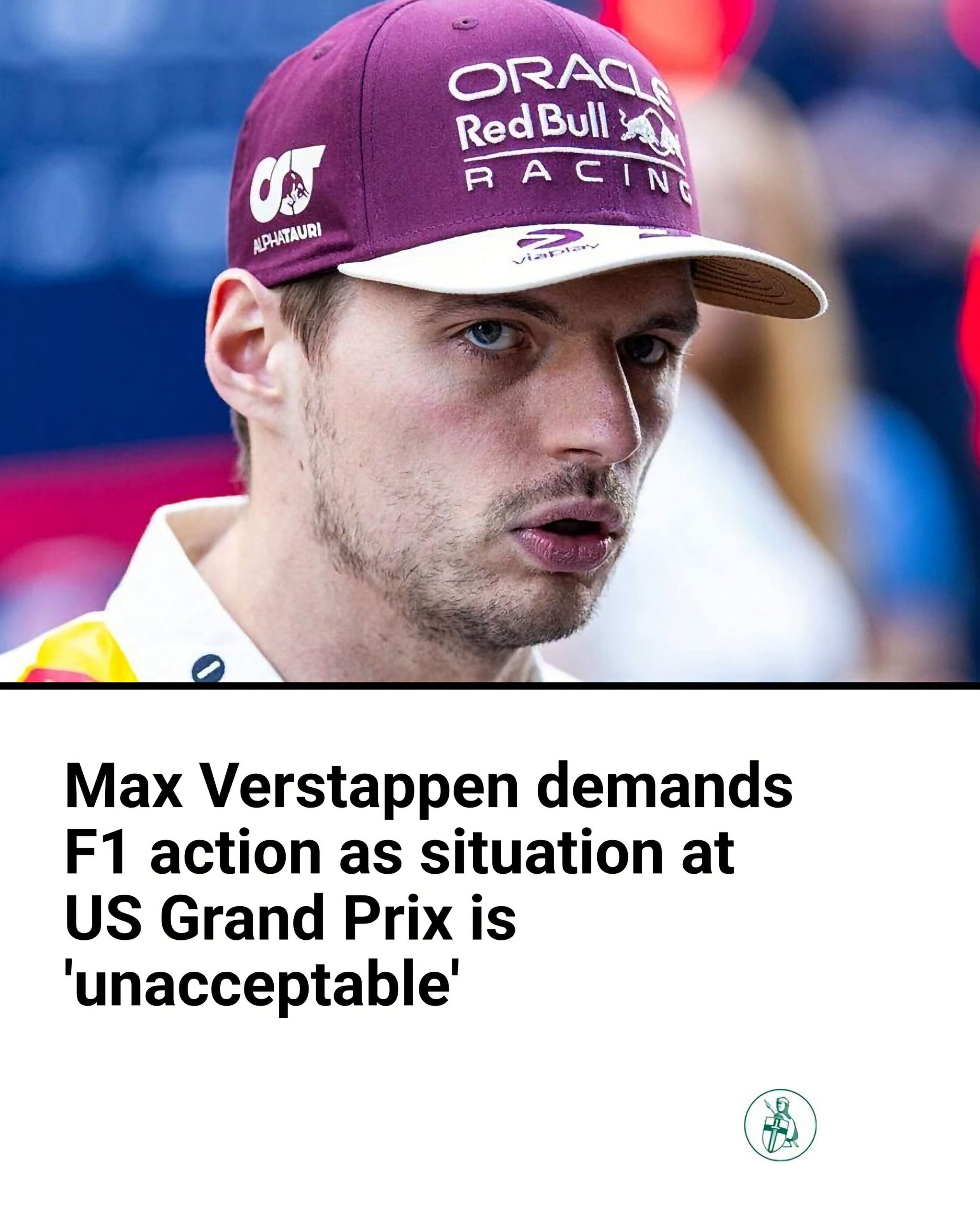
Max Verstappen has called for a complete relaying of the Circuit of the Americas surface, warning that the persistent bumps at the United States Grand Prix venue are causing extreme vertical loads on drivers’ spines and risking long-term health damage. The four-time world champion described the current state of the track as “unacceptable,” despite praising the layout and atmosphere of the Austin facility.
His concerns were publicly backed by Lando Norris, while George Russell suggested mandatory resurfacing standards should be enforced across the calendar.
### VERSTAPPEN DETAILS THE PHYSICAL TOLL
Speaking on media day in Austin, Verstappen made clear his affection for the circuit while drawing a hard line on its condition.
“I love this track, I love this place. It’s one of the best layouts ever and it’s one of the best venues, best cities to be at. But for me, the bumps that we have are unacceptable,” he said.
He revealed that vertical impacts at certain points have exceeded 9G on his spine, far beyond the 5-6G lateral loads typically experienced in high-speed corners. Medical checks, he added, have already shown deterioration at the lower end of his spine. As drivers age, he argued, the cumulative effect of such repeated trauma becomes increasingly serious.
“Especially the older you get you think about that more and more. I can tell you from the checks that I’ve done from my spine, the bottom end doesn’t look that great.”
### PARTIAL FIXES ARE NOT ENOUGH
COTA underwent a significant resurfacing project in 2022 and further work has been carried out this year. Verstappen dismissed these interventions as insufficient. Ground movement beneath the circuit continues to create new irregularities, and recent World Endurance Championship running at the venue confirmed the surface remains “extremely badly bumpy.”
“You can use the excuse that the soil is the problem, but then you should have known that and you need to make sure that you reinforce it more,” he said. “Over time they’ve been grinding a little bit here and there, but you’re just putting a plaster on the big problem. That’s just what’s coming underneath. That’s what you need to actually tackle in the first place. But that means you need to really fully open up the track.”
A full reconstruction would be expensive and time-consuming, he acknowledged, but insisted it is the only lasting solution.
### NORRIS AND RUSSELL ADD THEIR SUPPORT
Lando Norris echoed the physical complaints, revealing that the bumps force drivers to take headache tablets before sessions because of repeated impacts against the headrest. He also noted that the current surface would not meet the tighter tolerances required of newly constructed Formula 1 circuits.
“There’s a lot of places I need to take headache tablets before I go out, simply because it’s so bumpy and you’re hitting your head pretty hard against the headrests,” Norris said. “He’s certainly right.”
George Russell went further, suggesting promoters should be required to resurface tracks every couple of years to maintain acceptable standards. With COTA contracted to host Formula 1 until at least 2034, the pressure for a more permanent fix is likely to grow.
### A GROWING DRIVER WELFARE ISSUE
Modern Formula 1 cars generate enormous forces. When those forces are combined with an uneven surface, the vertical spikes transmitted through the chassis and into the driver’s body become a genuine occupational health concern. Verstappen’s willingness to discuss personal medical findings elevates the issue beyond routine track feedback.
The sport has made significant progress on safety in recent decades, largely focused on impact protection and circuit barriers. Surface quality and the long-term musculoskeletal cost of racing have received less consistent attention. The Austin debate may force a broader conversation about minimum standards and enforcement.
### WHAT HAPPENS NEXT AT COTA
For this weekend the drivers will simply have to manage the conditions. Looking further ahead, the combination of public comments from multiple high-profile drivers and the circuit’s long-term contract creates leverage for meaningful action. A full relaying would represent a major investment, but the alternative — continued high-G spinal loading and accumulating driver complaints — is increasingly difficult to defend.
Verstappen’s message was unambiguous. The layout is excellent. The venue is popular. The bumps, however, are no longer tolerable. Formula 1 and the circuit promoters now face a clear choice between temporary patches and a proper, lasting solution.