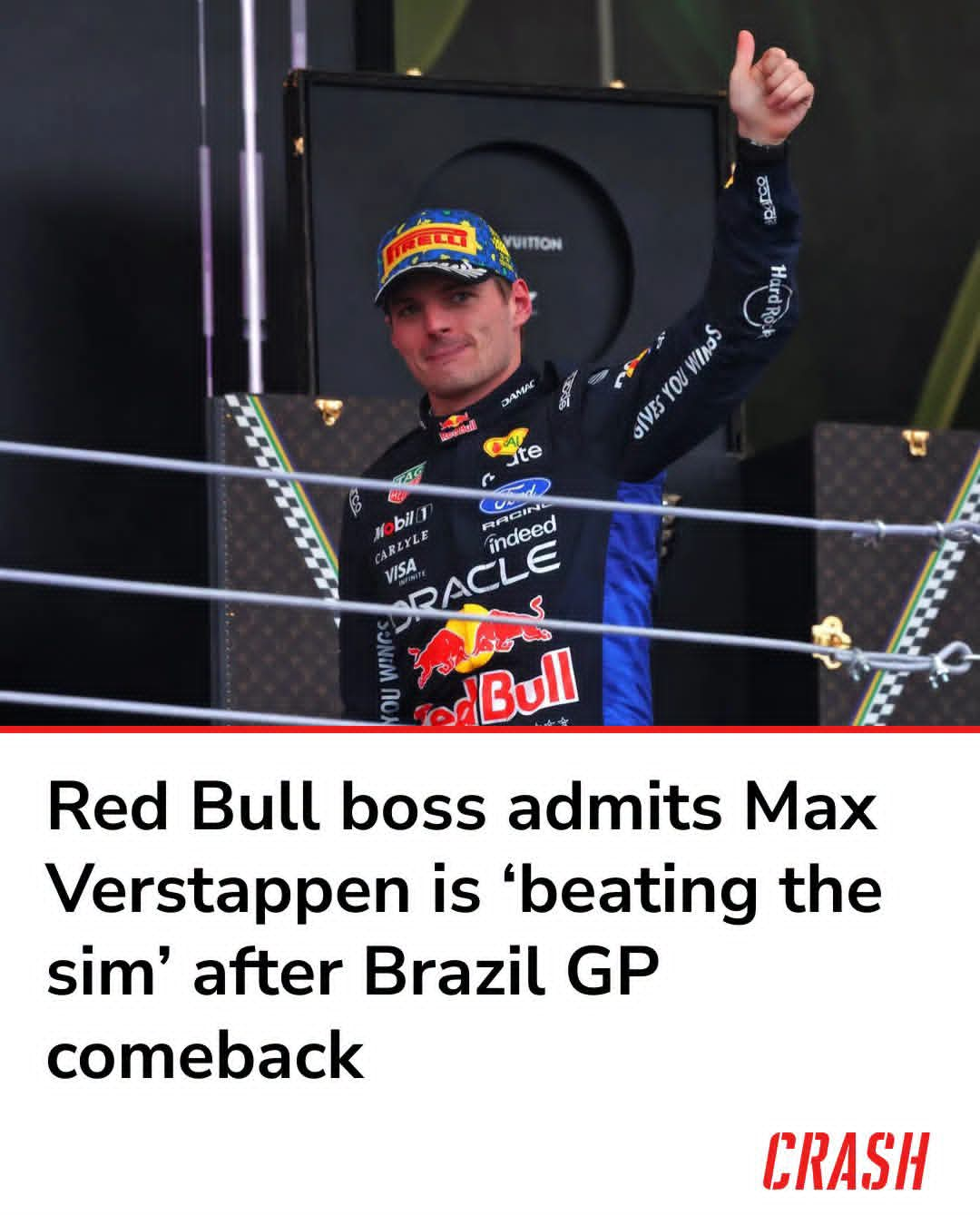
Interlagos once more became the stage for one of Formula 1’s most reliable miracles. Max Verstappen started the 2026 São Paulo Grand Prix from 21st on the grid after a power-unit penalty and finished second, just behind Lando Norris. Red Bull team principal Laurent Mekies made no attempt to hide his astonishment. No simulation the team ran had predicted a climb from the back of the field to the podium, let alone the blistering early charge that gained 14 positions in five laps. Verstappen had simply outperformed the numbers again.
That admission carries weight. Modern Formula 1 teams live and die by data. Simulations shape strategy, set expectations, and often dictate how aggressively a driver can push. When the driver regularly exceeds those models, it reveals something deeper than raw pace. It shows a rare ability to extract performance that the computers cannot fully capture.
WHY INTERLAGOS KEEPS REWARDING VERSTAPPEN
The Brazilian circuit has long favored drivers who thrive in chaos. Elevation changes, a mix of high-speed corners and tight sections, and weather that can turn on a dime create opportunities that pure one-lap pace cannot always unlock. Verstappen has now delivered three consecutive standout recoveries at the track: victory from 17th in the wet in 2024, a podium from the pit lane in 2025, and this latest charge from 21st to second in 2026.
What makes the 2026 drive particularly striking is the context. The 2026 cars, with their new power-unit regulations, were expected to make overtaking harder. Verstappen himself had warned that the long straights and energy deployment characteristics would reduce the closing-speed advantage drivers once enjoyed. Yet he still sliced through the field with clinical efficiency, especially in the opening stint on intermediate tyres when the track was at its most unpredictable.
THE HUMAN ELEMENT THAT SIMULATIONS CANNOT MODEL
Mekies’ comments highlight a fundamental truth about elite motorsport. Simulations are excellent at predicting average outcomes under clean conditions. They struggle with the grey areas: imperfect starts, rapidly changing grip levels, traffic management under pressure, and the split-second decisions that separate a good recovery from a great one.
Verstappen’s start was not perfect. He admitted holding the clutch incorrectly and reacting slowly off the line. Many drivers would have lost momentum and settled into a damage-limitation race. He did the opposite. Within a handful of laps he was already hunting the midfield and podium contenders. That ability to reset instantly and attack is difficult to code into any model.
Later in the race the car’s balance deteriorated after the switch to slicks. Verstappen reported extreme oversteer in high-speed corners and suspected possible damage. Even with a car that no longer felt right, he maintained enough pace and racecraft to secure second place and a double podium for Red Bull alongside Isack Hadjar.
IMPACT ON THE CHAMPIONSHIP AND THE TEAM
The result kept Red Bull firmly in the constructors’ fight and preserved Verstappen’s position as the strongest challenger to the McLaren-led championship battle. More importantly, it reinforced the team’s belief that their driver remains capable of rewriting the expected script when the situation turns messy.
For a team navigating the first full season of new power-unit regulations, such performances provide more than points. They generate confidence. They also send a message to rivals: even when Red Bull starts compromised, Verstappen can still punish any hesitation or mistake further up the order.
Hadjar’s third place added further value. A double podium from a weekend that began with grid penalties demonstrates organisational resilience and the growing strength of the second car. In a championship that often turns on small margins, those extra points matter.
WHAT THIS REVEALS ABOUT THE BROADER SPORT
Formula 1 continues to wrestle with the tension between data-driven precision and the unpredictable human factor. Teams invest heavily in simulation tools, yet the drivers who consistently exceed those tools become the ones who define eras. Verstappen’s repeated ability to do so at Interlagos is not luck. It is a combination of racecraft, adaptability, and an almost stubborn refusal to accept the limitations the models suggest.
The 2026 season has already shown that the new regulations have not eliminated dramatic recovery drives. If anything, the combination of tighter performance windows and still-variable track conditions has created fresh opportunities for the drivers who can think and react faster than the data can update.
LOOKING AHEAD
Red Bull will analyse the balance issues that appeared mid-race and work to understand whether aero damage or other factors played a role. The bigger takeaway, however, is positive. When the car is competitive enough and the conditions allow even a small window of opportunity, Verstappen remains capable of performances that the team’s own tools cannot fully anticipate.
Interlagos has become his personal stage for these masterclasses. As the championship enters its final stretch, rivals must continue to plan not only for the Red Bull that starts near the front, but also for the version that starts near the back and still finds a way onto the podium. Simulations may never fully capture that threat. The results keep proving it exists.