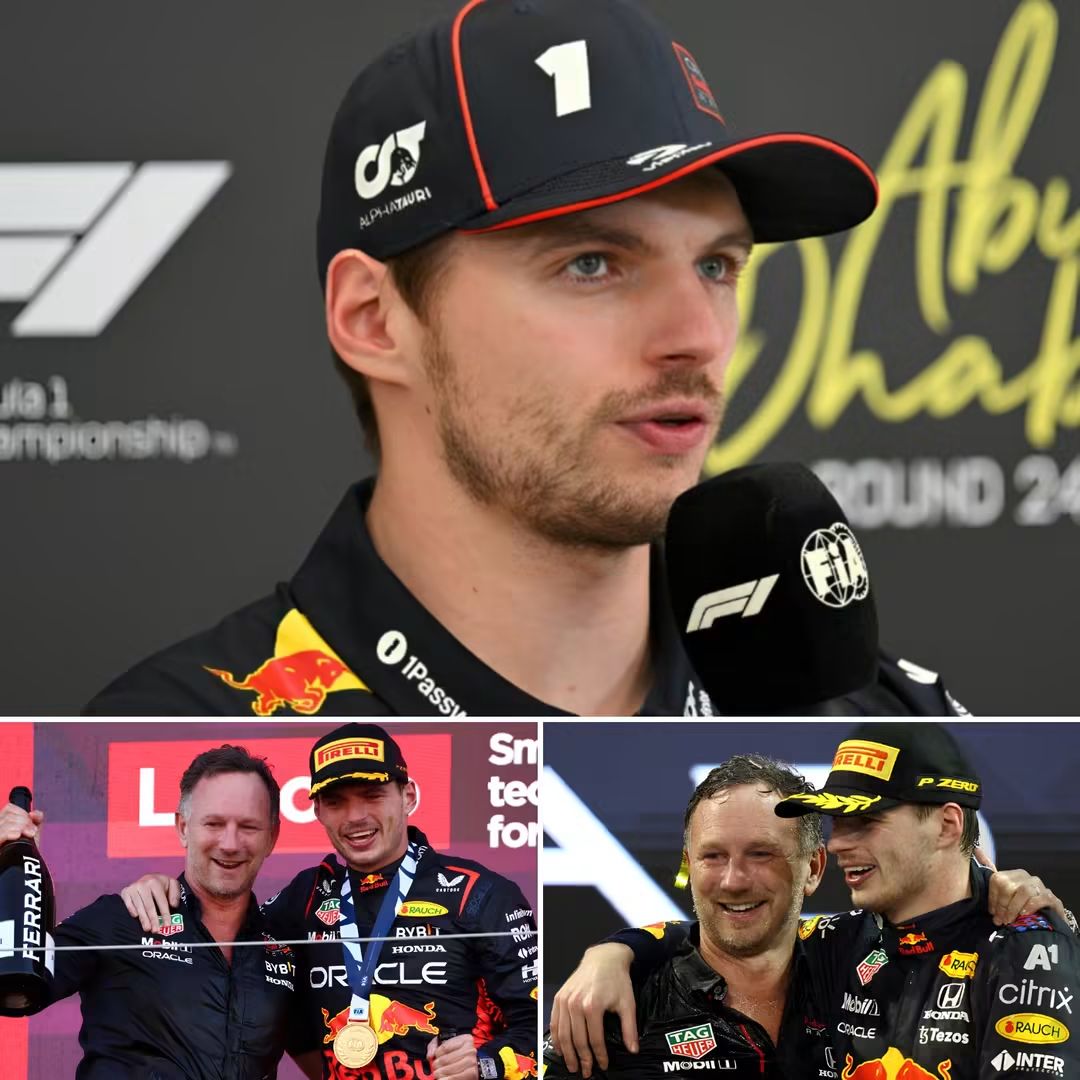
Max Verstappen has never been one to sugar-coat reality. The four-time Formula 1 world champion built his reputation on ruthless precision both on and off the track, and his latest comments about life after Christian Horner only reinforce that reputation. Speaking candidly, the Dutchman revealed that the paddock atmosphere has become noticeably calmer since the former Red Bull team principal’s departure, describing the current environment as less stressful and more cooperative than the high-tension years that defined much of his title-winning run.
The admission carries weight. Verstappen claimed every one of his championships while Horner sat at the top of the Milton Keynes hierarchy. Yet the driver who thrived under that intense regime now openly prefers the quieter dynamic that has taken hold.
WHY VERSTAPPEN NO LONGER MISSES THE OLD TENSION
Verstappen explained that constant friction between people never appealed to him. He said he likes seeing colleagues get along and that ongoing tension is simply not pleasant. While outsiders often enjoy the drama and the “spicy” rivalries that once dominated headlines, the driver made clear that those working inside the sport benefit from more civil relationships between teams.
“It is less stressful,” Verstappen stated. “We are all leading a stressful life and when you can take a bit of stress out at times, it is good.”
Those words land with particular force because they come from a competitor who has operated at the absolute limit for nearly a decade. Formula 1 already demands extreme focus, physical conditioning, and mental resilience. Removing unnecessary interpersonal friction, according to Verstappen, creates space for clearer thinking and better performance.
THE END OF A 20-YEAR CHAPTER AT RED BULL
Christian Horner’s exit in July 2025 marked the close of an extraordinary era. He had led the team since its arrival on the grid in 2005, transforming a modest operation into a dominant force that collected multiple constructors’ titles and eight drivers’ championships in total. Under his leadership Red Bull became a powerhouse, and Verstappen the face of that success.
Yet the final stretch of Horner’s tenure was marked by internal strain, declining competitiveness at times, and very public disagreements that spilled beyond the garage walls. His removal after the British Grand Prix that year, followed by a substantial settlement, allowed the team to reset under new leadership. Laurent Mekies has since taken the dual role of team principal and CEO, steering a quieter but still ambitious Red Bull operation.
Verstappen’s comments suggest the reset has delivered tangible benefits for those closest to the action. The constant background noise that once accompanied team politics appears to have faded, leaving more energy for the core task of extracting performance from the car.
WHAT THIS MEANS FOR RED BULL AND THE WIDER PADDOCK
A calmer environment does not automatically translate into more race wins, but it can remove distractions that slowly erode focus. Drivers at Verstappen’s level already manage enormous pressure from media, fans, and self-imposed standards. When team dynamics add extra layers of tension, the cumulative load increases. Reducing that load, even modestly, can improve decision-making in strategy meetings, technical briefings, and the high-stakes moments that decide championships.
For Red Bull specifically, the shift coincides with a new regulatory cycle and the need to rebuild competitiveness. A more collaborative internal culture may help attract and retain talent that values stability alongside ambition. Other teams watching from across the garage will also notice the change. The old “piranha club” image of Formula 1, defined by sharp public exchanges between team principals, has softened. Whether that makes the sport less entertaining for casual viewers remains debatable, but those who live the sport day to day appear to welcome the difference.
HORNER’S POSSIBLE RETURN AND VERSTAPPEN’S DETACHED VIEW
Horner has not disappeared from the conversation. He has spoken of unfinished business and described leading Ferrari as a potential dream role. Speculation continues to swirl about if and where he might re-enter the paddock.
Verstappen’s response to those rumours was characteristically direct. He acknowledged that Horner did a good job during their time together, but added that the former boss’s future plans are “not my problem or concern.” The message was clear: the driver is focused on the present and the performance of his current car rather than old alliances or potential future rivalries.
This detachment itself signals how thoroughly the page has been turned inside Red Bull. The personal and professional relationship that delivered four titles has been set aside in favour of forward momentum.
LOOKING AHEAD: PERFORMANCE OVER PERSONALITY
The real test will arrive in the races that follow. A less stressful paddock is valuable only if it helps deliver results. Verstappen has already shown he can win under intense pressure; the open question is whether a more settled atmosphere will unlock even greater consistency or allow the team to innovate more freely without internal friction slowing decisions.
For the broader industry, Verstappen’s comments highlight a quiet evolution. Formula 1 has long thrived on larger-than-life characters and public conflict. Yet the current generation of drivers and many team personnel appear increasingly drawn to professionalism over perpetual drama. That shift could influence how teams structure leadership, how the media frames stories, and how sponsors evaluate the emotional tone of the sport they invest in.
Verstappen has never been interested in nostalgia for its own sake. His preference for a less stressful environment is not a rejection of the success he achieved with Horner, but a clear-eyed assessment of what helps him perform at the highest level today. In a sport measured in thousandths of a second, removing even small sources of friction can matter.
The championship battle will still be decided on track. The politics, however, may no longer burn quite as hot. For Max Verstappen, that change is not something he misses.