A FRIGHTENING MOMENT AT SUZUKA CIRCUIT
Williams Racing reserve driver Luke Browning has walked away unscathed from a dramatic crash during Super Formula testing at the iconic Suzuka Circuit.
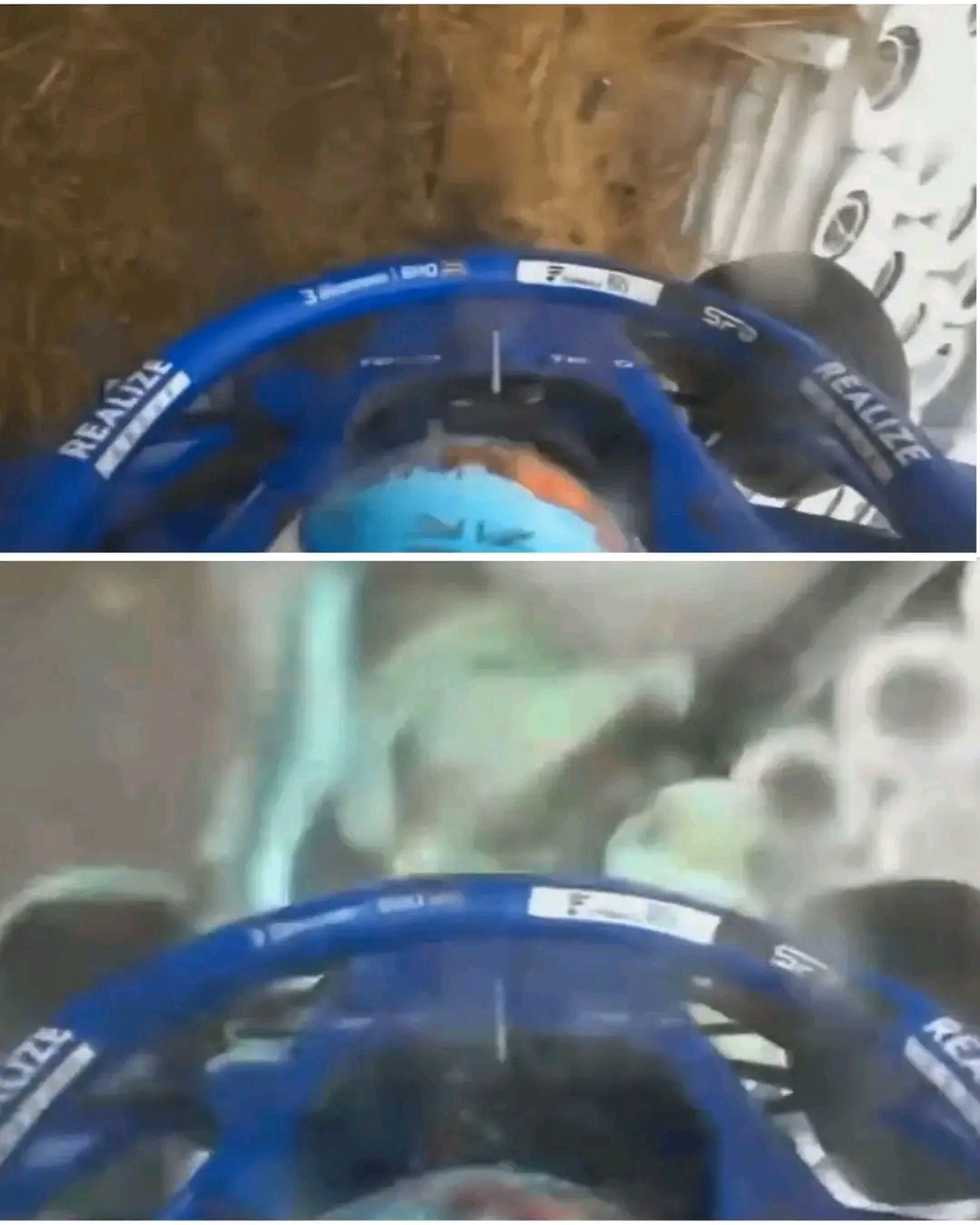
The incident occurred in wet conditions, where grip levels were extremely low and visibility was reportedly challenging. Browning’s car is understood to have lost control after a spin, made contact with the barriers, and then flipped in a violent rollover before coming to rest upside down.
Despite the severity of the accident, early reports confirm that Browning exited without serious injury and was later seen back in the garage in good spirits.
WHAT EXACTLY HAPPENED IN THE CRASH?
Wet-weather testing at Suzuka is always a high-risk environment due to the circuit’s fast direction changes and unforgiving run-off areas. According to initial accounts, Browning’s car stepped out unexpectedly, likely aquaplaned, and the driver was unable to recover before impact.
Once the car struck the barrier, the energy of the crash caused it to launch into a rollover sequence. While modern single-seater safety structures are designed for exactly this type of incident, seeing a car inverted after multiple rotations is still alarming for any motorsport fan.
Importantly, the survival cell and halo system appear to have done their job effectively, absorbing the impact and protecting the driver through the most dangerous phase of the crash.
WHY THIS CRASH MATTERS FOR WILLIAMS AND SUPER FORMULA
Browning is one of the key young talents linked to Williams Racing, where he serves as a reserve driver and development prospect. His participation in Super Formula is part of a broader strategy to sharpen racecraft in one of the most competitive single-seater championships outside Formula 1.
Super Formula itself, organized under Super Formula, is known for producing extremely close racing and demanding technical circuits like Suzuka. Drivers often use it as a stepping stone or parallel development path toward Formula 1 opportunities.
A crash like this, even when no injury occurs, is significant because it tests both driver confidence and team planning. For Williams, the priority now will be ensuring Browning remains fully comfortable and mentally reset before returning to competitive running.
DRIVER SAFETY IN MODERN OPEN-WHEEL RACING
One of the most important takeaways from this incident is the continued effectiveness of modern Formula 1-era safety standards filtering into feeder series.
The halo device, reinforced survival cell, and improved barrier technology have all drastically reduced the risk of fatal outcomes in crashes that, years ago, could have had far worse consequences.
Browning walking away from a rollover at Suzuka is another reminder of how far motorsport safety has evolved. While crashes remain visually dramatic, the engineering behind today’s cars is specifically designed to protect drivers even in extreme multi-impact scenarios.
MENTAL IMPACT AND RECOVERY PROCESS
Even when physical injuries are avoided, crashes like this can leave a psychological mark. Drivers often need time to rebuild confidence, especially in wet conditions where grip changes rapidly.
For a young driver like Browning, the key challenge will not just be returning to the car, but returning with full trust in pushing limits again. Teams typically support this process with simulator work, gradual reintroduction to high-speed running, and detailed debriefs to understand exactly what triggered the incident.
Given that Browning was later seen in good spirits, early signs suggest he is already moving in the right direction.
WHAT THIS MEANS FOR HIS ROOKIE CAMPAIGN
Browning’s Super Formula season is still in its early stages, and this incident is unlikely to define his campaign. However, it does introduce a new narrative pressure point: how he responds.
Strong drivers are often defined not by avoiding incidents entirely, but by how quickly they recover and adapt afterward. If anything, this moment could become a learning experience that sharpens his wet-weather awareness and race management.
For Williams, the bigger concern will be ensuring he continues to accumulate mileage without unnecessary setbacks, especially as they evaluate long-term driver development options within their system.
FINAL OUTLOOK: A SCARY BUT IMPORTANT WAKE-UP CALL
In motorsport, high-speed incidents are an unfortunate but accepted part of the development ladder. Luke Browning’s crash at Suzuka was dramatic, but the most important outcome is also the simplest: he walked away safely.
As Super Formula continues and attention turns back to performance, all eyes will be on how quickly he regains momentum and whether this moment becomes a footnote in a strong rookie season rather than a turning point.
For now, the takeaway is clear. The crash was terrifying, but the result reinforces just how effective modern racing safety has become—and why drivers can still push the limits in one of the world’s most demanding motorsport environments.