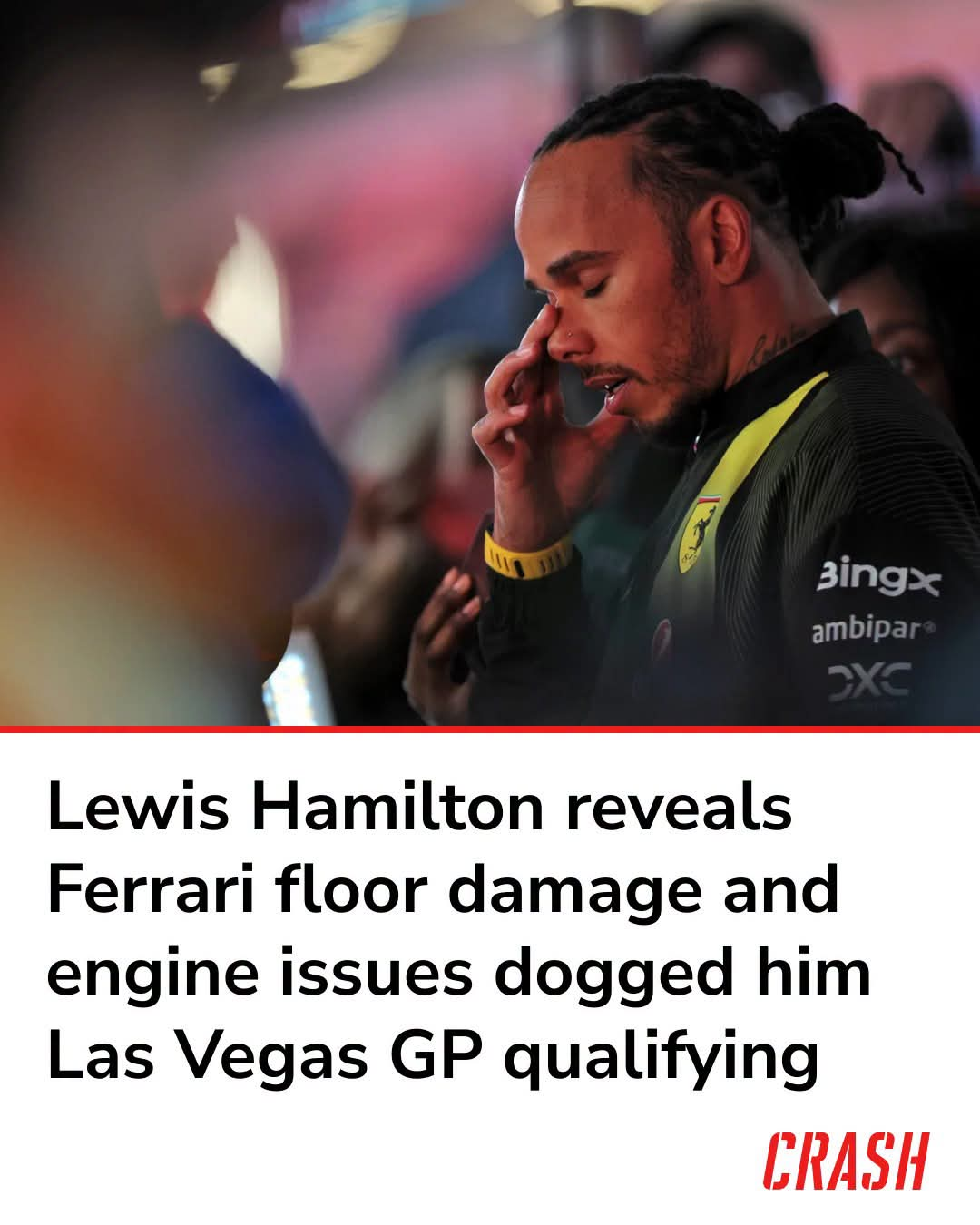
Lewis Hamilton’s Ferrari looked compromised almost from the opening laps of qualifying for the 2026 Las Vegas Grand Prix. The seven-time champion finished 12th, with teammate Charles Leclerc one place ahead in 11th. Both cars were eliminated in Q2, marking Ferrari’s worst combined qualifying result of the season so far. Hamilton later detailed the specific problems that stacked against him on a night when the Scuderia already expected to struggle.
The Las Vegas Strip Circuit’s long straights and cool night temperatures exposed known Ferrari weaknesses. What turned a difficult session into a genuine setback were the additional issues Hamilton revealed afterward.
FLOOR DAMAGE STRUCK EARLY AND CHANGED EVERYTHING
Hamilton reported that he lost a piece of the floor on the first or second lap of Q1 after hitting debris. The damage immediately altered the car’s balance and cost roughly three to four tenths of downforce. From that point the SF-26 became more unsettled, with the rear sliding more than usual.
Team principal Fred Vasseur later confirmed the floor could not be repaired between Q1 and Q2. In modern Formula 1, floor integrity is critical for aerodynamic load, especially on a street circuit where every tenth counts. Running with compromised downforce for the remainder of the session left Hamilton fighting the car rather than extracting the maximum from it.
ENERGY DEPLOYMENT FAILURE COST ANOTHER SIX TENTHS
Even with the damaged floor, Hamilton felt his final Q2 lap was strong in the later sectors. The decisive blow came at the end of the lap when the car suffered a lack of electrical energy deployment. Hamilton estimated the shortfall alone was worth approximately six tenths of a second.
On a circuit defined by long acceleration zones, hybrid power delivery is everything. Ferrari has already been operating with a straight-line deficit compared with Mercedes and Red Bull power units. Losing deployment at the critical moment removed any realistic chance of reaching Q3. Hamilton noted he also lacked a slipstream from another car, further compounding the straight-line disadvantage.
WHY THIS RESULT MATTERS FOR FERRARI AND HAMILTON
A double Q2 exit is more than a bad Saturday night in Sin City. It highlights ongoing challenges for Ferrari in 2026. The team entered the weekend knowing the long straights would hurt, yet the gap proved larger than anticipated. Low track temperatures around 15°C made tire preparation even harder, and both drivers reported difficulty generating and maintaining grip.
For Hamilton, the evening added frustration to an already demanding adaptation period with the team. He has spoken openly about the effort required to extract performance from the car in cooler conditions and the continuing challenge of getting the current generation of tires into their operating window. A session like this tests confidence as much as pure speed.
For the constructors’ championship, every point matters. Starting outside the top ten (even after Oscar Piastri’s grid penalty moves both Ferraris up one spot) reduces the margin for error on Sunday. Overcoming a power unit deficit and recovering positions on a circuit that rewards clean air and efficient energy management is never straightforward.
BROADER CONTEXT AND THE REALITY OF STREET CIRCUIT WEEKENDS
Las Vegas has repeatedly proven unforgiving for teams that lack straight-line speed or struggle with tire temperature in cool conditions. Ferrari’s package has strengths in higher-downforce environments, but the Strip’s unique demands expose limitations quickly. The combination of debris damage, unrepaired floor, deployment shortfall, and the absence of a tow created a perfect storm.
These are the nights that separate contenders from also-rans. Reliability of the hybrid system, the ability to recover from minor aerodynamic damage mid-session, and precise energy management strategies become decisive. Ferrari will analyze the data thoroughly. The floor damage was unlucky, but the scale of the deployment loss and the straight-line gap raise questions about whether the current power unit and energy recovery strategy are competitive enough on this type of track.
WHAT COMES NEXT AND THE PATH FORWARD
Hamilton remains characteristically measured. He believes that without the floor damage and deployment issue he could have reached Q3, though it would still have been tight. That assessment suggests the underlying car performance was closer than the final result implies. Sunday’s race offers a chance to salvage points through strategy, tire management, and opportunistic overtakes, especially if safety cars or variable temperatures come into play.
Ferrari’s season will not be defined by one difficult qualifying in Las Vegas. Yet repeated struggles on power-sensitive circuits will continue to limit their ceiling until the power unit and aerodynamic efficiency close the gap to the leaders. Hamilton’s honesty after the session provides useful transparency. The team now has clear data points: floor robustness under debris, energy deployment consistency, and the ongoing tire warm-up challenge in cool conditions.
The lights of the Strip will shine just as brightly on Sunday. Whether Ferrari can turn a damaged Saturday into a competitive race will reveal how resilient the current package truly is. For Hamilton and the entire team, the focus now shifts from explaining what went wrong to extracting every possible position when the lights go out.