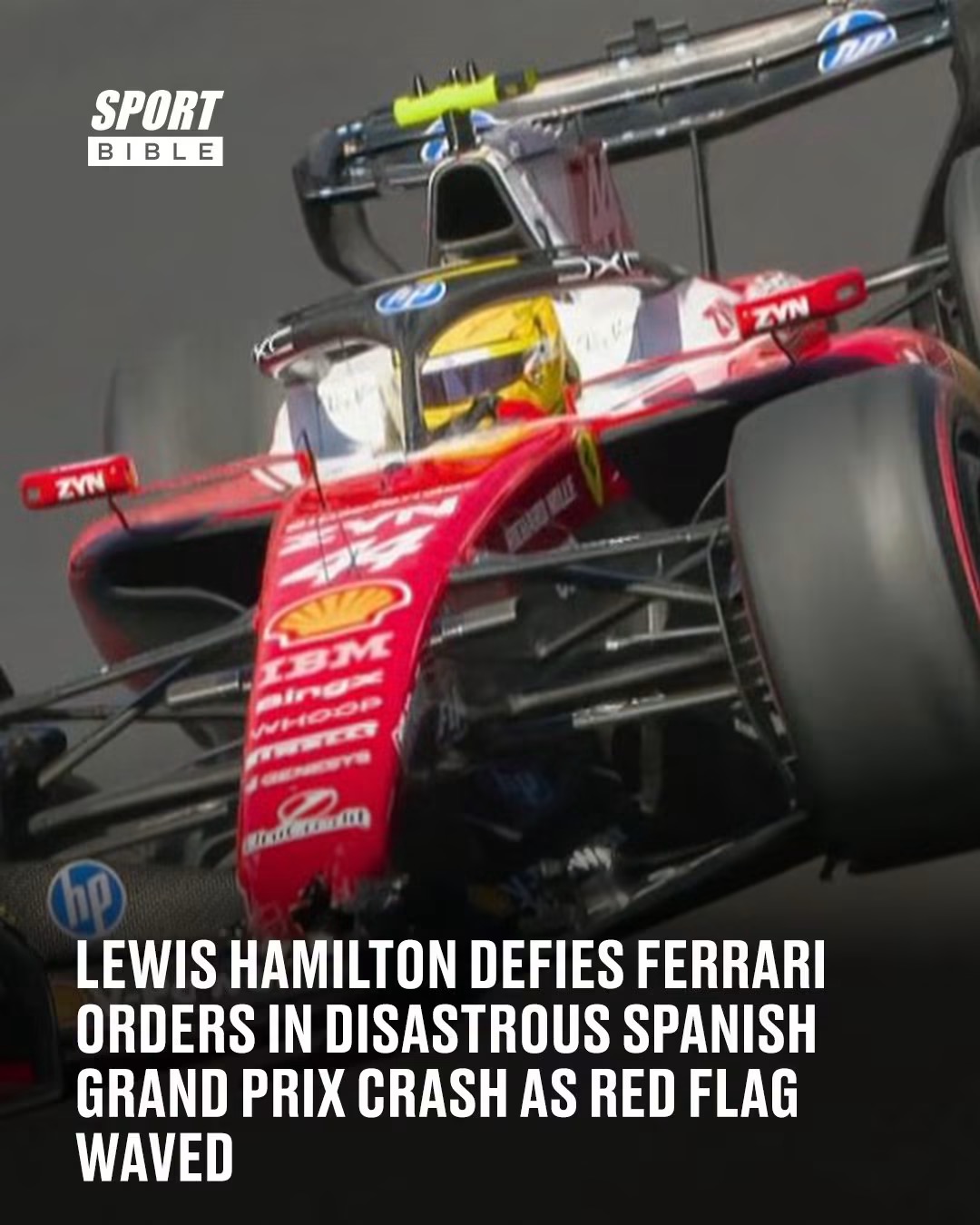
Lewis Hamilton’s quest to make history at Formula 1’s newest venue hit a major setback in final practice when he crashed and then ignored clear team instructions to stop his damaged car. The incident brought out the red flags and forced Ferrari into a race against time ahead of qualifying for the inaugural Spanish Grand Prix at the Madring.
The seven-time world champion’s competitive instincts once again collided with team orders on a weekend that offered a unique chance to etch his name into the record books.
HAMILTON’S CRASH AT THE CRITICAL MOMENT
With around 37 minutes remaining in Free Practice 3, Hamilton locked up the front-left wheel on the approach to Turn 22 and slammed into the barriers. The impact left the front wing lodged under the nose of the SF-26. Having already passed the pit-lane entry, returning to the garage required completing almost a full extra lap with clear damage.
Ferrari immediately instructed Hamilton to stop in a safe place to protect the car for qualifying and the race. Hamilton argued he could still make it back and continued driving until the race director formally ordered him to halt. Only then did he comply, triggering a red flag while barriers were repaired.
THE HIGH STAKES OF A HISTORIC WEEKEND
This was no ordinary practice session. The Madring is hosting the Spanish Grand Prix for the first time, and a pole position followed by a race win would have given Hamilton a permanent place in the circuit’s history. At 41, every remaining opportunity to add to his legacy carries extra weight. That context helps explain the reluctance to abandon a potentially strong lap time, even with a damaged car.
Yet the cost was immediate. Ferrari mechanics were left with limited time to repair the car before qualifying, while the rest of the field lost valuable track time during the red-flag stoppage.
WHY DEFYING ORDERS STILL CARRIES RISK
Modern Formula 1 places strict emphasis on safety when a car is visibly compromised. Continuing with a front wing tucked under the chassis creates unpredictable handling, debris risks and potential danger to marshals or other drivers. The regulations allow for reprimands or grid penalties when drivers fail to stop significant damage in free practice.
Hamilton’s decision to keep going, even briefly, revived the familiar tension between a driver’s desire to maximise every session and the collective responsibility to keep the circuit safe.
WHAT IT MEANS FOR FERRARI AND HAMILTON’S WEEKEND
The crash and subsequent delay left Ferrari on the back foot heading into qualifying. Any remaining balance or reliability issues from the impact would only compound the challenge of extracting a strong grid position on a brand-new circuit. For Hamilton, the incident added another layer of frustration to a weekend that had promised so much.
The rest of the grid, meanwhile, had to adapt their final preparation around the interrupted session. In a season as competitive as 2026, even small disruptions can shift the balance.
THE BIGGER PICTURE AFTER ANOTHER DRAMATIC PRACTICE
Hamilton has built a career on refusing to accept limitations. That same mindset has delivered multiple titles and countless memorable recoveries. In Madrid it produced a red flag, a damaged car and fresh questions about where the line sits between determination and discipline.
Whether the stewards take further action remains to be seen. What is already clear is that Hamilton’s Spanish Grand Prix weekend began with drama rather than dominance. How Ferrari and their star driver respond in qualifying and the race will determine whether this incident becomes a costly setback or just another obstacle overcome on the road to history.