Race day has arrived at one of Formula 1’s most electric and unpredictable venues. The Autódromo José Carlos Pace, better known as Interlagos, is primed for the 2026 São Paulo Grand Prix, and the atmosphere in São Paulo is thick with anticipation. After a rain-soaked qualifying that produced one of the strangest grids of the season, the question hanging over the circuit is simple: who will emerge as the king of São Paulo today?
This is more than just another race. It is Round 20 of a season that has already crowned its youngest-ever drivers’ champion, and Interlagos rarely fails to deliver drama. The combination of elevation changes, a short lap, passionate Brazilian crowds, and the ever-present threat of rain makes this venue a true test of nerve, strategy, and pure racing instinct.
NORRIS CLAIMS THIRD STRAIGHT INTERLAGOS POLE IN TREACHEROUS CONDITIONS
Lando Norris once again showed his affinity for this track. In a qualifying session delayed more than 80 minutes by torrential rain, the McLaren driver produced a lap of 1:27.470 to secure pole position for the third consecutive year. It was a masterclass in wet-weather control on a circuit that punishes the slightest mistake.
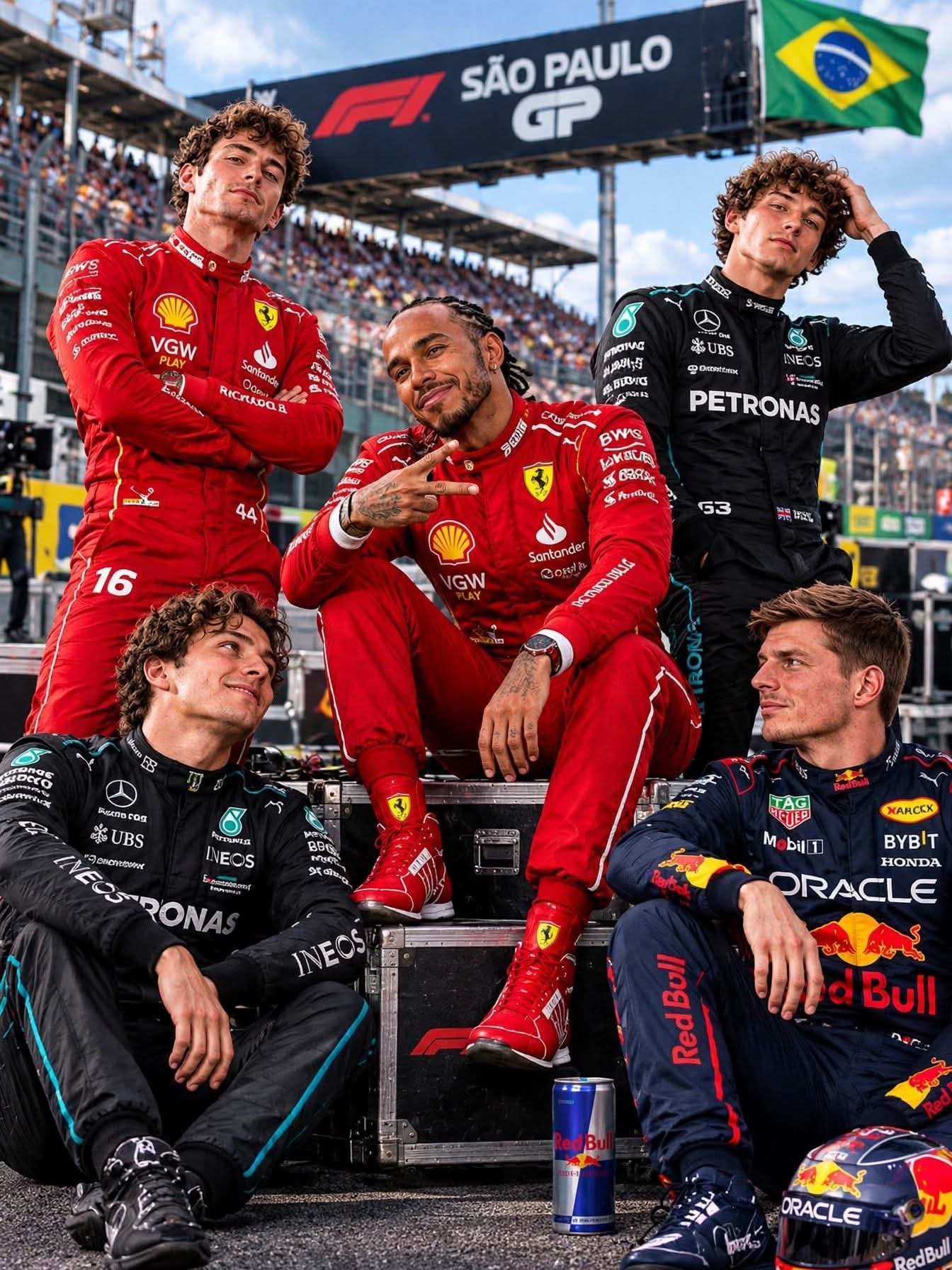
Newly crowned world champion Kimi Antonelli will start alongside him on the front row after teammate George Russell’s five-place grid penalty. Liam Lawson and Nico Hülkenberg complete an unusual top four, a direct result of the power-unit penalties that have reshuffled the order. Max Verstappen and Lewis Hamilton, two of the most successful drivers in recent Interlagos history, will start from the back of the grid. Charles Leclerc also drops significantly after a 10-place penalty.
That mix of high-stakes front-runners and proven race-winners buried in the pack sets the stage for a classic Interlagos scramble.
WHY THIS RACE MATTERS BEYOND THE CHEQUERED FLAG
The São Paulo Grand Prix sits at a pivotal point in the 2026 season. Antonelli sealed the drivers’ title in Mexico City last week, becoming the youngest champion in Formula 1 history. The focus now shifts to the constructors’ championship, where Mercedes hold a substantial lead over Ferrari. A strong result here could effectively seal the teams’ title for the Silver Arrows with races still remaining.
For Norris and McLaren, a win would provide a much-needed boost after a campaign of near-misses and would reinforce the team’s status as genuine contenders when conditions turn tricky. For Verstappen and Hamilton, starting from the rear is both a challenge and an opportunity. Interlagos has rewarded bold drives from the back before. Safety cars, changing weather, and the circuit’s overtaking potential mean a podium—or better—is still possible if strategy and bravery align.
Brazilian fans also have local interest. Debutant Rafael Câmara and Gabriel Bortoleto both featured in a difficult wet qualifying, with crashes impacting their sessions. Their presence adds extra emotion to an already passionate home crowd that has long treated Interlagos as a cathedral of motorsport.
INTERLAGOS: THE CIRCUIT THAT REWARDS THE BRAVE
Few tracks on the calendar generate the same level of excitement among drivers and fans. The 4.309-kilometre layout packs 15 corners into a short, undulating lap. The Senna S at the start of the lap remains one of the best overtaking zones in the sport. The long climb out of Juncão onto the start-finish straight rewards cars with strong traction and courage under braking.
Weather is almost always a factor. Light rain is in the forecast for race day, and Interlagos has a habit of delivering conditions that change by the minute. Teams will spend the morning monitoring radar closely. A dry race favors pure pace and tire management. A wet or mixed race rewards adaptability and split-second decision-making in the pits and on the steering wheel.
There is no sprint race this weekend, which means the full focus sits on the 71-lap Grand Prix. That longer race distance increases the importance of strategy, tire degradation, and traffic management—especially for those starting outside the top ten.
WHAT TO WATCH FOR WHEN THE LIGHTS GO OUT
The front-row battle between Norris and Antonelli will set the tone. Norris starts with a clear track and proven Interlagos form. Antonelli carries the confidence of a newly minted champion and a strong Mercedes package. Behind them, Lawson, Hülkenberg, and Isack Hadjar will be looking to capitalize on any early chaos.
Further back, the real story may develop. Verstappen has won at this circuit multiple times and thrives in difficult conditions. Hamilton knows how to extract results from difficult grid positions at Interlagos. Their progress through the field, combined with potential safety-car periods, could reshape the race entirely.
McLaren’s Oscar Piastri starts in the midfield and will be hungry to support Norris and score strong points. Aston Martin’s Fernando Alonso reached Q3 for the first time in a while and starts eighth—another potential spoiler if the race becomes a survival contest.
PREDICTIONS AND THE BIGGER PICTURE
Expect a race that refuses to settle early. Interlagos rarely produces processional afternoons. If the rain stays away, Norris and Antonelli should control the front, but the midfield and the recovering frontrunners will keep the action alive. If the weather intervenes, the race becomes wide open and the driver who best manages the changing grip levels will likely stand on the top step.
Beyond the result, this weekend reinforces Interlagos’ value to the Formula 1 calendar. The circuit has secured its place through at least 2035. That long-term commitment is a win for fans who appreciate old-school tracks with character, elevation, and genuine racing.
As the grid forms under the São Paulo sky, the stage is set. Norris sits on pole. A new champion lines up beside him. Legends start from the back. The Brazilian crowd is ready. And Interlagos, as always, is prepared to write another chapter of its chaotic, unforgettable history.
Who will be the king of São Paulo today? The lights are about to go out.