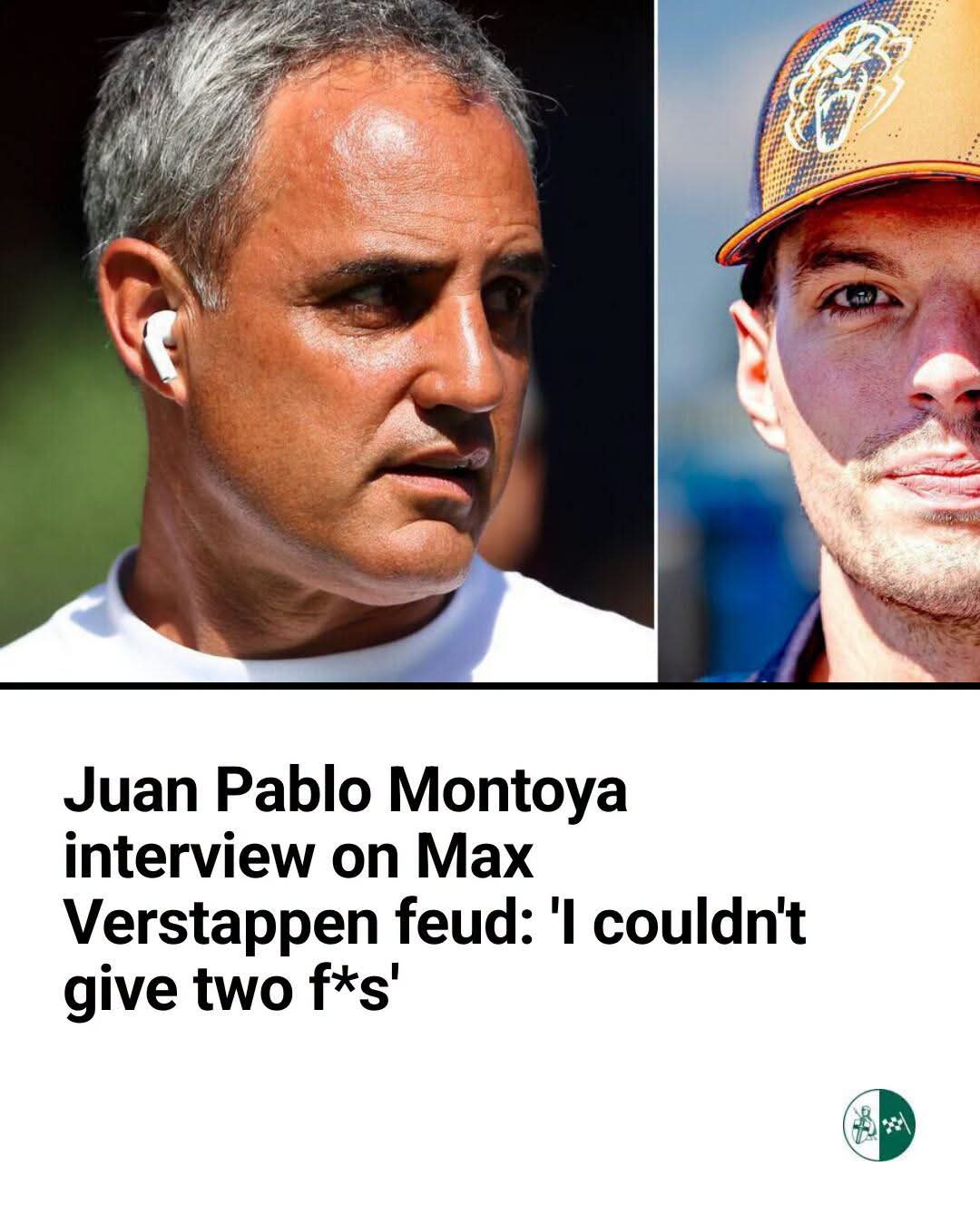
Former Formula 1 race winner Juan Pablo Montoya has broken his silence on his recent public disagreement with Max Verstappen, insisting there is no personal animosity between them despite the Dutch champion’s sharp criticism. The Colombian believes his comments about driver conduct were misunderstood and says he remains a huge admirer of Verstappen’s talent, even if they disagree on certain issues surrounding the sport.
Their exchange has become one of the most talked-about off-track stories in Formula 1, highlighting the growing tension between outspoken current drivers and former stars who now work as analysts and pundits.
HOW THE DISAGREEMENT STARTED
The disagreement began after Montoya commented on Formula 1 drivers publicly criticizing the sport’s new generation of cars.
Several drivers, including Verstappen, have repeatedly voiced frustration with the current regulations, comparing aspects of the new cars to arcade-style driving and questioning whether Formula 1 has moved too far away from pure racing.
Montoya argued that while drivers have every right to express concerns, there should be consequences when criticism crosses the line into mocking Formula 1 itself. He suggested that stronger disciplinary measures could be appropriate if competitors publicly disrespect the championship.
Those remarks eventually reached Verstappen, who strongly rejected the former Williams and McLaren driver’s opinion.
VERSTAPPEN DID NOT HOLD BACK
Verstappen publicly questioned why Montoya was being paid to comment on Formula 1, accusing the former Grand Prix winner of repeatedly speaking “nonsense.”
The Red Bull driver clearly viewed Montoya’s remarks as an unfair attack on drivers who have been openly discussing the shortcomings of Formula 1’s latest technical regulations.
Given Verstappen’s reputation for speaking honestly regardless of public reaction, his response was unsurprising to many inside the paddock.
The exchange quickly became another example of how Formula 1 debates increasingly extend beyond race weekends and into social media, interviews and television broadcasts.
MONTOYA INSISTS HIS COMMENTS WERE MISUNDERSTOOD
Montoya has now clarified that Verstappen was never the sole target of his original remarks.
According to the Colombian, his position applies equally to every Formula 1 driver.
He explained that when asked whether Verstappen should face penalties under his proposed approach, he simply answered yes because he believes the same standard should apply to everyone.
In his view, constructive criticism is healthy for Formula 1, but deliberately ridiculing the championship damages the image of the sport itself.
Montoya stressed that there is an important distinction between offering solutions and simply attacking Formula 1 publicly.
“I COULDN’T GIVE TWO F***S”
Perhaps Montoya’s strongest comments came when discussing Verstappen’s reaction.
Rather than appearing offended, the former Formula 1 star dismissed suggestions that the exchange had become personal.
He admitted that if someone criticized his own work as harshly as he had criticized Formula 1 drivers, he would probably respond in a similar fashion.
For Montoya, such exchanges are simply part of modern Formula 1.
He emphasized that he holds no grudge against Verstappen and even described the Dutchman as an exceptional driver whom he genuinely admires.
His blunt remark that he “couldn’t give two f***s” about the public disagreement reflected his belief that professional disagreements should not be confused with personal hostility.
A BROADER DEBATE ABOUT DRIVER RESPONSIBILITY
Beyond the headlines, the disagreement raises an interesting question about Formula 1 itself.
How far should drivers be allowed to criticize the championship that provides them with their careers?
Throughout Formula 1 history, drivers have frequently challenged regulations, race control decisions and technical changes.
Many of those criticisms have ultimately led to improvements.
However, there remains a fine line between demanding change and publicly damaging the sport’s reputation.
Montoya believes that line matters because Formula 1 depends on maintaining credibility with fans, sponsors and future audiences.
Others argue that outspoken champions like Verstappen play an essential role by forcing the FIA and Formula One Management to address genuine problems more quickly.
VERSTAPPEN’S FRUSTRATIONS ARE NOT NEW
The context behind Verstappen’s comments is equally important.
Since the introduction of Formula 1’s latest power unit regulations, the four-time world champion has repeatedly questioned whether the cars remain enjoyable to drive.
He has criticized the increased emphasis on battery deployment and energy management, arguing that it changes the character of Formula 1.
Those frustrations have become even more visible during Red Bull’s difficult start to the 2026 season, where the team has struggled to consistently challenge Mercedes and Ferrari.
For Verstappen, his criticism reflects genuine concerns about the direction of Formula 1 rather than an attempt to undermine the championship.
WHY THIS MATTERS FOR FORMULA 1
Although the disagreement between Montoya and Verstappen is unlikely to affect championship battles directly, it reflects a growing divide within Formula 1.
Current drivers increasingly feel comfortable expressing dissatisfaction with regulations and governance, while former champions often defend the importance of protecting Formula 1’s public image.
Both perspectives carry weight.
Constructive criticism has always driven Formula 1 forward, but maintaining respect for the championship remains equally important as the sport continues expanding into new global markets.
WHAT HAPPENS NEXT?
It is unlikely that this public exchange will develop into a lasting feud.
Both men have strong personalities, both are known for speaking honestly, and neither appears interested in prolonging the disagreement.
Instead, attention will soon return to what matters most—Verstappen’s future with Red Bull, the ongoing championship battle, and Formula 1’s continuing evolution under its new regulations.
Still, the debate has highlighted an issue that will remain relevant long after this particular controversy fades: balancing honest criticism with protecting the reputation of one of the world’s biggest motorsport championships.