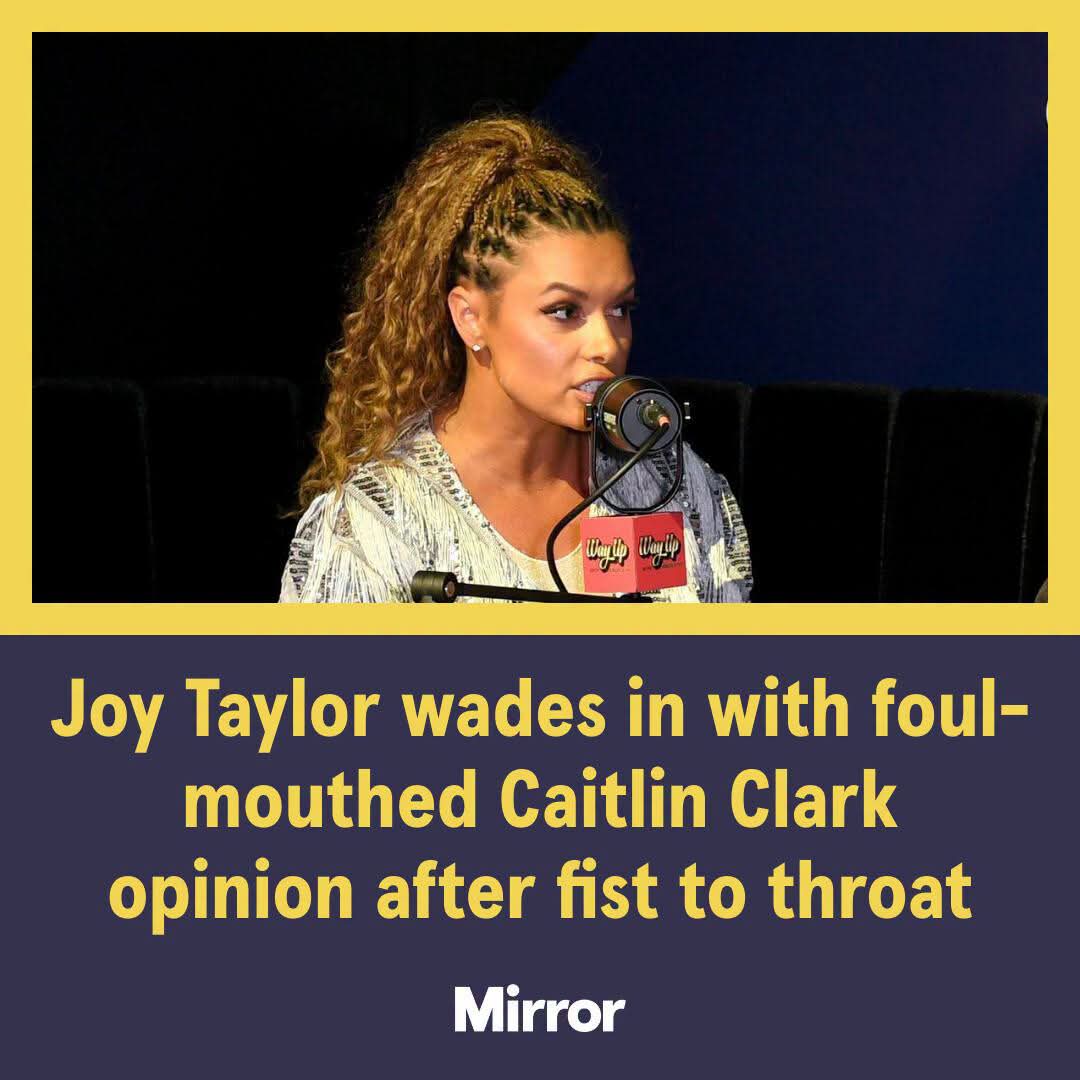
The conversation surrounding Caitlin Clark and player safety in the WNBA continues to dominate headlines, and now media personality Joy Taylor has added another strong voice to one of the league’s most polarizing debates. Following the controversial Indiana Fever-Phoenix Mercury matchup that resulted in Alyssa Thomas receiving a suspension, Taylor argued that Clark should not receive special treatment simply because she has become the league’s biggest star.
Her comments have reignited an already heated discussion about officiating standards, player safety, and how the WNBA should balance protecting its marquee players while preserving the physical nature of professional basketball.
THE INCIDENT THAT REIGNITED THE DEBATE
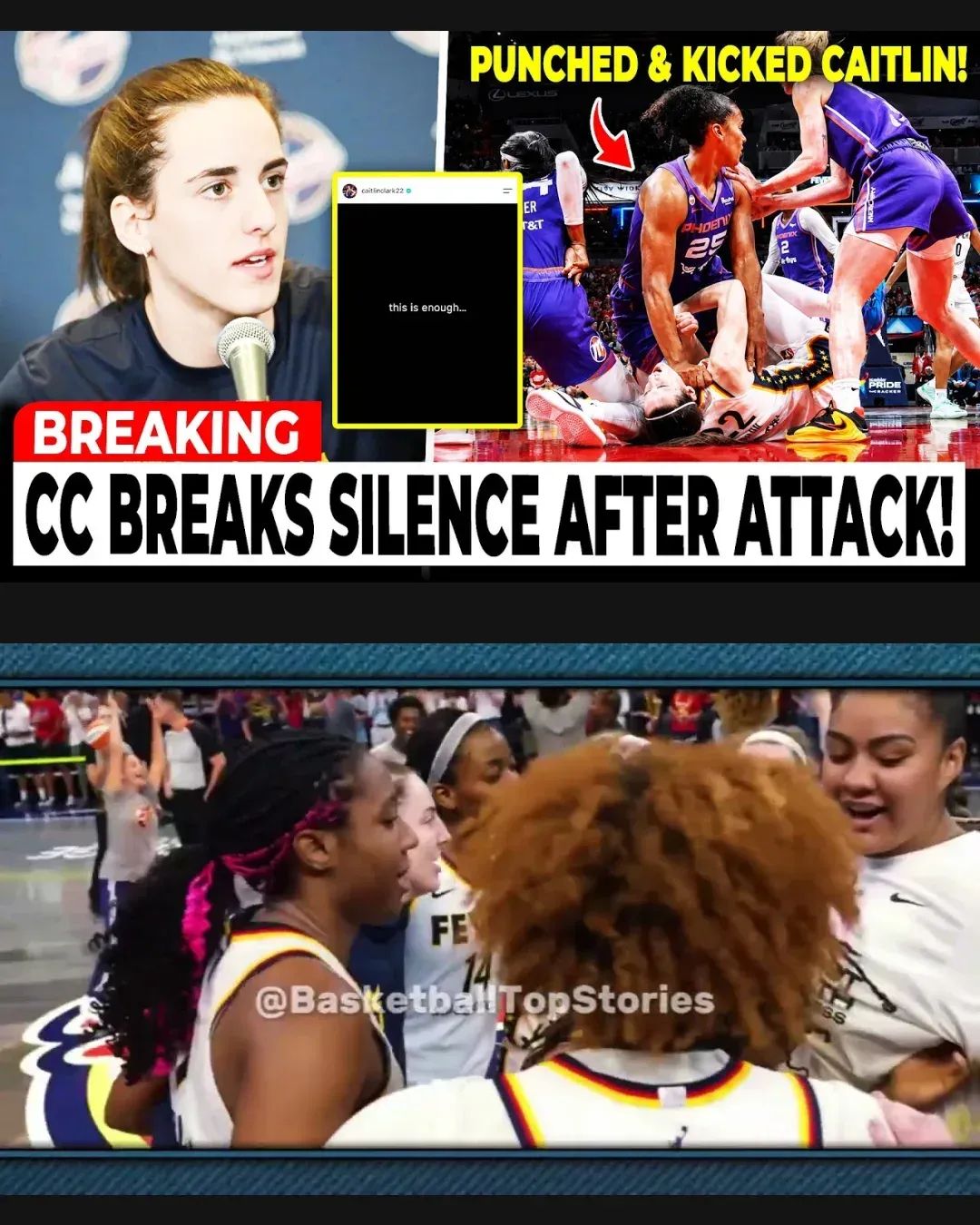
The controversy stems from Indiana’s dramatic matchup against Phoenix, where multiple physical plays involving Clark drew widespread attention.
During a scramble for a loose ball, Mercury veteran Alyssa Thomas made contact with Clark’s neck area as both players battled for possession. Officials initially allowed play to continue without calling a foul. However, after reviewing the sequence, the WNBA upgraded the play to a Flagrant 2 foul, labeling it a non-basketball act involving reckless contact to Clark’s throat area.
The league subsequently suspended Thomas for one game.
Although Clark remained in the contest after the collision, she later exited after aggravating a back injury during a separate sequence, leaving Indiana without its floor general during a crucial stretch of the game.
JOY TAYLOR ARGUES AGAINST SPECIAL TREATMENT
While many fans applauded the WNBA for upgrading the foul after review, Taylor focused on a different aspect of the discussion.
Speaking on social media, she rejected the growing belief among some fans that Clark deserves additional protection because of her enormous popularity and influence on the sport.
Taylor emphasized that the WNBA is a professional league filled with elite athletes competing for championships, not an environment where officials should referee games differently based on one player’s celebrity status.
Her central argument was that asking referees to protect one player beyond the normal enforcement of league rules would diminish both the competitive integrity of the league and the accomplishments of every other player on the court.
Her comments immediately generated intense reactions across basketball circles.
WHY CLARK HAS BECOME THE CENTER OF THE CONVERSATION
Whether supporters agree with Taylor or not, there is no denying that Clark occupies a unique position within the WNBA.
Since entering the league, television ratings, ticket sales, merchandise revenue, sponsorship interest, and national media coverage have all reached unprecedented levels. Every Fever game has become a major television event, and opposing arenas continue to experience record attendance whenever Indiana visits.
That unprecedented popularity naturally brings greater scrutiny whenever Clark becomes involved in controversial plays.
Each hard foul is analyzed repeatedly. Every officiating decision is debated on television and across social media. Few athletes in women’s basketball history have carried this level of visibility.
PLAYER SAFETY REMAINS THE BIGGER ISSUE
While Taylor’s comments focused on competitive fairness, Indiana Fever head coach Stephanie White has consistently emphasized a different concern.
White has repeatedly argued that dangerous plays—regardless of the player involved—must be officiated consistently if the league wants to protect all athletes.
Following the Phoenix game, White criticized officials for missing what she believed was obvious illegal contact during live action, saying Clark was not receiving the same whistle that many other star players receive.
That perspective resonates with many Fever supporters, who believe Clark has been subjected to repeated unnecessary physical play throughout the season.
Others argue that Clark is simply experiencing the same defensive intensity every elite playmaker encounters once opponents recognize their impact.
The truth likely lies somewhere between those viewpoints.
THE WNBA FACES A DELICATE BALANCING ACT
The league now faces one of its biggest officiating challenges in recent memory.
On one hand, the WNBA has built its reputation on physical, competitive basketball. Removing that edge could fundamentally change the product fans enjoy.
On the other hand, consistency remains essential.
Dangerous contact involving the head, neck, or other vulnerable areas must be addressed regardless of whether it involves Caitlin Clark, Alyssa Thomas, A’ja Wilson, Breanna Stewart, Napheesa Collier, or any other player.
The standard must remain the same for everyone.
Failing to establish that consistency only fuels accusations of favoritism—or, conversely, claims that stars are not being adequately protected.
THE IMPACT ON THE FEVER’S SEASON
For Indiana, the debate extends beyond social media.
Clark remains the engine of the Fever offense, leading the team’s ball movement, transition attack, and perimeter shooting. Even a brief injury absence affects Indiana’s rhythm and could influence playoff positioning in what is shaping up to be another tightly contested WNBA season.
The organization will likely prioritize Clark’s long-term health over rushing her back, particularly with championship aspirations still within reach.
Keeping their franchise cornerstone healthy could ultimately prove far more important than winning any individual regular-season game.
WHAT HAPPENS NEXT?
The discussion surrounding Clark is unlikely to disappear anytime soon.
Every physical matchup involving the Fever will continue attracting national attention, while officials will remain under increasing pressure to demonstrate consistency in reviewing flagrant fouls and dangerous contact.
Meanwhile, media personalities, former players, coaches, and fans will continue offering differing opinions about where the line should be drawn between toughness and unnecessary physicality.
As for Joy Taylor’s comments, they have only added another layer to a debate that already extends well beyond basketball.
FINAL THOUGHTS
Joy Taylor’s perspective reflects one side of an increasingly complex conversation. Her argument that Caitlin Clark should compete under the same rules as everyone else resonates with those who value competitive equality in professional sports.
At the same time, Clark’s supporters believe consistency—not favoritism—is what they’re asking for from officials. They argue that dangerous contact should always be penalized appropriately, regardless of who commits it or who receives it.
As the WNBA continues its remarkable growth, finding the right balance between protecting players and preserving the league’s competitive identity will remain one of its biggest challenges. With Clark continuing to draw unprecedented attention to women’s basketball, every major officiating decision is likely to receive even greater scrutiny throughout the remainder of the season.