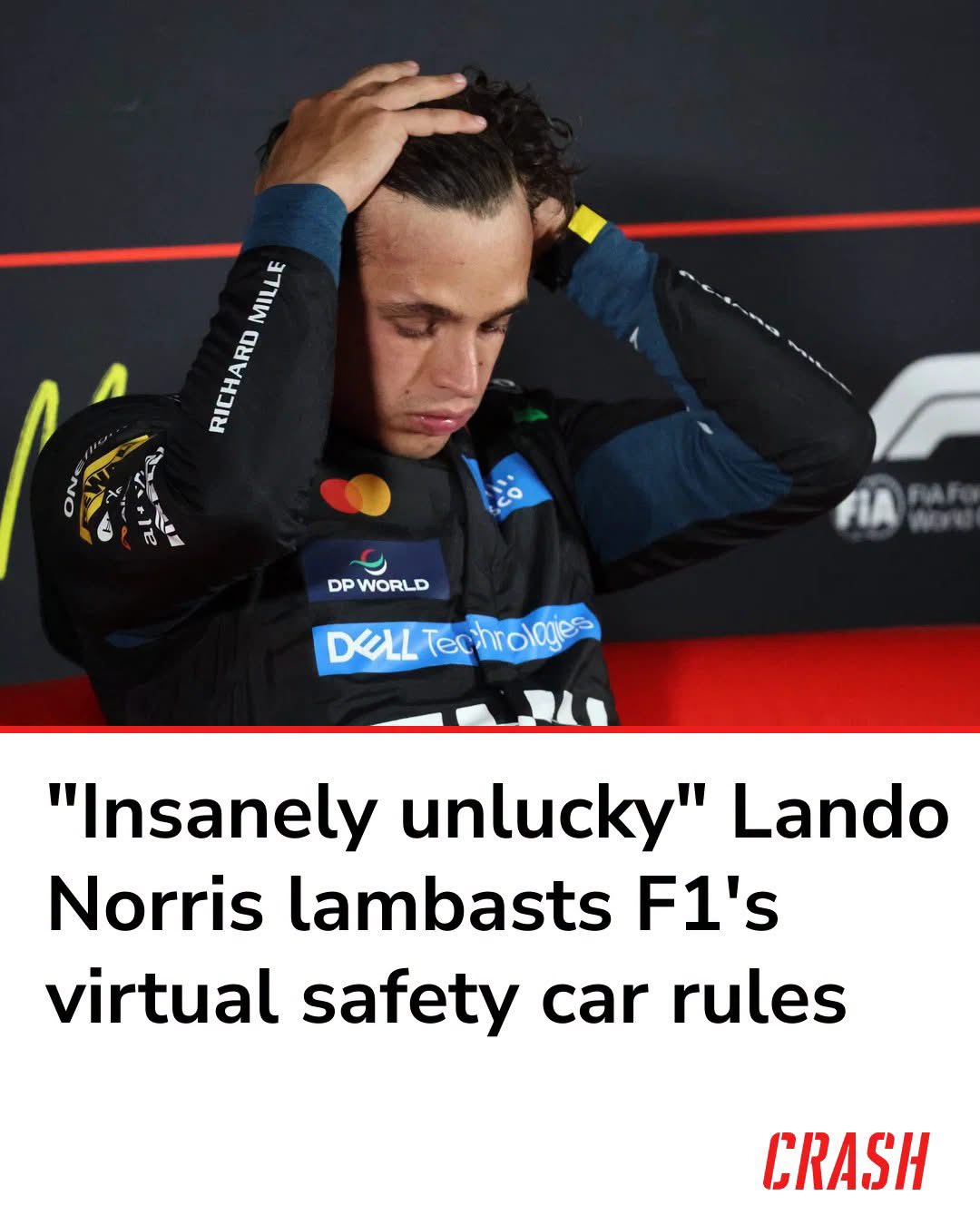
Lando Norris was left fuming at Formula 1’s virtual safety car regulations after a cruel twist of timing cost him a near-certain victory at the inaugural Spanish Grand Prix in Madrid. The McLaren driver controlled the early stages from pole position only to watch the win slip away when the VSC handed a decisive advantage to his rivals.
Norris recovered to finish third, but the manner of the defeat left him questioning the fairness of a system that has long divided the paddock.
HOW THE VIRTUAL SAFETY CAR DESTROYED NORRIS’S RACE
Norris looked firmly in control of the race at the Madring before the virtual safety car was deployed. While he was unable to reach the pit lane in time, both championship leader Kimi Antonelli and Max Verstappen managed to dive in under the VSC and complete their stops with minimal time loss.
By the time the VSC ended, Norris was forced to pit under normal racing conditions. A slow stop compounded the damage, dropping him to fifth. Although he fought back to third, the limited overtaking opportunities around the new Madrid street circuit made passing Antonelli and Verstappen almost impossible.
NORRIS: “I WAS THE ONLY ONE ON THE WHOLE GRID”
The reigning world champion did not hide his frustration afterwards. “We were just insanely unlucky today,” Norris said. “I was the only one on the whole grid that didn’t get the chance to do the pit stop. That’s just unfortunate.”
He acknowledged that the VSC has helped him on previous occasions and cost him on others, but insisted this felt different. “It’s happened in races and there’s been plenty of times where I’ve gained from it in the past and times where I’ve lost from it. It’s racing, but never when fighting for a win. I think it’s probably one of the first times a win has been lost simply because of it.”
Norris was careful not to blame his team or himself. “It’s not the team’s fault. It’s not my fault. Simple as that. We were just unlucky.” He also gave credit to Antonelli and Verstappen for their strong races.
THE LONG-RUNNING DEBATE OVER VIRTUAL SAFETY CAR FAIRNESS
Norris’s comments reignite a familiar argument inside Formula 1. Drivers have raised concerns about VSC timing for years, noting that the system can arbitrarily reward or punish competitors depending on their position on the track when it is deployed. While the VSC was introduced to improve safety and reduce the need for full safety cars, its impact on strategy remains highly unpredictable.
When asked whether the rules should be changed, Norris struck a measured tone. He noted that the issue has been discussed repeatedly and that any alternative would likely bring its own drawbacks. Over the course of a full season, he suggested, the benefits and disadvantages probably even out. That philosophical acceptance did little to ease the pain of losing a win in real time.
ANTONELLI CAPITALISES TO CLAIM EIGHTH WIN OF THE SEASON
While Norris reflected on what might have been, Kimi Antonelli seized the opportunity to claim his eighth victory of 2026. The young Mercedes driver continues to look increasingly comfortable at the front of the field, turning another slice of good fortune into a commanding championship statement.
For McLaren the result is a double blow. A potential one-two or strong points haul evaporated, and Norris’s title defence suffered another setback on a weekend when the car had shown clear race-winning pace.
WHY THE MADRING MADE THE LOSS EVEN HARDER TO TAKE
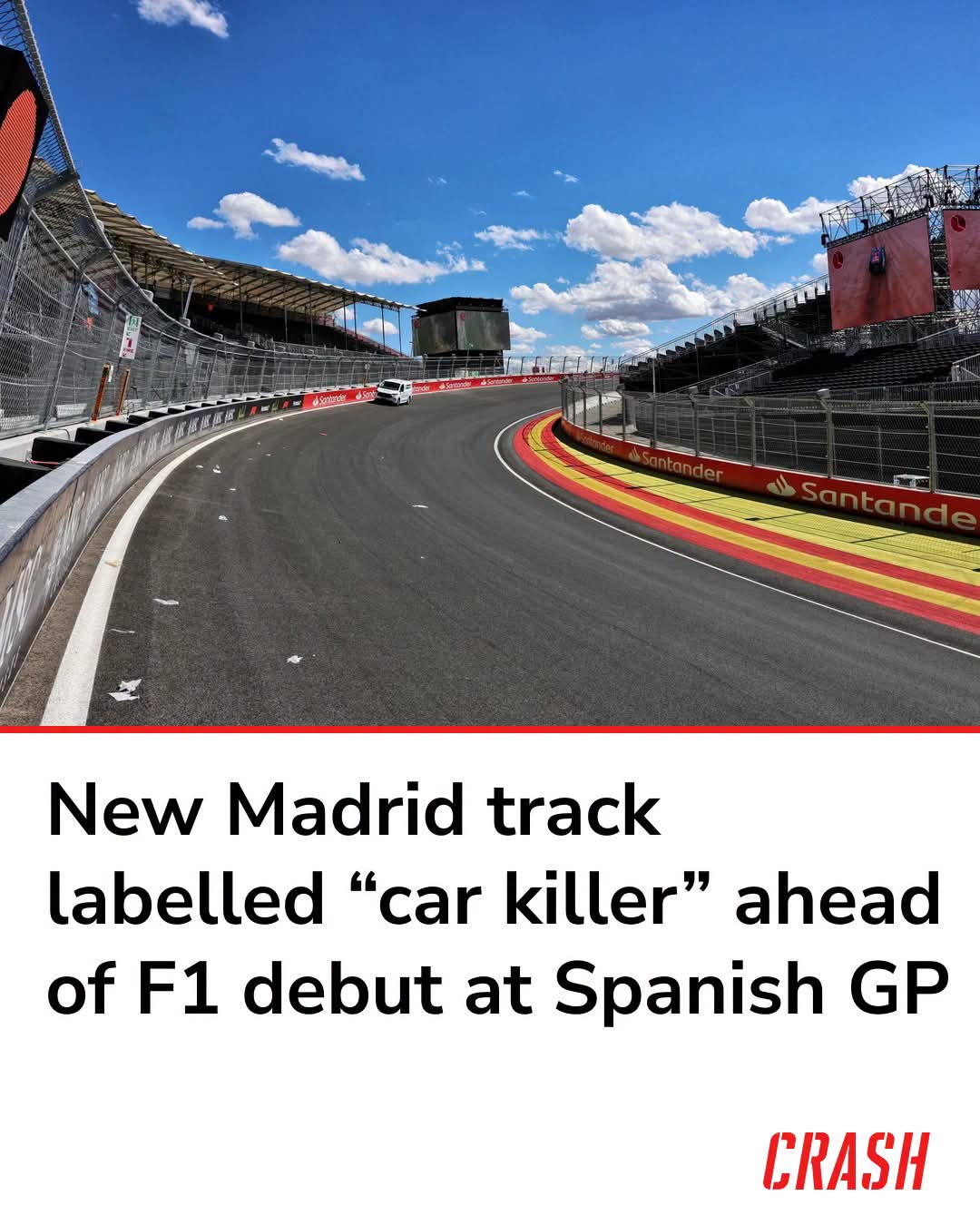
The characteristics of the new Madrid circuit amplified the damage. With overtaking already proving difficult, the positions lost under the VSC and during the slow pit stop became almost impossible to recover. Norris’s strong race pace counted for little once he found himself stuck behind cars he could not pass.
In that sense, the afternoon served as a harsh illustration of how modern Formula 1 can hinge on moments entirely outside a driver’s control.
WHAT HAPPENS NEXT IN THE VSC DEBATE
Norris’s high-profile frustration will ensure the topic returns to the stewards’ and Formula 1 Commission discussions in the coming weeks. Whether any meaningful change emerges is another matter. The sport has so far preferred to live with the occasional injustice rather than risk unintended consequences from a rule tweak.
For Norris himself, the focus will quickly shift to the next race. The performance in Madrid proved McLaren belongs at the front. The challenge now is converting that speed into results when fortune refuses to cooperate. On Sunday in Madrid, the virtual safety car made sure that conversion never had a chance.