George Russell may have walked away from the 2026 British Grand Prix with a valuable second-place finish, but behind the scenes, the Mercedes driver experienced one of the most emotionally draining weekends of his Formula 1 season. Reports from the Silverstone paddock revealed that Russell became so frustrated after qualifying that he asked Netflix’s Drive to Survive crew to stop filming him—an unusual moment that highlighted the immense mental pressure drivers face at the highest level of motorsport.
The incident offered fans a rare glimpse into the emotional toll that Formula 1 places on competitors, especially when expectations are sky-high at a home Grand Prix.
QUALIFYING LEFT RUSSELL DEEPLY FRUSTRATED
Heading into the British Grand Prix, Russell hoped to challenge for pole position in front of thousands of home supporters. Instead, qualifying proved disappointing.
The Mercedes driver could only secure fourth on the grid, finishing behind Ferrari teammates Charles Leclerc and Lewis Hamilton, while also trailing his own teammate and championship rival Kimi Antonelli.
Although fourth remains a strong starting position by most standards, Russell’s reaction reflected the mentality shared by elite Formula 1 drivers. For championship contenders, anything less than fighting for pole often feels like a missed opportunity.
THE NETFLIX CAMERAS CAPTURED AN UNUSUAL MOMENT
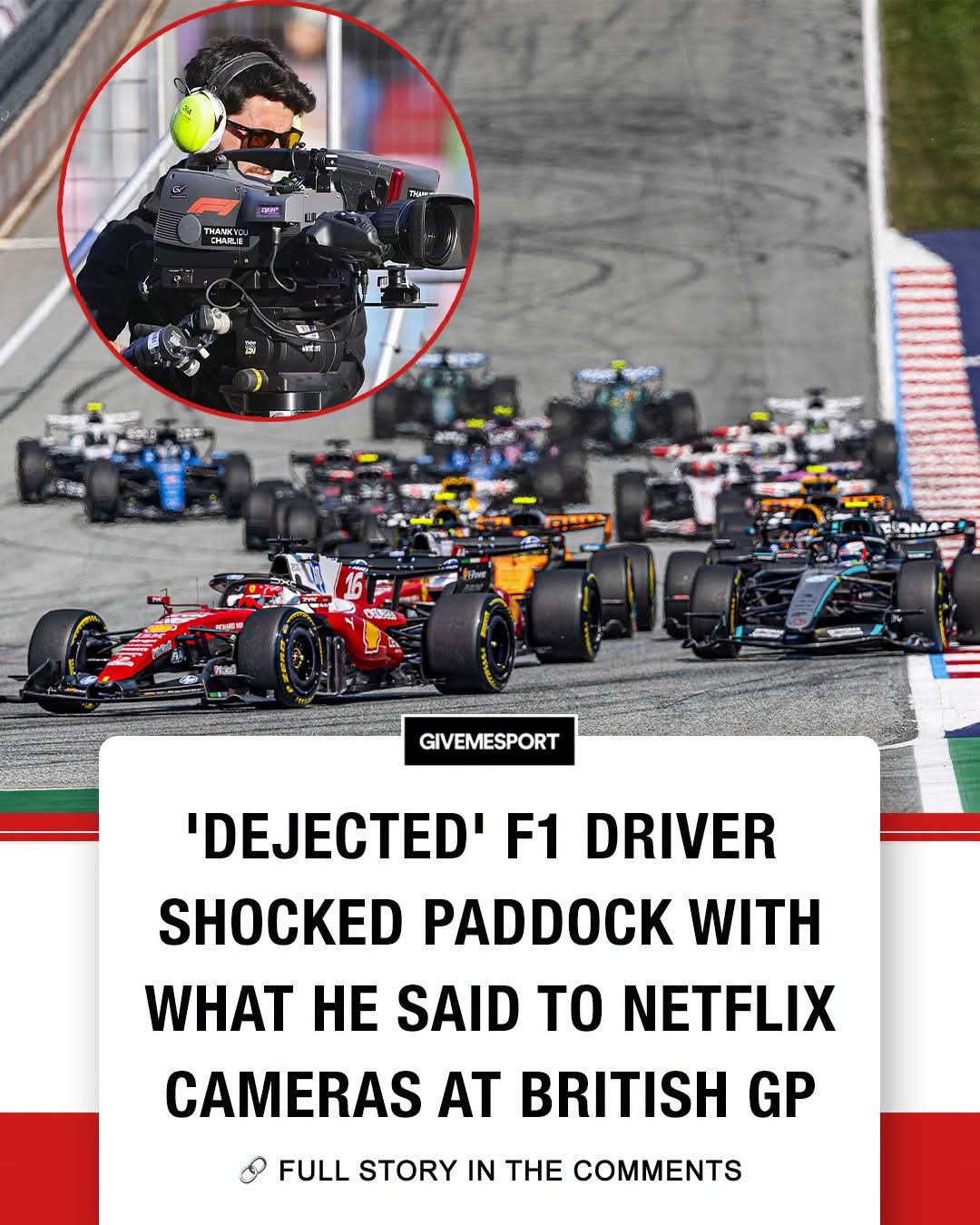
Formula 1 drivers have grown accustomed to the presence of Netflix cameras as Drive to Survive continues documenting life inside the paddock.
However, after qualifying, Russell reportedly had little interest in sharing his disappointment.
According to paddock observers, the Mercedes driver politely asked the production crew to stop filming, thanking them before requesting privacy.
Such moments are rarely seen in Formula 1, where media obligations continue regardless of results. The interaction illustrated just how emotionally invested Russell was in performing well at Silverstone.
WHY HOME RACES BRING EXTRA PRESSURE
Competing in front of a home crowd often creates additional motivation, but it also increases expectations.
British fans expected Russell to fight near the front alongside Hamilton, while Mercedes entered the weekend believing they had a realistic opportunity to challenge Ferrari for victory.
When qualifying failed to unfold as planned, Russell’s disappointment became understandable.
Every driver wants to deliver memorable performances for family, friends, team members, and home supporters, making setbacks feel even more significant than they would at other circuits.
RUSSELL RESPONDED LIKE A TRUE CHAMPIONSHIP CONTENDER
If qualifying exposed Russell’s frustration, Sunday’s race demonstrated his resilience.
The Mercedes driver produced one of his strongest recoveries of the season, navigating the chaotic British Grand Prix to secure second place behind Charles Leclerc while finishing ahead of Hamilton’s Ferrari.
More importantly, Russell capitalized on the misfortune suffered by several championship rivals.
Both Kimi Antonelli and Max Verstappen failed to finish strongly after incidents and technical problems disrupted their afternoons, allowing Russell to significantly reduce the championship deficit.
Sometimes title campaigns are built not only on victories but on maximizing opportunities during unpredictable races.
THE CHAMPIONSHIP FIGHT HAS CHANGED
Russell now sits just 25 points behind Antonelli in the Drivers’ Championship, transforming what once looked like a comfortable Mercedes teammate advantage into an increasingly competitive title battle.
With several races still remaining, momentum appears to be shifting.
If Russell continues combining consistency with podium finishes while Antonelli experiences further setbacks, the championship picture could change dramatically before the season reaches its final stretch.
Mercedes suddenly finds itself managing two legitimate championship contenders—an enviable but potentially complicated position.
THE HUMAN SIDE OF FORMULA 1
Incidents like Russell’s interaction with Netflix remind fans that Formula 1 drivers are far more than athletes behind a steering wheel.
Every race weekend involves constant interviews, sponsor appearances, technical meetings, strategy sessions, simulator preparation, and media commitments before drivers even climb into their cars.
When results fail to match expectations, processing disappointment becomes even harder while cameras continue documenting every emotion.
Russell’s request for privacy was not an act of arrogance—it was a reflection of the immense psychological demands that accompany life at the pinnacle of motorsport.
DRIVE TO SURVIVE CONTINUES TO SHAPE THE SPORT
Netflix’s Drive to Survive has transformed Formula 1’s global popularity by bringing fans closer than ever to the personalities inside the paddock.
Moments like Russell’s emotional reaction demonstrate why the series continues attracting audiences beyond traditional motorsport fans.
Rather than focusing solely on overtakes and victories, the documentary captures the vulnerability, pressure, and emotional highs and lows experienced throughout a championship season.
If this scene appears in the next season of Drive to Survive, it could become one of the defining behind-the-scenes moments of the year.
WHAT THIS MEANS FOR THE BELGIAN GRAND PRIX
The next stop on the Formula 1 calendar is Spa-Francorchamps, where Russell will arrive carrying renewed confidence after converting a frustrating weekend into a podium finish.
Mercedes also appears increasingly competitive against Ferrari, suggesting another fascinating battle lies ahead.
For Russell personally, Silverstone may prove to be a turning point. Instead of dwelling on qualifying disappointment, he demonstrated the mental resilience required to remain in championship contention.
That ability to recover quickly often separates title winners from the rest of the grid.
FINAL THOUGHTS
George Russell’s decision to ask Netflix’s cameras to step away revealed just how much success matters to Formula 1’s elite drivers. While disappointment initially dominated his Silverstone weekend, his remarkable recovery during the race transformed frustration into valuable championship momentum.
The incident serves as another reminder that Formula 1 is as much a psychological contest as it is a technical one. Drivers must constantly balance enormous expectations, relentless media attention, and the pressure of delivering results at every race.
If Russell can continue channeling that determination into performances like his British Grand Prix recovery, the battle for the 2026 Drivers’ Championship may become even more compelling in the races ahead.