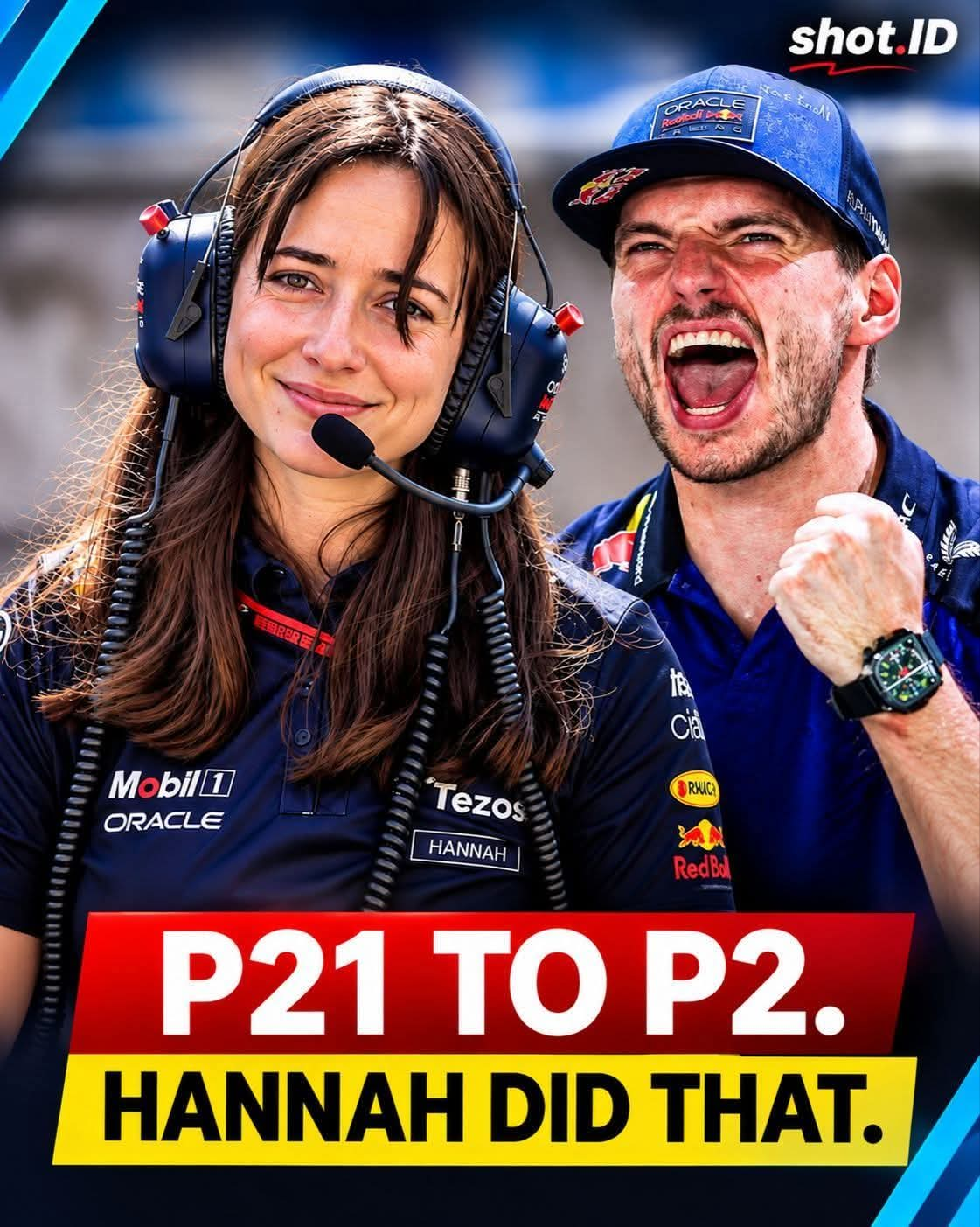
Motorsport is often remembered for spectacular overtakes, fearless drivers and breathtaking performances behind the wheel. However, some of the most impressive results are built long before a driver reaches the chequered flag.
A remarkable climb from P21 to P2 is a perfect example of how intelligence, communication and strategic decision-making can transform an otherwise difficult race into an outstanding result.
While the driver deserves enormous recognition for delivering such a performance, there is another person who deserves to share the spotlight: Hannah.
Her contribution highlights an often-overlooked reality of modern motorsport. Behind almost every extraordinary comeback is a team of people making crucial decisions, analysing information and identifying opportunities that might not be immediately visible to spectators.
FROM P21 TO P2: A COMEBACK BUILT ON MORE THAN SPEED
Starting from 21st position and finishing second is no ordinary achievement.
A driver beginning that far down the grid faces numerous challenges, including traffic, limited overtaking opportunities, tyre management and the possibility of getting caught in incidents involving other competitors.
Moving through the field requires more than simply having a fast car. It demands patience, consistency and the ability to recognise when opportunities arise.
A recovery of this magnitude also raises an important question: how much of the result comes from the driver, and how much comes from the strategic decisions made on the pit wall?
The answer is that both contributions are essential.
A brilliant strategy means very little if the driver cannot execute it. Equally, even the most talented driver can struggle to recover positions without intelligent decisions from the engineering team.
WHY HANNAH DESERVES THE SPOTLIGHT
Hannah deserves recognition ecause race engineering is one of the most demanding and influential responsibilities in modern motorsport.
Race engineers are responsible for maintaining communication with drivers, interpreting performance data, monitoring race conditions and helping determine the best approach as circumstances change.
Every decision can have significant consequences.
Should the team pit early or extend the current stint? Is it better to protect the tyres or push harder? Could a safety car create an opportunity? Is the driver losing time because of traffic or declining tyre performance?
These are the kinds of questions that demand quick thinking and accurate analysis.
A successful race engineer must also understand the driver’s strengths, weaknesses and communication style.
That relationship becomes particularly important during difficult races, when drivers need clear instructions and confidence in the decisions being made behind the scenes.
If Hannah played a central role in the strategy behind this P21-to-P2 recovery, her contribution deserves considerable recognition.
THE IMPORTANCE OF STRATEGY IN MODERN MOTORSPORT
Modern racing is increasingly becoming a competition of intelligence as much as outright speed.
Teams have access to enormous amounts of information, including tyre performance, fuel consumption, lap-time comparisons, weather conditions and competitor strategies.
However, collecting information is only half the challenge. The real advantage comes from knowing how to interpret it and make the right decision at precisely the right moment.
An effective strategy can help a driver gain positions without necessarily having to overtake every competitor on track.
Timing a pit stop correctly, managing tyre degradation and anticipating rival decisions can create opportunities that fundamentally change the outcome of a race.
This is why the strongest teams invest heavily in their engineering departments.
A driver might deliver the spectacular moments, but the strategic team often helps create the circumstances that make those moments possible.
THE DRIVER AND THE ENGINEER: A PARTNERSHIP THAT WINS RACES
One of the most fascinating aspects of motorsport is the relationship between drivers and their race engineers.
The driver experiences the race from inside the cockpit, feeling every change in grip, balance and tyre performance.
The engineer, meanwhile, has access to information that the driver cannot see.
Bringing these two perspectives together is essential.
A driver might report that the rear tyres are losing performance, while the engineer compares that feedback with live telemetry and the performance of competing cars.
Together, they can determine whether to change the approach or continue with the existing plan.
The best partnerships are built on trust, communication and the confidence to make difficult decisions under pressure.
A comeback from P21 to P2 demonstrates why this relationship should never be underestimated.
WHY THESE PERFORMANCES MATTER FOR THE FUTURE OF MOTORSPORT
Stories like this also highlight the growing importance of recognising the people working behind the scenes.
Motorsport coverage naturally focuses on drivers because they are the visible competitors. However, engineers, strategists, mechanics and other team members contribute significantly to the final result.
Giving these individuals greater recognition helps audiences understand how much teamwork is involved in professional racing.
It also highlights the opportunities available to talented people pursuing careers in motorsport beyond becoming professional drivers.
For young engineers, particularly women looking to enter an industry that has traditionally been male-dominated, seeing someone like Hannah receive recognition can be especially encouraging.
Motorsport needs talented people in every department, and achievements like this demonstrate that race-winning contributions are not limited to the cockpit.
WHAT DOES THIS MEAN FOR FUTURE RACES?
The biggest lesson from a P21-to-P2 recovery is that a disappointing starting position does not necessarily determine the final result.
However, teams should not assume that one successful strategy can be repeated under every circumstance.
Different circuits, weather conditions, tyre characteristics and competitive situations require different approaches.
The challenge for Hannah and the wider team will be maintaining that level of strategic awareness and identifying opportunities when future races become complicated.
If the engineering team continues to demonstrate strong decision-making under pressure, it could become an important competitive advantage.
Consistency will ultimately matter more than one spectacular result.
FINAL THOUGHT: RACE ENGINEERS DESERVE MORE RECOGNITION
Going from P21 to P2 is the kind of performance that reminds everyone why motorsport is so unpredictable and exciting.
The driver deserves enormous credit for executing the comeback, but the people making crucial decisions behind the scenes should not be forgotten.
Hannah deserves her moment in the spotlight.
Her recognition also opens up a much bigger conversation about the importance of race engineers and strategic teams in modern motorsport.
So, how much credit should race engineers receive for a result like this?
In my opinion, considerably more than they currently get.
Drivers win the battles on the circuit, but the people on the pit wall can help determine which battles are worth fighting and when the opportunity to strike arrives.
Sometimes, the difference between an ordinary result and a podium finish is not simply how fast a driver can go.
It is how smart the entire team can be.
And a recovery from P21 to P2 is certainly worth celebrating!Editorial note: The racing series, driver, team and specific event were not identified in the supplied material, so the article avoids inventing those details.