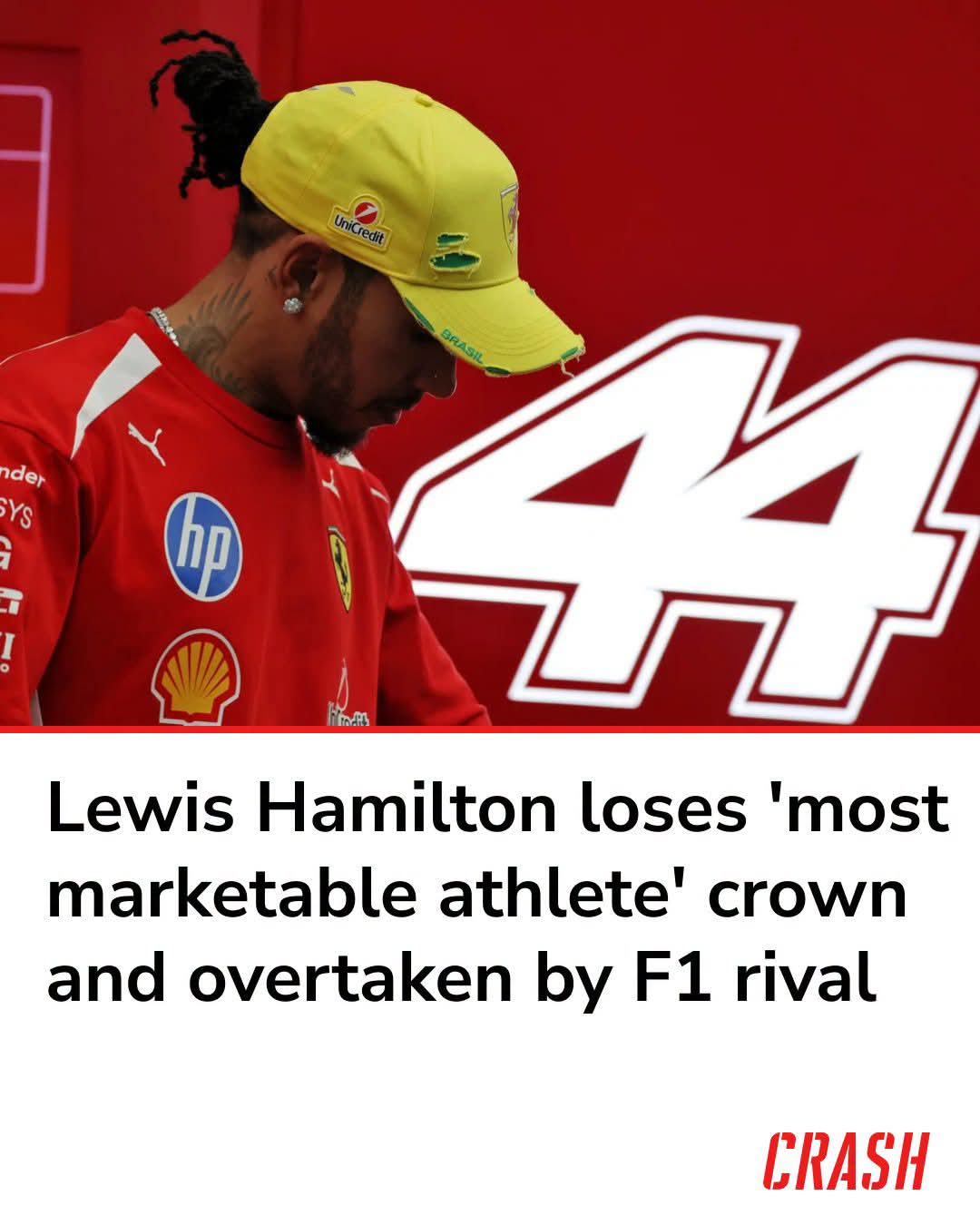
Lewis Hamilton has suffered an unexpected setback away from the racetrack after losing his position as Formula 1’s most marketable driver in a major annual sporting ranking.
The seven-time world champion, who previously dominated SportsPro’s Most Marketable Athletes list, has experienced a dramatic decline in his position, with Ferrari teammate Charles Leclerc now emerging as Formula 1’s highest-ranked representative.
The latest rankings provide an interesting perspective on how Hamilton’s commercial influence is evolving, particularly as the British superstar approaches the later stages of his extraordinary racing career.
Although Hamilton remains one of the most recognisable athletes globally, the latest assessment suggests that his younger Ferrari teammate is increasingly becoming one of the sport’s most valuable commercial personalities.
HAMILTON SUFFERS MASSIVE COLLAPSE IN SPORTS MARKETING RANKING
Hamilton’s fall in the 2026 SportsPro Most Marketable Athletes ranking represents one of the most significant changes involving Formula 1 personalities.
The British driver previously occupied first position in the 2025 edition, recording an impressive marketability score of 96.03 out of 100.
However, his score has now fallen to 66.63, leaving him in 22nd position overall.
That represents a substantial decline in his ranking, although it does not necessarily mean that Hamilton’s commercial popularity has disappeared.
The assessment reflects a broader evaluation of an athlete’s marketability, including brand strength, audience engagement, commercial partnerships and potential future influence.
Hamilton continues to possess extraordinary global recognition, but the latest results indicate that other sporting personalities are currently outperforming him in the overall assessment.
CHARLES LECLERC OVERTAKES HAMILTON AS F1’S MOST MARKETABLE DRIVER
The biggest Formula 1 development in the rankings involves Charles Leclerc, who has become the championship’s highest-ranked driver in ninth position.
The Ferrari Monegasque achieved a marketability score of 71.12, placing him ahead of Hamilton and several other established F1 stars.
According to Chris Collins, president of NorthStar Solutions Group, Leclerc performed particularly strongly in brand equity, supported by his personal presentation, compelling story and premium commercial partnerships.
Collins also highlighted Leclerc’s considerable social media following and the level of interaction generated by his audience.
That distinction is important because modern athlete marketability increasingly depends on more than simply attracting followers.
Brands want personalities capable of generating meaningful engagement, maintaining a consistent public image and connecting with audiences across different markets.
Leclerc’s commercial appeal appears to be benefiting from those qualities, placing him in an increasingly influential position within Formula 1.
WHY HAMILTON’S AGE HAS BECOME A FACTOR IN HIS COMMERCIAL VALUE
Collins offered an explanation for Hamilton’s position, suggesting that his declining marketability score is not primarily a reflection of a weaker personal brand.
Instead, he pointed towards the British driver’s age and the shorter remaining period of his competitive career.
At 41, Hamilton is entering the later chapters of a remarkable sporting journey, meaning future commercial assessments may naturally consider how much competitive time remains.
This does not diminish his achievements or the extraordinary influence he has accumulated throughout his career.
However, marketability rankings often evaluate future potential alongside existing popularity, meaning younger athletes can benefit from longer projected careers and greater opportunities for commercial growth.
Hamilton’s situation demonstrates the difference between being an established sporting icon and being considered one of the most commercially promising athletes for the future.
MAX VERSTAPPEN ALSO STRUGGLES TO BREAK INTO THE TOP 40
Hamilton is not the only Formula 1 superstar experiencing difficulties in the latest rankings.
Max Verstappen, the four-time world champion, occupies 48th position with a score of 60.45.
Although Verstappen remains one of the sport’s most influential competitors, his ranking places him considerably below Leclerc and Hamilton.
George Russell and Oscar Piastri are positioned even further down the list, occupying 55th and 56th respectively.
Lando Norris has also suffered a substantial decline, falling from 41st position in 2025 to 78th in the latest assessment.
Meanwhile, Andrea Kimi Antonelli, Formula 1’s newest world champion according to the supplied report, occupies 126th position.
These results underline how sporting achievements alone do not automatically translate into commercial dominance.
WHY LECLERC’S MARKETABILITY COULD CONTINUE GROWING
Leclerc’s commercial position could become increasingly significant if he maintains his competitive performances and strengthens his global profile.
The Ferrari driver benefits from representing one of the most recognisable brands in motorsport, while his personal image and international audience provide additional opportunities for commercial partnerships.
His appeal extends beyond race results, particularly through his public appearances, social media activity and growing recognition among younger Formula 1 supporters.
Ferrari’s enormous global audience also creates a powerful platform for expanding his commercial influence.
However, maintaining that position will require consistency, continued audience engagement and a strong public image.
SPORTS PRO’S RANKING REVEALS A SURPRISING SPORTING SHIFT
The overall ranking also demonstrates that Formula 1 does not currently dominate the athlete marketability conversation.
Tennis star Aryna Sabalenka occupies first position, followed by freestyle skiing sensation Eileen Gu and basketball superstar Giannis Antetokounmpo.
Football’s Erling Haaland and tennis champion Carlos Alcaraz complete the top five.
The presence of athletes from different sporting disciplines highlights the growing importance of international audiences, commercial partnerships and personal branding.
Formula 1 remains a powerful global platform, but its drivers must increasingly compete with athletes from football, basketball, tennis and other sports for commercial attention.
HAMILTON’S LEGACY REMAINS FAR BIGGER THAN ONE RANKING
Despite losing his position as Formula 1’s most marketable athlete, Hamilton’s influence within the sport remains enormous.
His seven world championships, record-breaking achievements and global popularity have established him as one of the most recognisable sporting personalities of his generation.
His commercial legacy also extends beyond motorsport through fashion, cultural influence and partnerships with major international brands.
The latest ranking should therefore not be interpreted as evidence that Hamilton has suddenly become commercially irrelevant.
Instead, it reflects an evolving market in which younger athletes and emerging sporting personalities are increasingly competing for attention.
For Ferrari, Leclerc’s ninth-place ranking represents another encouraging development, while Hamilton’s decline offers an interesting reminder that even the biggest sporting icons must contend with changing commercial priorities.
Ultimately, the 2026 SportsPro rankings have delivered an unexpected verdict on Formula 1’s commercial hierarchy: Hamilton remains a global superstar, but his Ferrari teammate is currently enjoying the stronger position in the battle for sporting marketability.