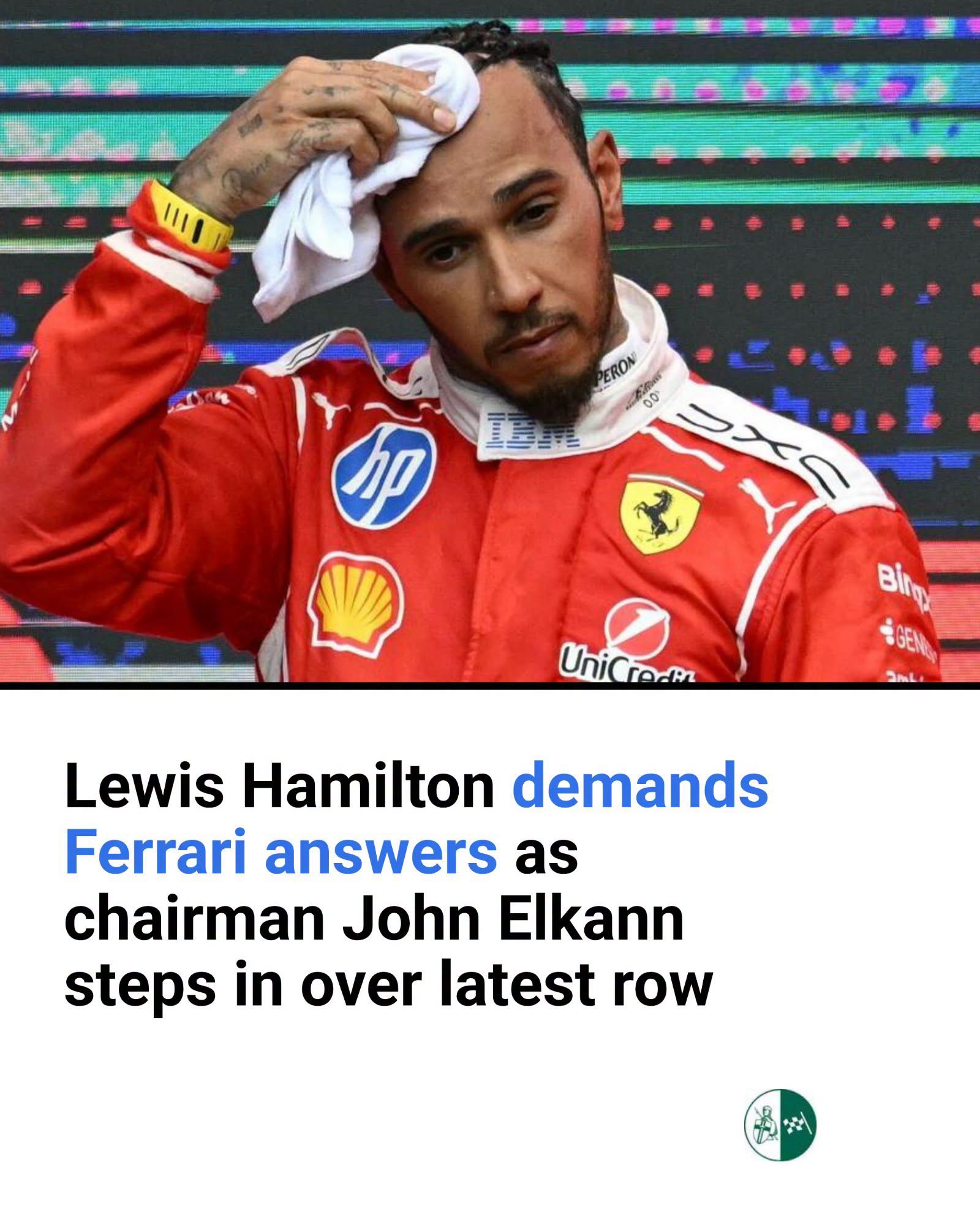
Lewis Hamilton’s difficult afternoon at the Sao Paulo Grand Prix has triggered fresh tension inside Ferrari, with chairman John Elkann reportedly becoming involved as questions grow over the team’s disappointing performances and internal disagreements.
The seven-time world champion finished ninth at Interlagos, marking his worst Sunday result of the 2026 season outside the retirement he suffered at the Spanish Grand Prix in Madrid. It was also the first time this year that Hamilton had finished a Grand Prix outside the top six.
The disappointment was made worse by the fact that Charles Leclerc also endured a difficult afternoon. The Monegasque crossed the line in eighth before a post-race penalty affected his final classification, leaving Ferrari with another weekend far below its expectations.
Hamilton is now seeking answers, and the involvement of Ferrari’s chairman suggests that the concerns surrounding the team are attracting attention at the highest level.
HAMILTON DEMANDS ANSWERS AFTER FERRARI’S BRAZIL COLLAPSE
Hamilton’s ninth-place finish was a significant setback after a season in which he had generally managed to remain competitive.
Interlagos exposed several difficulties for Ferrari, with neither driver able to challenge for the leading positions. For a team with championship ambitions, having both cars finish outside the leading group represents a worrying outcome.
Hamilton’s frustration is understandable. Drivers depend on their teams to provide competitive machinery, effective strategy and clear communication. When those elements fail to come together, the consequences become visible on Sunday.
However, the important question is whether Ferrari can identify the reasons behind the disappointing performance and introduce meaningful improvements before the remaining races.
Hamilton has made it clear that he wants explanations rather than simply accepting another difficult weekend.
JOHN ELKANN’S INVOLVEMENT ADDS PRESSURE
The reported involvement of chairman John Elkann adds another dimension to Ferrari’s situation.
When disagreements and performance concerns reach the highest levels of a Formula 1 organisation, it becomes increasingly difficult for the team to treat them as isolated sporting problems.
Elkann represents the wider leadership structure behind Ferrari, meaning his involvement could have implications for how the organisation approaches its current difficulties.
Ferrari must balance the expectations of its drivers with the need to maintain a stable working environment. Hamilton and Leclerc are both high-profile competitors, and their frustrations cannot be allowed to overshadow the team’s wider objectives.
The chairman’s involvement also underlines the importance of restoring confidence across the organisation.
LECLERC’S STRUGGLES SHOW THIS IS NOT JUST A HAMILTON PROBLEM
One important detail from Brazil is that Hamilton was not the only Ferrari driver struggling.
Leclerc also failed to find the pace needed to challenge towards the front, eventually finishing eighth before his post-race penalty affected the result.
That matters because it makes it harder to explain Ferrari’s problems solely through Hamilton’s adaptation to the team.
The British driver has faced criticism throughout his Ferrari career, but when both cars struggle at the same circuit, attention naturally turns towards the machinery, setup decisions and overall team execution.
Leclerc has spent several seasons working with Ferrari and understands its systems. If both drivers are encountering similar limitations, the organisation must examine whether there are deeper weaknesses affecting its competitiveness.
THE HAMILTON-LECLERC TENSION IS BECOMING ANOTHER DISTRACTION
Ferrari’s difficulties have also been accompanied by growing attention surrounding the relationship between its two drivers.
Their Mexico City opening-lap collision and subsequent discussions in Brazil created another uncomfortable moment for the team.
Hamilton’s frustration following the incident brought renewed focus to Ferrari’s handling of its driver pairing. Leclerc, meanwhile, remains an established figure within the organisation and has his own ambitions to compete for championships.
Managing two drivers with such strong competitive instincts requires clear leadership.
Ferrari must establish expectations around racing conduct, communication and strategic decisions. Without that clarity, disagreements can become distractions at precisely the moment when the team needs unity.
The organisation cannot afford to allow internal tension to become more important than improving its performance.
FERRARI’S TECHNICAL PROBLEMS NEED MORE THAN INTERNAL MEETINGS
The biggest challenge facing Ferrari is translating discussions into improvements on track.
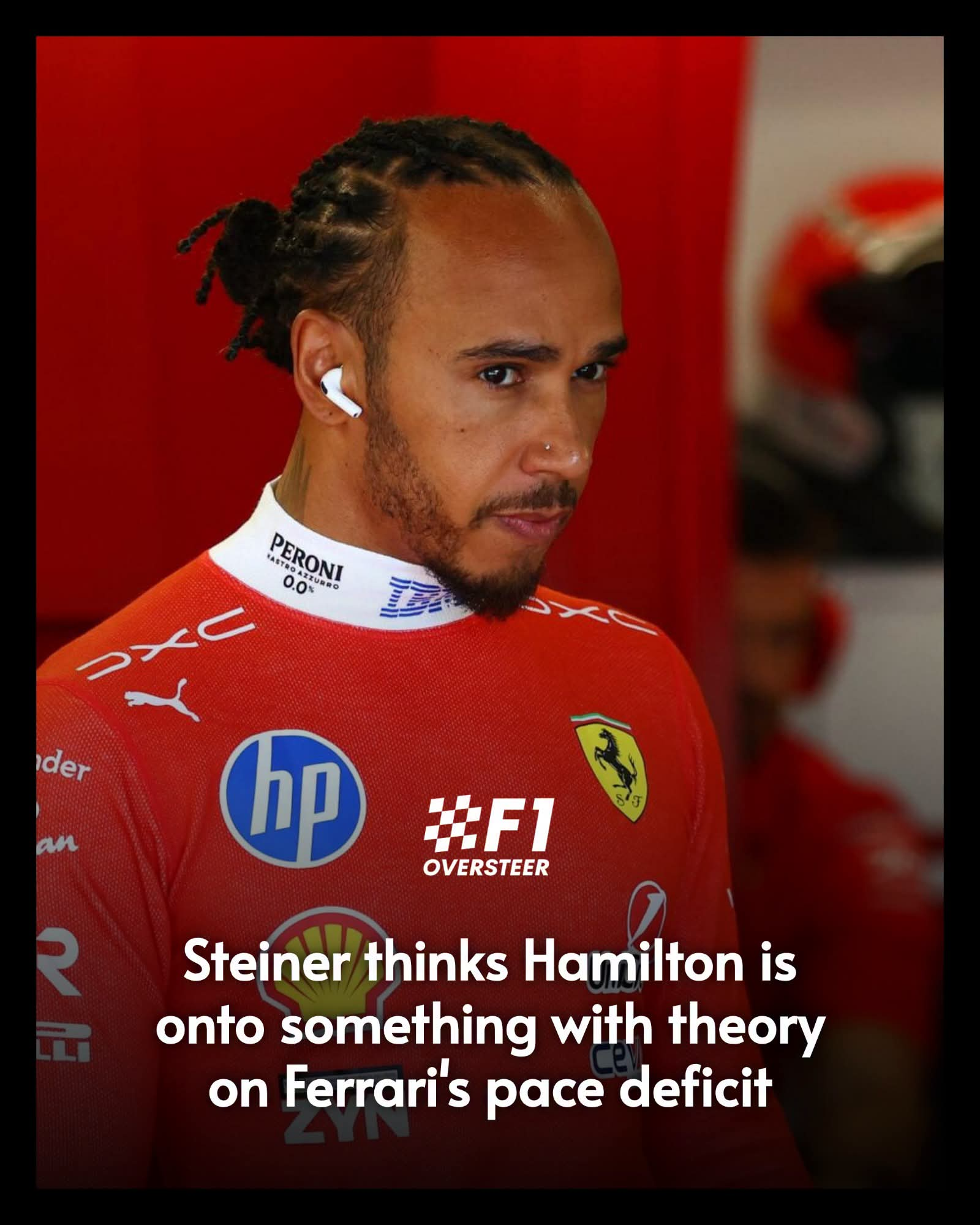
Hamilton has previously highlighted concerns about the team’s performance, including its lack of top-end speed compared with rivals. Such limitations cannot be solved through management meetings alone.
Engineers must understand where the car is losing time, whether the problem is connected to aerodynamic efficiency, power delivery, tyre performance or setup limitations.
The team also needs to ensure that its development direction works for both drivers.
A competitive Formula 1 car requires several departments to operate effectively together. If one area consistently falls short, even the strongest driver pairing can struggle to deliver victories.
Ferrari’s leadership therefore has to make sure that the concerns raised by Hamilton and Leclerc reach the people responsible for producing practical solutions.
HAMILTON’S EXPERIENCE COULD BECOME IMPORTANT IN THE REBUILD
Hamilton’s championship experience remains one of Ferrari’s most valuable assets.
He has worked within a highly successful Mercedes organisation and understands what is required to build a championship-winning environment.
That experience could help Ferrari identify weaknesses in its processes, communication and technical development.
However, experience only makes a difference when a team is willing to listen and act on constructive feedback.
Hamilton cannot single-handedly transform Ferrari, just as Elkann cannot solve the team’s technical problems through executive intervention.
The responsibility must be shared across the organisation, from senior management to the engineers working on the car.
THE REMAINING RACES WILL TEST FERRARI’S RESPONSE
With the Las Vegas Grand Prix approaching, Ferrari has limited time to demonstrate that the Brazil disappointment will not become a recurring problem.
The team needs to restore confidence, improve its execution and give both drivers a realistic opportunity to fight towards the front.
For Hamilton, the immediate priority is recovering from a weekend that exposed the limitations of his current situation.
For Leclerc, it is equally important to return to consistent performances and avoid further incidents that could complicate Ferrari’s campaign.
The pressure is now on the entire organisation to show that it can respond effectively when expectations are not being met.
THE VERDICT: FERRARI MUST ANSWER THE QUESTIONS ON TRACK
Elkann’s reported involvement and Hamilton’s demand for answers highlight how seriously Ferrari’s latest struggles are being viewed.
But the real measure of progress will not be the number of meetings held behind closed doors. It will be whether Ferrari can produce a faster, more reliable and more consistently competitive car.
Hamilton and Leclerc have both experienced the frustration of leaving Interlagos without the results they wanted. Their performances also suggest that the problems extend beyond one driver’s individual form.
Ferrari still has the resources, experience and driver talent to compete at the highest level. What it needs now is a clear technical direction and stronger execution.
Hamilton is demanding answers. Ferrari’s next performances will determine whether the organisation has found them.