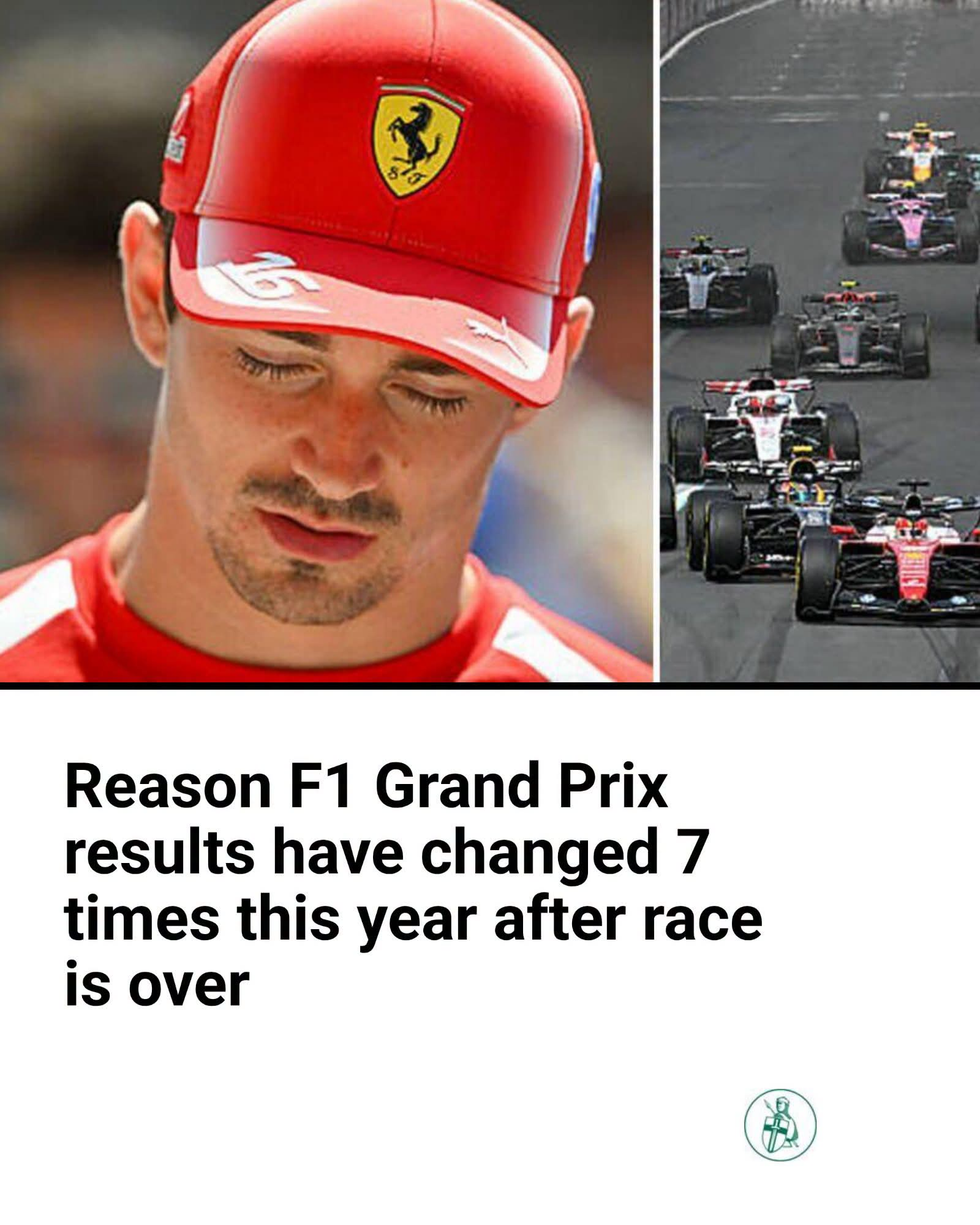
The 2026 Formula 1 season has delivered plenty of excitement on the circuit, but some of its biggest talking points have emerged after the chequered flag. Across seven different occasions, Grand Prix classifications have been altered following post-race investigations, penalties and decisions by FIA stewards.
With Kimi Antonelli already crowned the youngest Drivers’ World Champion in Formula 1 history, attention is increasingly turning towards the controversies that have shaped the season. From Charles Leclerc losing positions to Pierre Gasly having a penalty overturned, several drivers have discovered that their finishing positions were not necessarily final when they crossed the line.
The latest example came at the Brazilian Grand Prix, where penalties involving Charles Leclerc, Kimi Antonelli and Oliver Bearman affected the final classification.
These incidents have highlighted an important reality of modern Formula 1: a race is not always over when the drivers take the chequered flag. Stewards can still investigate incidents, examine evidence and impose sanctions that significantly change the result.
MIAMI GRAND PRIX: CHARLES LECLERC LOSES TWO POSITIONS
The first major post-race classification change highlighted by the report came at the Miami Grand Prix in May.
Charles Leclerc was involved in a late-race incident after continuing to drive his damaged Ferrari during the final lap. The stewards determined that he had breached the relevant regulations by continuing with the damaged car.
His original drive-through penalty was converted into a 20-second time penalty because the race had already ended.
That decision proved costly for the Ferrari driver. Leclerc dropped from sixth to eighth in the final classification, losing two valuable positions after the race.
The incident demonstrated how quickly a driver’s result can deteriorate when a damaged car creates a potential safety concern.
For Ferrari, it was another reminder that protecting a finishing position must never come at the expense of following the regulations.
BARCELONA GRAND PRIX: FRANCO COLAPINTO PUNISHED UNDER YELLOW FLAGS
The Barcelona-Catalunya Grand Prix in June also produced a significant change to the final standings.
Franco Colapinto initially finished eighth but was later penalised for failing to slow sufficiently under yellow-flag conditions.
Yellow flags are among the most important safety signals in Formula 1. Drivers are expected to reduce their speed and be prepared to change direction or stop if necessary because an incident or hazard may be present.
The stewards’ decision dropped Colapinto from eighth to tenth.
Liam Lawson and Arvid Lindblad consequently benefited, moving up to eighth and ninth respectively.
Although the change did not affect the podium, it was important for the midfield battle, where even one additional championship point can influence a team’s final position and financial rewards.
MONACO GRAND PRIX: FIA REVERSES PIERRE GASLY’S PENALTIES
Monaco produced one of the most controversial post-race decisions of the 2026 season.
Pierre Gasly initially received two separate five-second penalties, which pushed him down from third to seventh in the provisional classification.
However, the situation did not end there.
Following a review several days later, the FIA reversed the decision, demonstrating that post-race penalties can themselves become the subject of further scrutiny.
The weekend also featured another costly decision involving Sergio Perez.
The Cadillac driver received a 10-second penalty after the race, dropping from tenth to 15th. That change denied Cadillac what would have been its first championship point.
For a new team trying to establish itself in Formula 1, losing a potential point in such circumstances was particularly frustrating.
The Monaco controversy also raised questions about consistency in stewarding and the importance of ensuring that decisions are supported by clear evidence.
BRITISH GRAND PRIX: CARLOS SAINZ SUFFERS A FIVE-PLACE DROP
Carlos Sainz experienced one of the most damaging classification changes of the season at the British Grand Prix.
The Williams driver crossed the finish line in 12th position at Silverstone but was subsequently penalised for overtaking the safety car when he was not permitted to do so.
The punishment resulted in a penalty lap, sending him tumbling down the final classification to 17th.
Losing five positions after completing a demanding Grand Prix was a major disappointment for Sainz.
The safety car regulations exist to protect drivers and track personnel during dangerous situations. Overtaking restrictions are therefore taken seriously, regardless of how much time a driver believes can be gained.
For Williams, the result represented a missed opportunity to collect a stronger finish.
AZERBAIJAN GRAND PRIX: GABRIEL BORTOLETO LOSES A POSITION
The Azerbaijan Grand Prix in September added another name to the list.
Gabriel Bortoleto was penalised after overtaking Sergio Perez under yellow-flag conditions.
The Audi driver initially finished 13th but dropped to 14th following the stewards’ decision.
Perez and Oscar Piastri both benefited from the change, moving up one position each.
Although the penalty did not affect the points-paying positions, it demonstrated how important it is for drivers to remain alert to track conditions throughout a race.
Yellow-flag infringements can be particularly costly because the regulations are designed to prevent drivers from maintaining normal racing speeds when other competitors or marshals may be exposed to danger.
BRAZILIAN GRAND PRIX: THREE PENALTIES CHANGE THE FINAL CLASSIFICATION
The latest major example arrived at Interlagos during the Brazilian Grand Prix.
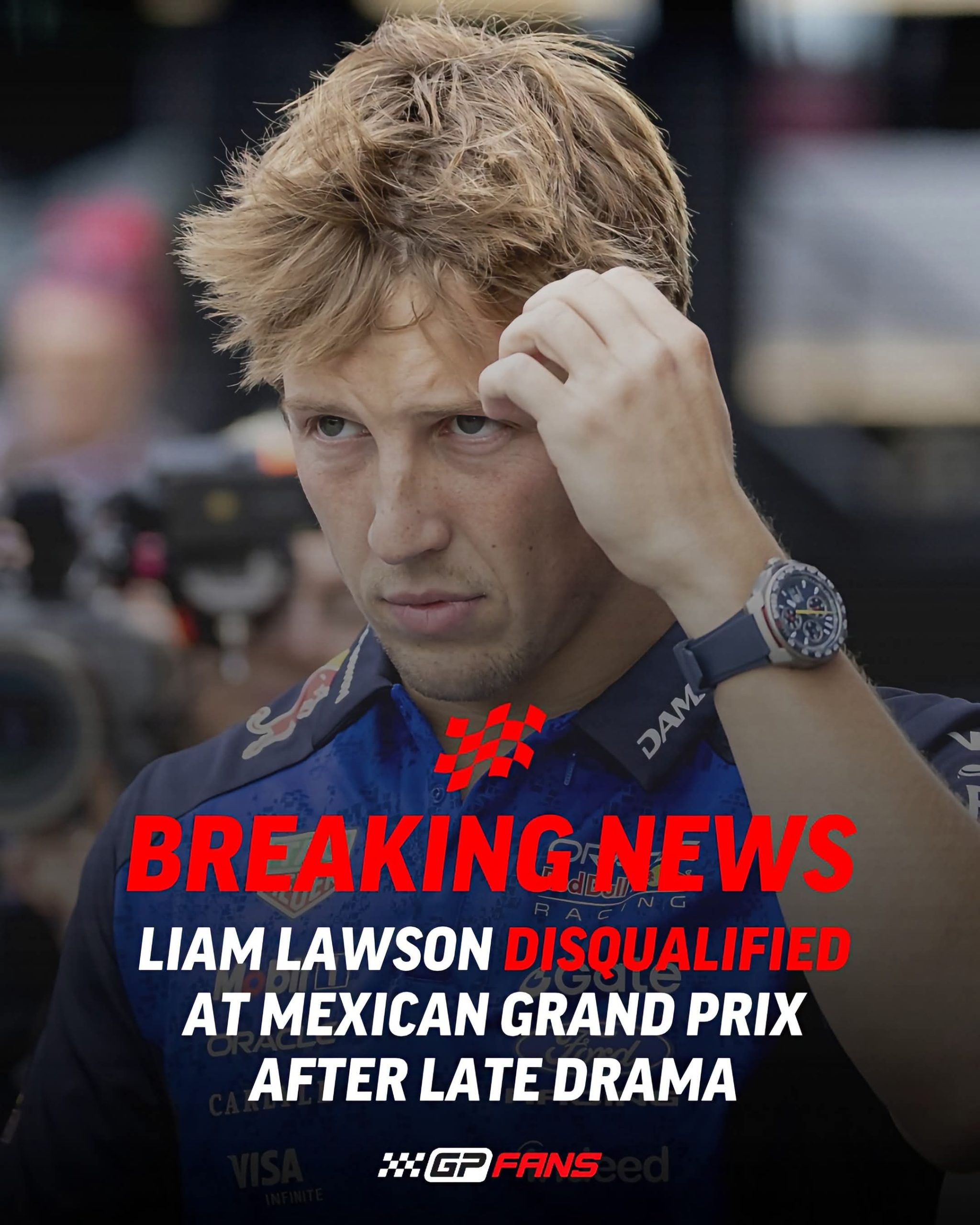
Lando Norris secured victory ahead of Max Verstappen and Isack Hadjar, but several incidents involving other drivers required attention from the stewards.
Charles Leclerc was among those affected after receiving a five-second penalty following his collision and overtake involving Liam Lawson late in the race.
The Ferrari driver dropped from seventh to eighth, allowing Lawson to move up to seventh.
Kimi Antonelli also received a five-second penalty after Mercedes released him unsafely into the path of Franco Colapinto in the pit lane.
Oliver Bearman was handed another five-second penalty for an unsafe release involving Leclerc.
Neither Antonelli’s nor Bearman’s punishment changed their finishing positions, but both decisions were included in the final classification adjustments.
For Mercedes, the incident was an unfortunate detail in an otherwise successful weekend, as the team had already secured the 2026 Constructors’ Championship.
WHY POST-RACE PENALTIES HAVE BECOME SUCH A BIG TALKING POINT
The seven classification changes highlighted during the 2026 season demonstrate the increasing importance of post-race investigations in Formula 1.
Modern Grands Prix involve complex regulations covering safety cars, yellow flags, pit-lane procedures, track limits, car condition and on-track battles.
Stewards often need to examine video footage, telemetry, radio communications and driver explanations before reaching a conclusion.
That process can take time, meaning provisional results may change after the celebrations have already begun.
There is also a significant championship impact. A five-second penalty might appear relatively minor, but it can cost a driver several positions when the field is closely matched.
For teams fighting over constructors’ points, such changes can influence millions of dollars in championship-related revenue and affect the final competitive picture.
However, the Monaco situation also demonstrates why the review process must be transparent and consistent. When penalties are reversed days later, fans and teams naturally demand clear explanations.
FIA STEWARDS FACE PRESSURE TO DELIVER CONSISTENT DECISIONS
The repeated changes have placed additional attention on the FIA’s approach to stewarding.
Formula 1 fans regularly disagree over penalties, particularly when similar incidents appear to receive different punishments at different events.
The challenge is that not every incident is identical. Speed, available space, driver behaviour, consequences and the evidence available to the stewards can all influence a decision.
Nevertheless, consistency remains essential if competitors are to have confidence in the regulations.
The FIA must also balance sporting fairness with safety. Incidents involving unsafe releases, yellow flags and damaged cars cannot simply be ignored because a driver has already completed the race.
As the 2026 season approaches its conclusion, further investigations remain possible, and the provisional classification of a Grand Prix should never be treated as completely final until the relevant procedures are completed.
The seven occasions highlighted this year have provided a clear reminder: in Formula 1, the battle for positions can continue long after the chequered flag has fallen.