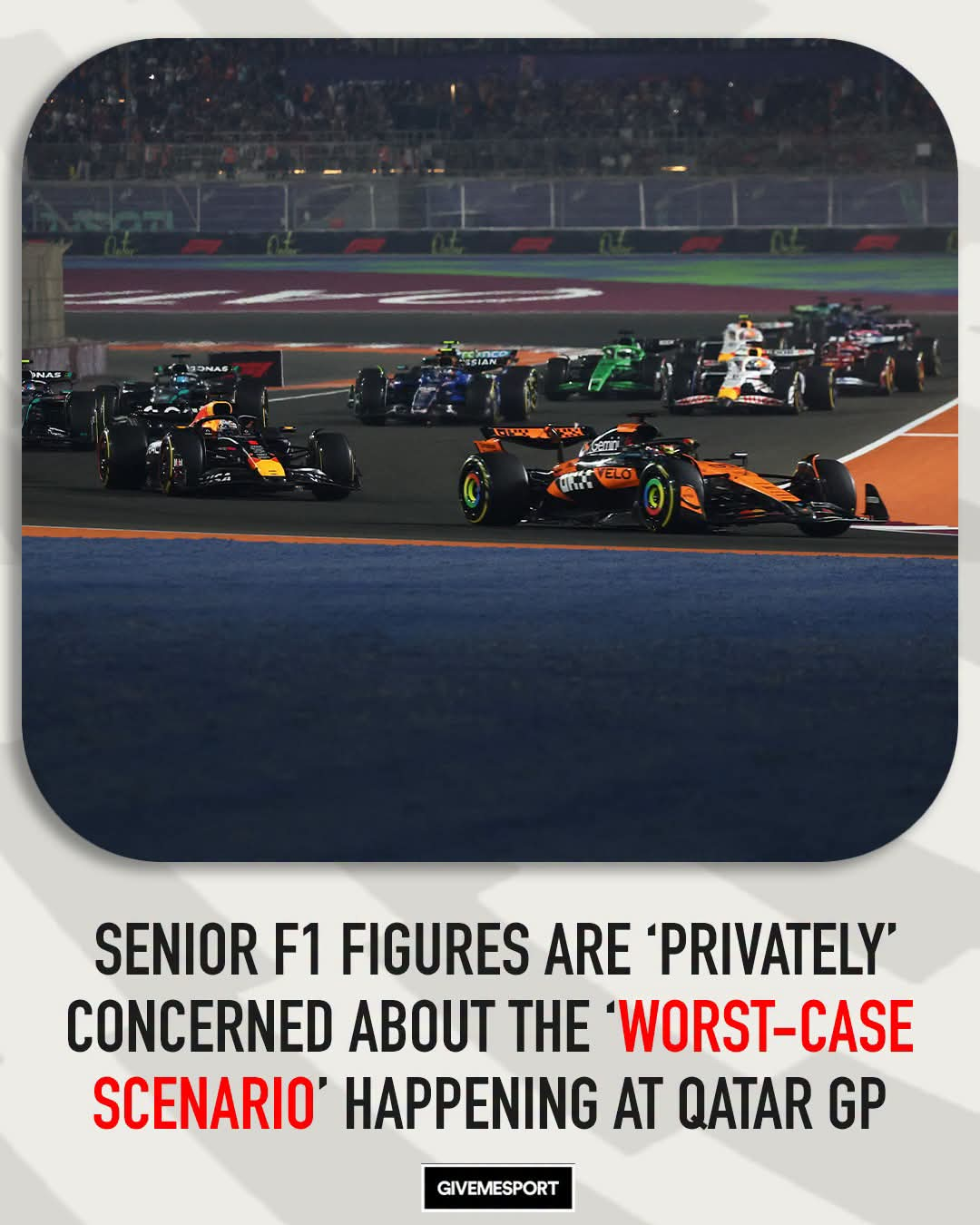
Formula 1 is facing a difficult decision ahead of the final two races of the 2026 season, with senior figures reportedly expressing serious private concerns about travelling to the Middle East amid escalating regional tensions.
Although the Qatar and Abu Dhabi Grands Prix remain on the calendar, a fresh report from the BBC suggests that not everyone within the sport is comfortable with the current situation. According to the report, several influential figures privately believe proceeding with both events could be the wrong decision under the circumstances.
The concerns are particularly significant because Formula 1 has already experienced disruption to its 2026 calendar. Earlier in the year, the Bahrain and Saudi Arabian Grands Prix were cancelled following the outbreak of the conflict involving Iran, the United States and Israel.
Now, with the championship approaching its conclusion, the possibility of further disruption has returned.
The timing could hardly be more sensitive. Kimi Antonelli has already secured the Drivers’ Championship in Mexico, but the remaining races still matter enormously to teams, drivers, sponsors and the commercial structure of Formula 1.
The biggest question is whether the sport will prioritise completing its calendar as planned or take further action if the security situation deteriorates.
SENIOR F1 FIGURES REPORTEDLY WORRIED ABOUT THE MIDDLE EAST RACES
According to the BBC report cited by GiveMeSport, concerns about the final two races are being discussed privately within the paddock.
The report states that many people in Formula 1 have significant misgivings about travelling to the region, even though those opinions are generally not being expressed publicly.
More importantly, some senior figures reportedly believe the decision to hold the races in Qatar and Abu Dhabi under the current circumstances could carry serious risks.
One of the most striking descriptions in the report is the reference to a possible “worst-case scenario.”
That phrase raises important questions about the level of concern behind the scenes. While it does not establish that an incident is expected or that either event is certain to be cancelled, it suggests that some people within the sport are considering consequences beyond ordinary logistical disruption.
Formula 1 operates on an international scale, moving thousands of people, cars, equipment and technical resources between countries. Any security concern therefore affects far more than the drivers competing on Sunday.
Team personnel, mechanics, engineers, broadcasters, officials, hospitality workers and travelling supporters could all be affected by a decision to proceed.
WHY QATAR AND ABU DHABI HAVE BECOME A MAJOR CONCERN
The 2026 season is scheduled to conclude with the Qatar Grand Prix on November 29, followed by the Abu Dhabi Grand Prix on December 6.
Both events are important fixtures on the modern Formula 1 calendar. Qatar has established itself as a major destination for the championship, while Abu Dhabi traditionally hosts the season finale at the Yas Marina Circuit.
However, the regional conflict has introduced uncertainty that cannot be ignored.
The United States and Israel launched air strikes against Iran in February, after which Iran fired missiles at Israel and other countries in the region with links to the United States.
The consequences extended beyond the countries directly involved, creating wider security and travel concerns across the Middle East.
For Formula 1, the challenge is determining whether the circumstances surrounding the races remain sufficiently stable to allow the championship to proceed safely.
The fact that the events are scheduled in countries that are not necessarily direct participants in the conflict does not automatically remove every potential risk. International sporting events depend on secure travel routes, reliable infrastructure and the ability to protect everyone involved.
That is why the situation requires continuous assessment rather than assumptions based solely on the current race schedule.
FORMULA 1 HAS ALREADY CANCELLED TWO RACES THIS SEASON
The possibility of further cancellations is not simply speculation based on an unfamiliar situation.
Formula 1 has already removed two races from the 2026 calendar following the outbreak of the conflict.
The Bahrain and Saudi Arabian Grands Prix were cancelled in March, forcing the championship to adjust its schedule and creating significant consequences for teams, promoters and commercial partners.
That earlier decision demonstrated that Formula 1 is prepared to make difficult calendar changes when circumstances demand them.
However, the remaining Middle East events present a different challenge because they are scheduled towards the end of the season.
The Qatar Grand Prix is followed immediately by the Abu Dhabi finale, meaning a disruption to either event could affect the championship’s closing arrangements.
If Qatar were cancelled, Formula 1 would need to decide whether to proceed directly to Abu Dhabi or find another venue. If Abu Dhabi were affected, the sport would face the even more complicated task of finding a suitable location for its season finale.
The priority would have to remain the safety of everyone involved, rather than simply protecting the original calendar.
IMOLA EMERGED AS A POSSIBLE REPLACEMENT VENUE
One of the most interesting details surrounding the uncertainty is the reported preparation of Imola as a possible replacement venue.
According to the timeline in the GiveMeSport report, Formula 1 had considered the Italian circuit as an “oven-ready” alternative for the season finale.
Imola is familiar territory for the championship and has previously hosted major Formula 1 events. Its experience, facilities and existing motorsport infrastructure could make it a practical option if a replacement became necessary.
However, having a potential alternative does not mean a cancellation has been decided.
A replacement race would require careful coordination involving the FIA, Formula 1 management, teams, circuit organisers, broadcasters and commercial partners. The timing would also be complicated because the championship is already approaching its final weeks.
There would be questions about freight transportation, personnel availability, accommodation, ticketing and local preparations.
The existence of a contingency plan is therefore important, but it should not be mistaken for confirmation that Imola will host the finale.
For now, it remains a reported backup possibility rather than an announced replacement.
COMMERCIAL INTERESTS COULD MAKE THE DECISION MORE COMPLICATED
Formula 1’s relationship with Qatar and Abu Dhabi adds another layer to the situation.
Both countries have significant commercial connections with the sport, and the GiveMeSport report highlights their wider involvement through ownership interests linked to Audi and McLaren.
Those relationships make the final decision commercially sensitive.
The Qatar Investment Authority has been associated with Audi’s wider ownership structure, while Abu Dhabi’s CYVN Holdings has been involved in McLaren-related investment and ownership developments.
Formula 1 also has lucrative agreements connected to both destinations.
These commercial arrangements are important to the championship’s financial structure, but they cannot replace a proper assessment of security conditions.
A Grand Prix is a major international operation, not simply a sporting competition taking place inside a circuit. The organisers must consider the safety of everyone travelling to the event, including people who have no control over the wider political situation.
If the risks become unacceptable, commercial agreements would not remove the need to consider cancellation or relocation.
That is the difficult balance facing Formula 1: protecting its commercial commitments while ensuring that sporting ambitions do not outweigh the safety of its travelling workforce and fans.
FORMULA 1 IS REPORTEDLY WAITING FOR FURTHER DEVELOPMENTS
Another important detail in the report is that Formula 1 is believed to be monitoring the wider political situation before making any final decision.
The BBC report suggests that developments surrounding the Israeli election result and the United States midterm elections are among the factors being watched.
However, political events do not automatically determine whether a Grand Prix can proceed. The decisive considerations will include the actual security situation, advice from relevant authorities and the ability to operate the events safely.
Formula 1 chief executive Stefano Domenicali previously confirmed in October that both Middle East races would proceed as scheduled.
That position provides an indication of the sport’s intention at the time, but it does not mean the calendar cannot change if circumstances develop.
The situation remains fluid, and any significant deterioration could force a reassessment.
For teams, that uncertainty makes preparation more complicated. They must continue planning for the scheduled races while remaining aware that alternative arrangements could become necessary.
WHAT A QATAR OR ABU DHABI CANCELLATION WOULD MEAN FOR THE 2026 SEASON
The potential consequences would extend well beyond changing the location of a race.
For drivers, the final rounds are still opportunities to secure victories, podiums and valuable championship positions. Although Antonelli has already won the title, the battle behind him remains important.
Max Verstappen, Lewis Hamilton, George Russell and Charles Leclerc are among the drivers whose final championship positions could still be affected by the remaining events.
For constructors, every race represents an opportunity to collect points that influence prize-money distribution and the competitive position of each organisation.
A cancellation without a replacement would also reduce the number of opportunities available to teams to improve their final standings.
There would be consequences for broadcasters, sponsors, circuit organisers, hospitality businesses and fans who may already have made travel arrangements.
A replacement event could preserve some of those sporting and commercial opportunities, but organising one at short notice would be a substantial undertaking.
This is why Formula 1 needs to communicate clearly and make decisions early enough for everyone involved to respond.
THE SPORT MUST NOT ALLOW THE CHAMPIONSHIP TO OVERRIDE SAFETY
Formula 1 has spent years expanding its international calendar and building relationships with new destinations. That growth has brought greater commercial opportunities, but it has also increased the complexity of organising a global championship.
The 2026 situation is a reminder that sporting schedules cannot operate independently of the world around them.
The championship may want to finish the season with its planned Middle East double-header, particularly given the commercial importance of Qatar and Abu Dhabi. Nevertheless, the consequences of making the wrong decision could be far greater than the disappointment of losing two races.
There is also an important distinction between private concern and confirmed danger. The BBC report does not establish that an incident is imminent, nor does it confirm that either Grand Prix will be cancelled. It reveals that serious questions are reportedly being raised within the sport.
Those concerns deserve attention, but the final decision must be based on reliable security assessments rather than speculation.
If the situation remains stable and authorities can provide credible assurances, the races may proceed as planned. If the risks increase, Formula 1 must be prepared to activate its contingency arrangements.
QATAR GRAND PRIX FACES A CRITICAL TEST BEFORE THE SEASON FINALE
With the Brazilian Grand Prix taking place this weekend, Formula 1 is entering the final stretch of a dramatic 2026 campaign.
The championship will then travel to Las Vegas before heading to Qatar and Abu Dhabi for the final two rounds.
Antonelli may have already secured the biggest prize, but the sport still has several important battles to complete.
The uncertainty surrounding the Middle East races now threatens to become one of the biggest off-track stories of the closing weeks.
For the moment, both Grands Prix remain scheduled, and no cancellation has been officially confirmed in the supplied report.
However, the reported private concerns among senior figures show that the situation is being taken seriously.
Formula 1 now faces a difficult test of leadership. Completing the calendar would be commercially attractive and convenient for the championship, but ensuring the safety of drivers, teams, staff and fans must remain the overriding priority.
If the circumstances change, the sport must be ready to act — even if that means abandoning its original plans for the end of the 2026 season.