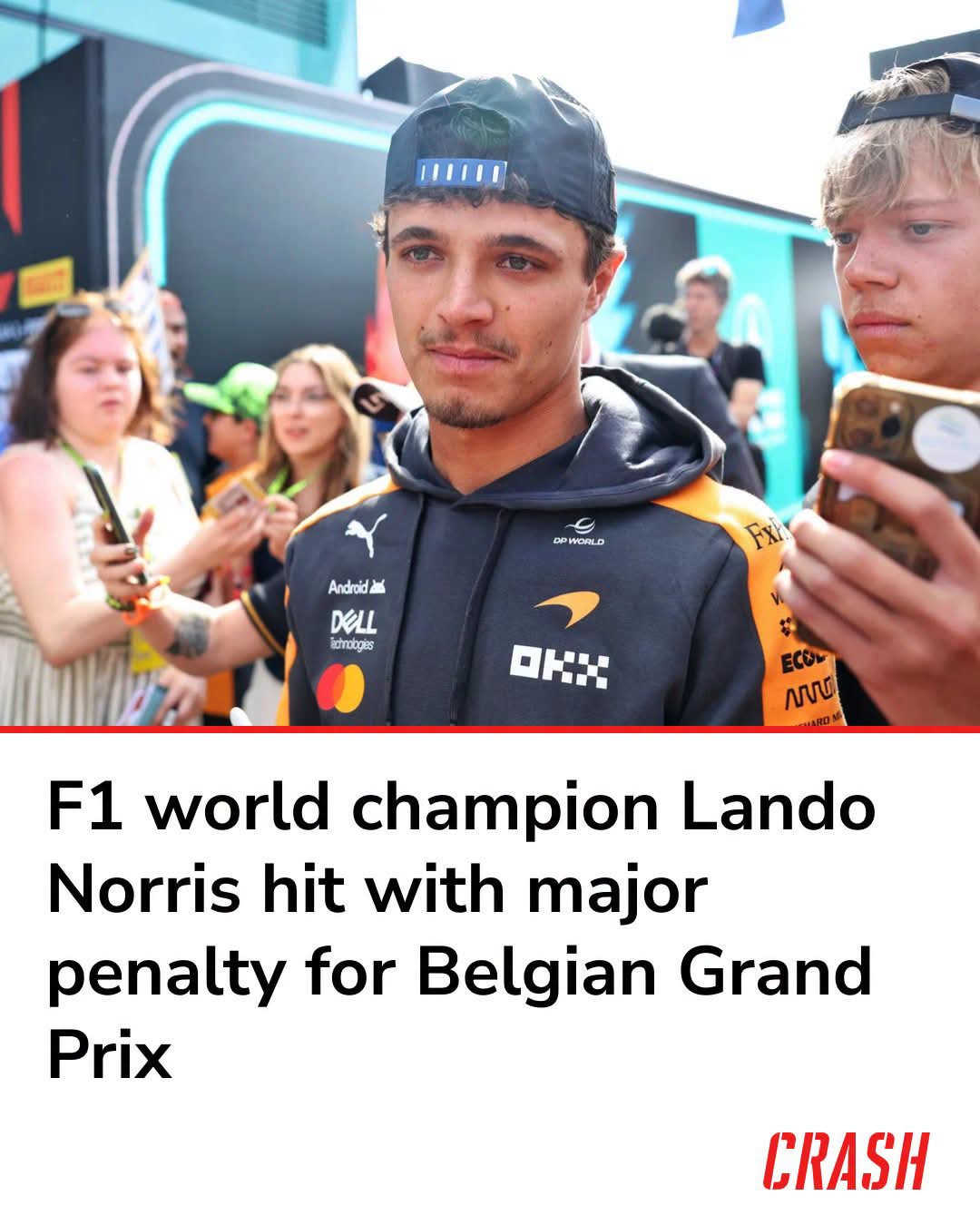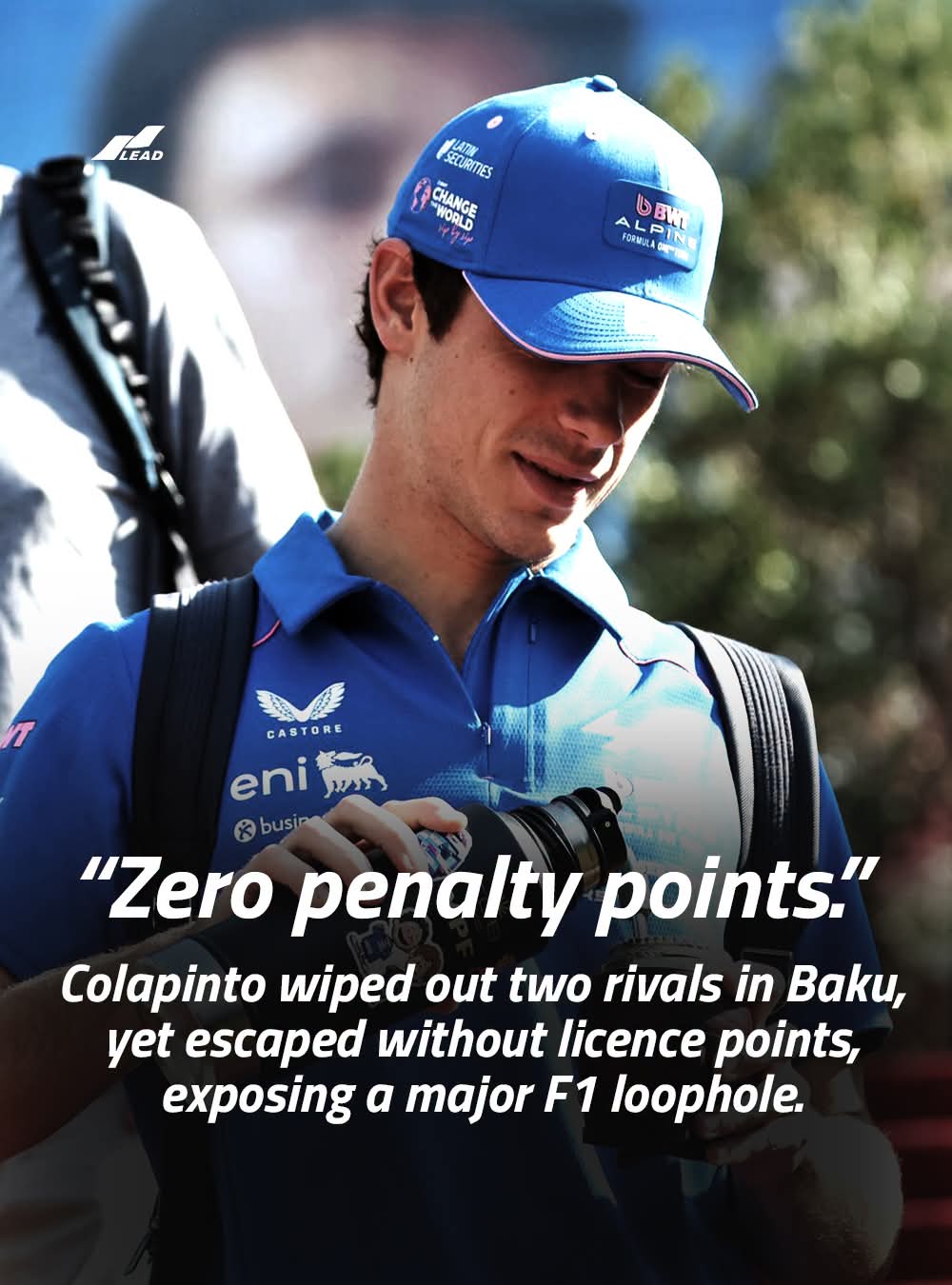
Franco Colapinto’s Azerbaijan Grand Prix has triggered renewed debate over how Formula 1 handles incidents that have major consequences for other drivers. The Alpine driver was involved in a collision in Baku that ended the races of Lando Norris and Pierre Gasly, leaving both rivals unable to continue. Despite the seriousness of the outcome, Colapinto emerged without penalty points on his FIA super licence, prompting questions about whether the current system adequately reflects the consequences of incidents on track.
The collision became one of the major talking points of the Azerbaijan weekend because of its immediate impact on two competitors. Norris and Gasly were both caught up in the incident, turning what could have been a normal race into a frustrating retirement for both drivers. For teams operating on extremely tight margins, losing a car means more than simply surrendering championship points. It can also mean damaged machinery, additional repair costs and lost opportunities that cannot be recovered later in the season.
However, the absence of penalty points does not necessarily mean that the FIA viewed the incident as completely consequence-free. Formula 1’s sporting regulations distinguish between the immediate sporting penalty imposed during a race and the accumulation of penalty points on a driver’s super licence. Stewards can assess an incident according to its circumstances, including factors such as responsibility, intent, positioning and the nature of the collision, while the separate penalty-point system is designed to monitor a driver’s record over time.
The controversy nevertheless raises a legitimate question about consistency. Fans and drivers naturally expect similar incidents to produce broadly understandable outcomes, particularly when a collision eliminates multiple competitors. At the same time, judging responsibility in a fast-moving F1 incident is rarely as simple as counting the number of cars that were damaged or retired. The stewards must consider what happened in the moments before contact rather than relying solely on the final consequences of the crash.
For Colapinto, the Baku incident will now become another chapter in his development as an F1 driver, while Norris and Gasly will be left to consider the points and opportunities lost through their retirements. The debate over penalty points is likely to continue, especially if comparable incidents produce different outcomes later in the season. Ultimately, the question is not simply whether Colapinto deserved more punishment, but whether Formula 1’s current system provides enough consistency and clarity for drivers, teams and fans to understand how serious on-track incidents are being judged.