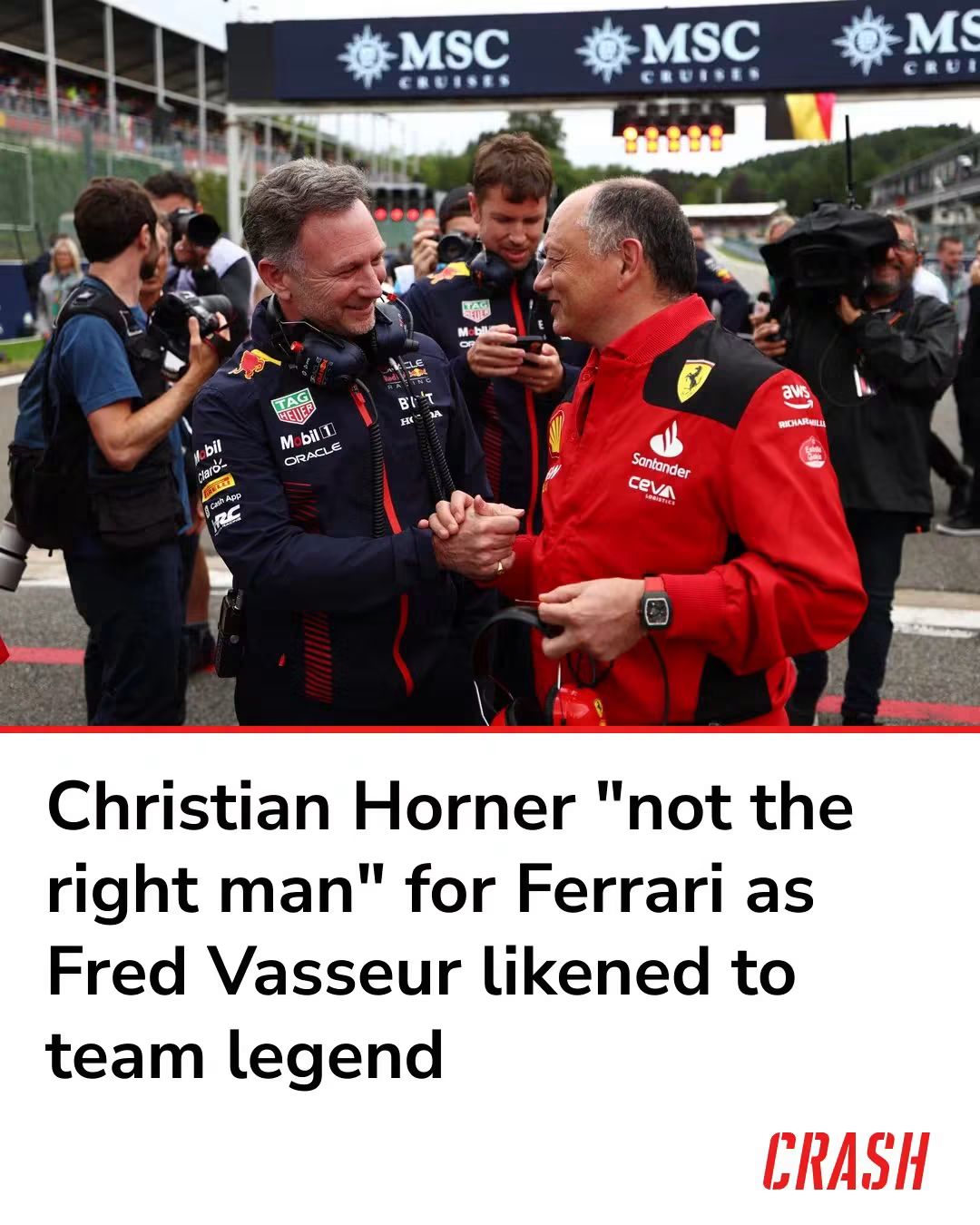
Former Red Bull team principal Christian Horner finds himself in a familiar spotlight once again. Speculation linking him to Ferrari refuses to fade, even as the 52-year-old insists any return to Formula 1 must come with ownership and that his earlier comments were taken out of context. One prominent voice from the sport’s past is not buying the narrative—or the approach.
Ralf Schumacher has delivered a blunt verdict. The former Formula 1 driver, speaking on a German podcast, described Horner’s public comments about Ferrari as “embarrassing.” Schumacher argued that Horner appears to be currying favour by repeatedly attaching his name to different teams, calling it an “indictment of poverty” for a man who once stood at the peak of the sport.
That criticism lands at a delicate moment. Horner’s September interview with *The Times*, in which he called Ferrari “the biggest brand in Formula 1,” “the dream,” and “the sleeping giant,” ignited fresh talk about the future of current Ferrari team principal Fred Vasseur. Horner later clarified that he never claimed the Ferrari job was *his* personal dream and that ownership remains non-negotiable for any comeback.
THE CONTEXT BEHIND THE LATEST ROUND OF SPECULATION
Horner left Red Bull in July 2025 after two decades in charge, a period that delivered six constructors’ titles and eight drivers’ championships. His exit was abrupt and, by his own description, brutal. Since then he has promoted his book *Drive*, spoken about Red Bull losing its “mojo” after his departure, and made clear he has significant capital behind him. He has also stressed he is in no rush to return simply for the sake of being on the pit wall.
In the *Times* interview he appeared to carve out one exception: Ferrari. He suggested it was the only team for which he would accept a role without an ownership stake. That single sentence was enough to send Italian media and the wider paddock into overdrive. Ferrari publicly backed Vasseur. Lewis Hamilton and Charles Leclerc also voiced support for their team principal. Martin Brundle even rang Horner directly and reported that the former Red Bull boss said he had merely been polite and respectful about Ferrari, only for the remarks to be amplified far beyond their intent.
Horner has since doubled down in conversations with *The Guardian* and during his book tour. Ferrari is the biggest and most historic brand in the sport, he said, but the team is not going to sell shares. Any future involvement for him must include ownership. He added that he is content to remain outside Formula 1 until the right opportunity with like-minded people appears. Returning just to take part holds no appeal.
WHY RALF SCHUMACHER’S CRITICISM CARRIES WEIGHT
Schumacher’s comments stand out because they come from inside the sport’s extended family. As a former driver with experience at multiple teams and the brother of seven-time champion Michael Schumacher, his perspective carries historical resonance. He sees Horner’s public positioning as a comedown from the decisive, often combative figure who built Red Bull into a dominant force.
There is a broader industry angle here. Formula 1 team principals operate under intense scrutiny. Success brings praise; anything short of it invites speculation about replacements. Ferrari’s structure, history, and passionate fanbase amplify that pressure more than most. Vasseur has faced questions almost continuously since taking the role, even as the team fights for strong championship positions. Horner’s remarks, however carefully later clarified, added another layer of noise at a time when the squad needed focus.
The personal dynamics add further complication. A theoretical Horner-Ferrari pairing would place him in the same organisation as Lewis Hamilton, a driver with whom relations were strained during the intense 2021 title battle. Brundle himself noted how interesting—and potentially combustible—that combination could prove.
WHAT THIS MEANS FOR FERRARI, RED BULL AND THE WIDER GRID
For Ferrari the episode is a reminder of how quickly external chatter can distract. Publicly reaffirming support for Vasseur was a necessary step. Continual talk of high-profile alternatives risks undermining morale inside the team and sending mixed signals to sponsors and the driver line-up. Hamilton and Leclerc’s public backing of their boss suggests the garage wants continuity rather than another round of upheaval.
Red Bull, meanwhile, continues its post-Horner chapter. The team is running its own power units for the first time, a project Horner helped set in motion. Whether the organisation has truly lost the edge he claims remains a live debate among observers. Horner’s willingness to comment on his former team’s direction keeps that conversation alive even as he stays officially outside the paddock.
Across the sport the episode highlights a structural reality. Ownership stakes are increasingly attractive to experienced operators who no longer want to answer solely to corporate boards. Horner has made that preference explicit. Smaller teams or potential new projects may offer more realistic paths for someone with his track record and financial backing than a historic manufacturer that keeps its racing division tightly controlled.
LOOKING AHEAD: OWNERSHIP, OPPORTUNITY AND THE LONG GAME
Horner’s current stance is clear. He is not desperate to return. He has the resources to wait. Any move must involve equity and people aligned on winning rather than simply participating. Ferrari remains an admired brand in his eyes, but not a realistic destination under present conditions.
Ralf Schumacher’s criticism may not close the door on future speculation—Formula 1 rarely lets a good rumour die—but it does inject a note of realism. Publicly floating high-profile options carries reputational risk, especially when the comments can be framed as job-seeking. For a figure who once controlled one of the most successful operations in the sport’s modern era, the optics matter.
The coming months will reveal whether a genuine ownership opportunity materialises for Horner. Until then, the Ferrari links are likely to surface whenever results at Maranello fall short of expectations or when Horner appears in the media. Vasseur’s position appears secure for now, backed by the team, its drivers, and the public record. Horner, for his part, seems prepared to stay on the sidelines until the terms match the ambition that defined his Red Bull years.
In a sport that thrives on drama, the combination of a successful former boss, an iconic team, and sharp commentary from a fellow racing figure ensures this story will keep generating headlines. The real test will be whether any of the talk ever turns into a concrete project—or whether Horner’s next chapter unfolds entirely outside the Formula 1 paddock.