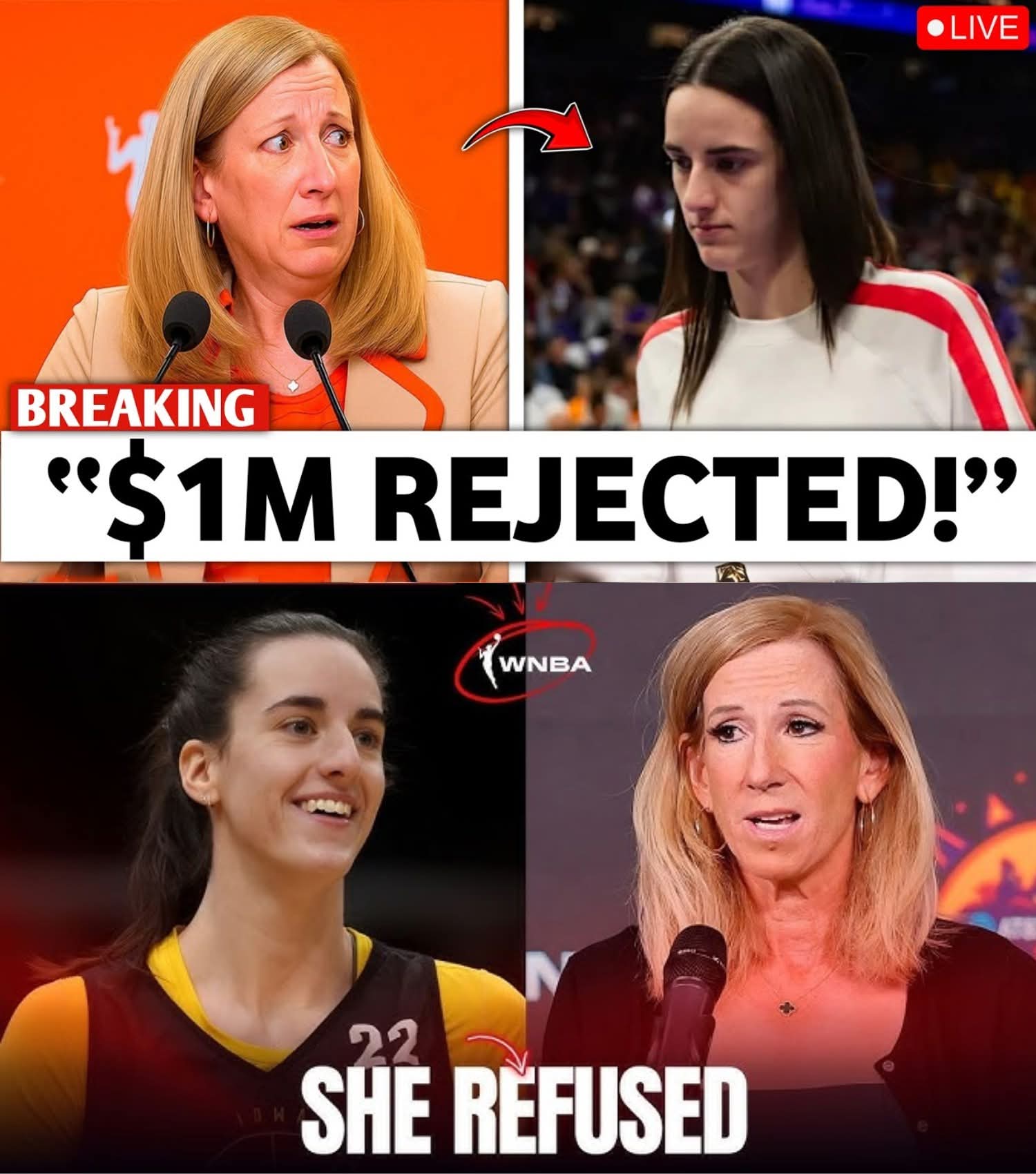
Caitlin Clark has become the face of a new era in women’s basketball, but the conversations surrounding her continue to extend far beyond her performances on the court. A recent claim that Clark turned down a reported $1 million opportunity has fueled another wave of debate about the WNBA’s culture, business strategy, and ability to capitalize on its unprecedented surge in popularity.
Whether discussing television ratings, attendance records, sponsorship growth, or league-wide visibility, Clark’s influence has become impossible to ignore. However, alongside that remarkable growth has come increasing scrutiny over how the league, its players, and its leadership are navigating the attention surrounding its biggest star. While strong opinions have emerged from every corner of the basketball world, the bigger question is whether the WNBA can transform this moment into sustainable long-term success.
CAITLIN CLARK’S IMPACT HAS CHANGED THE WNBA’S ECONOMIC LANDSCAPE
Few athletes have entered professional sports with the immediate commercial impact Clark has generated.
Since joining the WNBA, television audiences have surged, arenas have consistently sold out, merchandise sales have climbed dramatically, and corporate sponsors have shown greater interest in investing across the league. Games featuring Clark routinely produce some of the highest viewership numbers in WNBA history, creating financial opportunities that extend well beyond the Indiana Fever.
Her popularity has also introduced countless new fans to women’s basketball, many of whom had never regularly watched the league before her arrival. That influx of attention has benefited opposing teams through higher ticket sales, increased local media coverage, and stronger national exposure.
Rather than representing success for one franchise alone, Clark has become a major driver of the WNBA’s broader commercial growth.
THE DEBATE HAS SHIFTED FROM BASKETBALL TO BUSINESS
As Clark’s profile has expanded, discussions surrounding the WNBA have increasingly focused on economics rather than basketball.
Many analysts argue the league now faces one of the most significant business opportunities in its history. With growing television audiences and expanding sponsorship interest, executives have an opportunity to strengthen revenues, improve player salaries, expand marketing efforts, and accelerate overall league growth.
Others, however, caution against framing the league’s future around a single player, emphasizing that sustainable success requires promoting stars across every franchise.
This debate has created passionate disagreements among fans, media personalities, and former players, illustrating how Clark’s arrival has fundamentally changed conversations surrounding professional women’s basketball.
PUBLIC PERCEPTION HAS BECOME A CHALLENGE FOR THE LEAGUE
The WNBA has made enormous progress over the past several years, but public perception remains one of its most valuable—and vulnerable—assets.
Every controversial moment involving Clark quickly becomes national news, often dominating sports talk shows and social media for days. Whether discussing officiating, physical play, media narratives, or player rivalries, the attention surrounding Clark frequently overshadows the basketball itself.
For league officials, balancing competitive intensity with positive public messaging has become increasingly important.
Professional sports thrive on rivalries and emotion, but maintaining an environment that welcomes new fans while preserving competitive authenticity will remain one of the league’s biggest long-term challenges.
THE OPPORTUNITY EXTENDS FAR BEYOND ONE PLAYER
Although Clark has become the central figure in many headlines, the WNBA’s future depends on far more than one superstar.
Indiana’s roster features established stars such as Aliyah Boston and Kelsey Mitchell, while other franchises continue building around elite talents across the league. Rising television numbers create opportunities for all players to gain larger audiences, stronger endorsement opportunities, and greater national recognition.
History shows that transformative athletes often elevate entire leagues. Michael Jordan expanded the NBA globally. Tiger Woods transformed professional golf. Serena Williams helped reshape women’s tennis.
Clark now appears positioned to have a similarly significant influence on professional women’s basketball, provided the league successfully builds around its expanding popularity.
WHAT THE WNBA MUST DO NEXT
The WNBA finds itself at a defining moment.
Growing fan interest has created momentum that few sports leagues experience so rapidly. Maintaining that momentum will require continued investment in marketing, improved fan engagement, expanded media partnerships, and consistent efforts to showcase the league’s deepest collection of stars.
At the same time, league leadership must continue strengthening competitive balance while ensuring every franchise benefits from the increased attention.
If managed effectively, today’s discussions surrounding Clark could ultimately be remembered not as a source of controversy but as the turning point that accelerated the WNBA into its strongest commercial era.
THE BIGGER PICTURE REMAINS POSITIVE
Passionate debates often accompany periods of rapid growth in professional sports.
While opinions surrounding Clark, the WNBA, and the league’s direction remain divided, one fact is difficult to dispute: women’s basketball has never received this level of sustained global attention.
That attention brings pressure, criticism, and heightened expectations—but it also creates unprecedented opportunities.
Whether through record-breaking audiences, increased sponsorships, or expanding fan engagement, the WNBA now has an opportunity to build lasting success. How the league manages this historic moment may ultimately determine whether the current surge becomes a temporary boom or the foundation for a new generation of sustained growth.