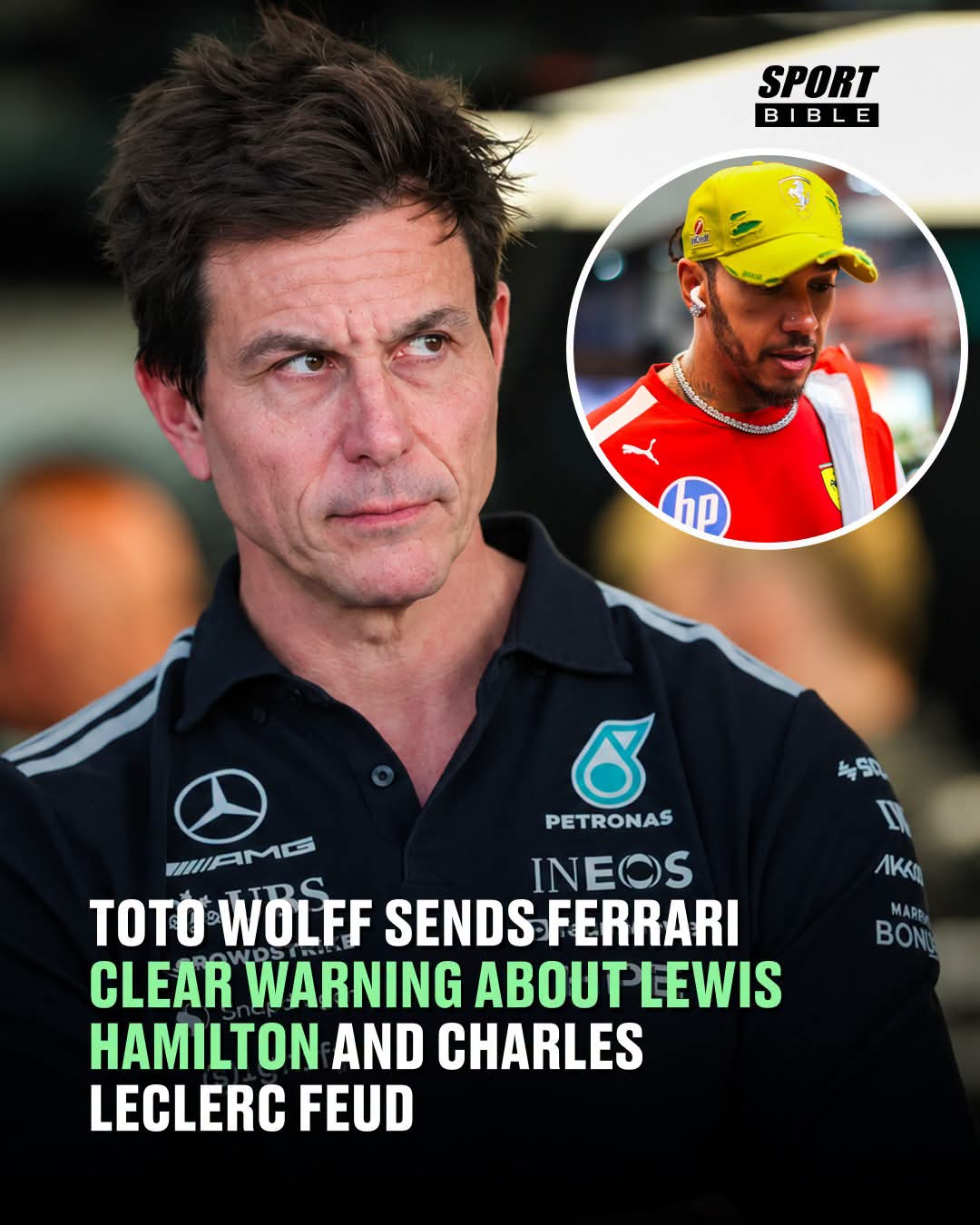
Ferrari’s 2026 season was supposed to mark the beginning of a new era. Lewis Hamilton, the seven-time world champion, joined Charles Leclerc at Maranello with the promise of combining experience, speed, and star power to end the team’s long title drought. Instead, the partnership has delivered repeated on-track collisions, public frustration, and growing questions about whether the Scuderia can actually manage two elite drivers who both refuse to play second fiddle.
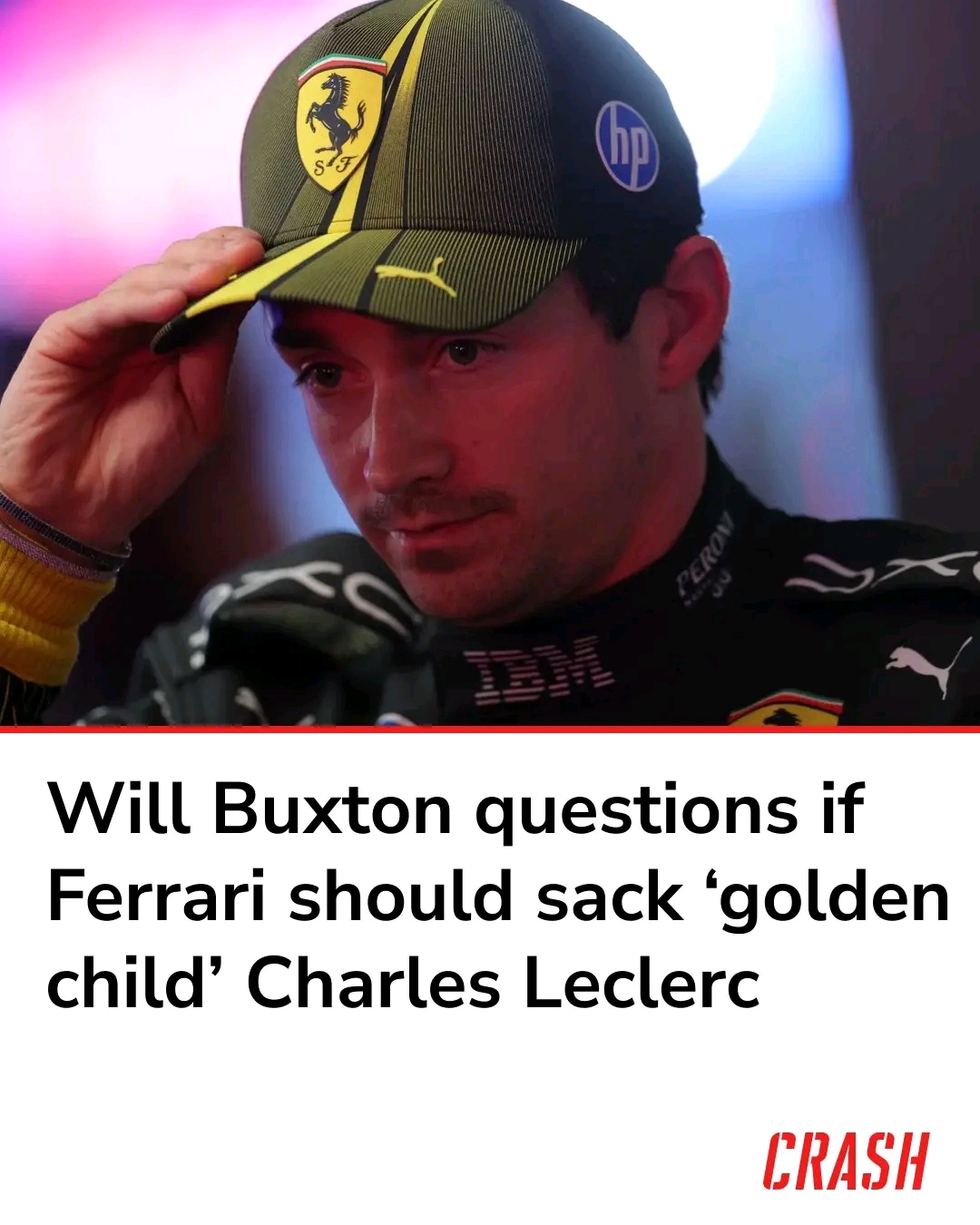
Former F1 broadcaster Will Buxton has now put a sharper edge on the conversation. Speaking on the *Up to Speed* podcast after the Las Vegas Grand Prix, Buxton did not treat the latest incident as an isolated mistake. He described a recurring pattern of selfishness from Leclerc that stretches back through his previous Ferrari teammates and suggested the team still lacks the structure and culture to control it.
THE LATEST FLASHPOINT IN LAS VEGAS
On lap 38 of the Las Vegas Grand Prix, Leclerc attempted an aggressive overtake on Hamilton while the pair were fighting over sixth place. Contact sent Hamilton spinning. The stewards ruled Leclerc entirely at fault and handed him a 10-second penalty. Hamilton recovered to seventh; Leclerc finished tenth. The sporting cost was real, but the political cost was larger.
Before the collision, Hamilton had already asked the team over the radio to tell Leclerc to “back the f*** off.” The message was clear: the two drivers were not operating as a coordinated unit. Team principal Fred Vasseur later called the incident “unacceptable” and a “lack of respect” for the team and its sponsors. It was the second costly clash in three races after a Mexico City first-lap battle that handed victory to Max Verstappen.
Buxton’s reaction cut deeper than the usual post-race analysis. He argued that the problem has moved beyond “rules of engagement.” It is now about respect and racecraft. “I always thought Charles had really good racecraft,” Buxton said. “But because this keeps happening, people keep posting videos of previous incidents, and you go back to his relationship with Carlos and even with Vettel… there are moments where it keeps cropping up – selfishness… and maybe not thinking the bigger picture. It appears to be a repetitive pattern.”
WHY THIS PATTERN MATTERS MORE THAN ONE RACE
Leclerc has long been Ferrari’s golden child – the driver signed as a teenager, developed inside the system, and positioned as the future of the team. Hamilton arrived as the biggest external star the Scuderia has signed in decades. That combination creates an inherent tension. One driver is deeply embedded in the culture and history of Maranello. The other is a proven champion who will not accept being managed as a number two.
Buxton is not the first to notice the friction, but he is one of the few willing to frame it as a character pattern rather than isolated racing incidents. Looking back at Leclerc’s partnerships with Sebastian Vettel and Carlos Sainz reveals similar moments of hard racing that cost the team. Those earlier episodes were often excused as the natural intensity of a young driver still learning. With Hamilton, the excuses are harder to sustain. The cars are competitive enough that every lost position and every collision has measurable championship consequences.
The impact is not limited to the drivers. Repeated internal battles erode trust on the pit wall. Strategy calls become slower and more political. Engineers and strategists start second-guessing whether a clear team order will be obeyed. Sponsors notice. Fans notice. And rivals – especially Red Bull and McLaren – exploit the gaps.
Ferrari has spent years talking about building a winning mentality. Buxton has previously criticized the team for appearing “so scared of losing that they can’t win.” The hesitation over team orders at Zandvoort earlier in the season, the failure to properly brief the drivers before Monza, and the repeated inability to prevent contact all point to the same cultural issue: Ferrari still prioritizes keeping both drivers happy over making the hard decisions required to maximize points.
THE BIGGER PICTURE FOR FERRARI AND FORMULA 1
This is not just a Ferrari problem. Formula 1 has seen plenty of toxic teammate pairings – Senna and Prost, Hamilton and Rosberg, Verstappen and Perez. The difference is that the most successful teams eventually impose hierarchy or clear rules that protect the constructors’ championship. McLaren has its “papaya rules.” Red Bull has long operated with a clear number-one structure. Ferrari has tried to maintain the public fiction of two equal number ones while the evidence on track shows that equality is producing mutual damage.
The timing could hardly be worse. The 2026 regulations cycle is still young. Ferrari has the drivers and the resources to challenge for both titles in 2027 and beyond. Yet every high-profile collision chips away at the internal cohesion required to convert potential into trophies. Young talents such as Oliver Bearman are waiting in the wings. Prolonged instability between Hamilton and Leclerc only increases the pressure on management to consider more radical solutions.
For Hamilton, the situation tests his patience and his legacy. He joined Ferrari to win an eighth title, not to spend weekends managing a teammate who appears unwilling to prioritise the team result. For Leclerc, the narrative is shifting from “future champion held back by the car” to “driver who struggles to race for the team when the pressure rises.” That is a dangerous perception in a sport that rewards both speed and maturity.
WHAT COMES NEXT
Vasseur has made it clear that the situation “cannot continue.” Clear-the-air talks after Mexico did not prevent the Las Vegas collision. More talks will follow. The real test will be whether Ferrari is prepared to impose genuine consequences – stricter internal codes, clearer priority rules, or even public hierarchy – rather than relying on another round of private conversations.
Buxton’s diagnosis is uncomfortable because it suggests the problem is structural and behavioural, not merely a series of bad days. If Leclerc continues to race as if the bigger picture is secondary, and if Ferrari continues to hesitate when decisive leadership is required, the partnership that once looked like a dream ticket risks becoming a long-running distraction.
Formula 1 is unforgiving of teams that waste performance. Ferrari has the talent. It still needs the discipline. Until that changes, the fallout between Hamilton and Leclerc will keep generating headlines – and costing the Scuderia points it cannot afford to lose.