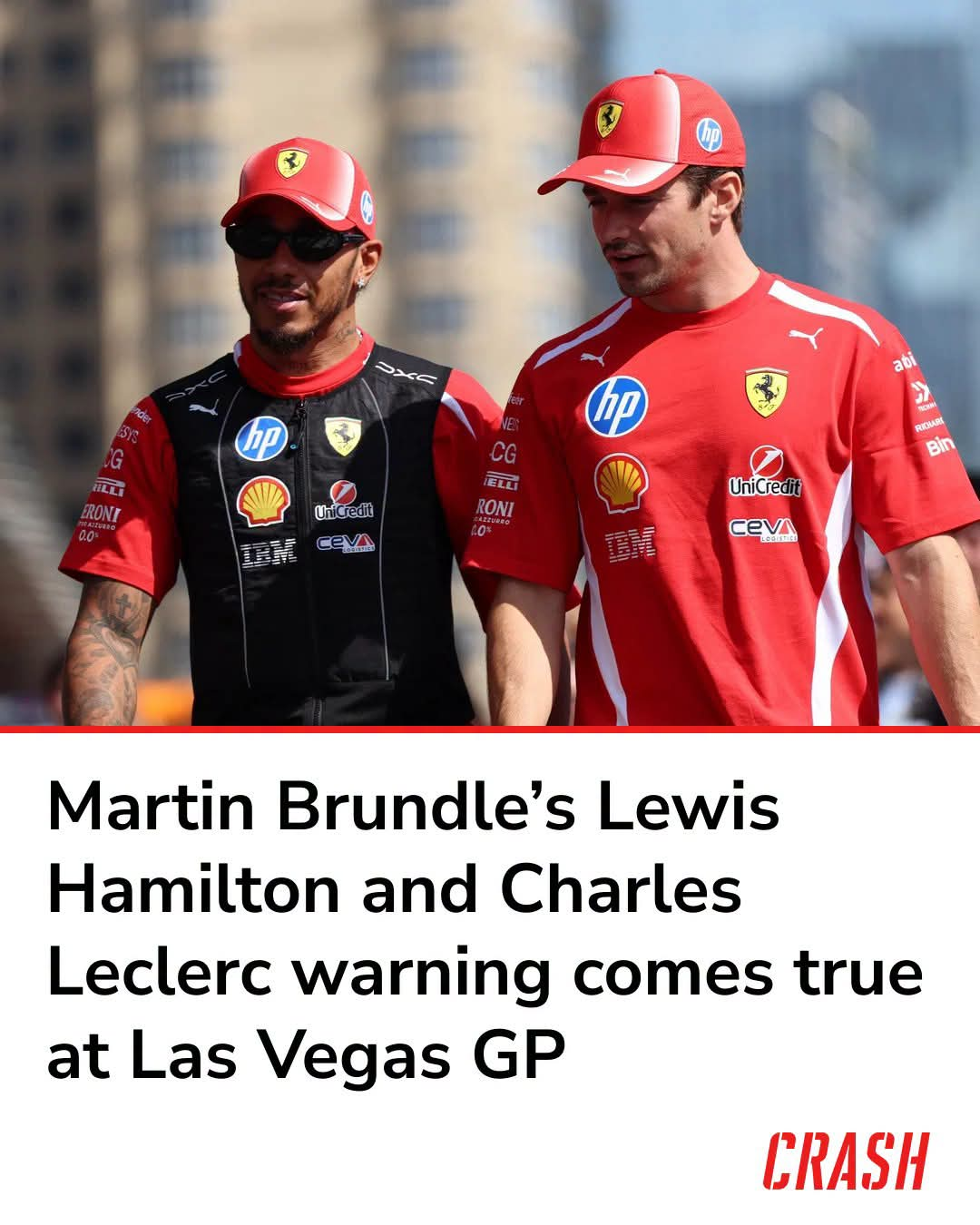
The Mexican Grand Prix delivered the kind of intra-team drama that Formula 1 fans both crave and dread. On the opening lap at the Autódromo Hermanos Rodríguez, Lewis Hamilton and Charles Leclerc locked horns in a high-stakes battle that ultimately handed Max Verstappen a gift-wrapped victory. What followed was radio fury, public frustration, and a pointed prediction from Martin Brundle that should send a chill through the corridors of Maranello.
Brundle, never one to soft-pedal, looked at the aftermath and essentially told Ferrari: this is not over. Crisis talks, public unity statements, and carefully worded press conferences will not rewire two elite racing drivers. The next flashpoint, he suggested, is only a matter of time.
WHAT ACTUALLY HAPPENED IN MEXICO CITY
Hamilton started from pole. Leclerc, starting alongside or close behind depending on the grid details that day, launched an aggressive challenge around the outside into Turn 4. Both drivers carried too much speed. Both ran wide. Leclerc cut across the grass and emerged ahead. Hamilton rejoined having lost critical track position to Verstappen, who needed no second invitation to slip between the two scarlet cars.
The stewards handed Leclerc a five-second penalty. Hamilton finished second. Leclerc ended up fourth. Verstappen took the win. Hamilton’s radio messages left little to the imagination: he felt pushed off by his own teammate, believed the stewards had effectively handed Leclerc an advantage, and declared that Ferrari had “big problems.”
In the post-race media pen the seven-time champion called for “serious talks.” He questioned Leclerc’s approach and suggested his teammate races him harder than he races drivers from other teams. The air was thick with tension.
BRUNDLE’S BLUNT ASSESSMENT
Speaking in the days that followed, Brundle cut through the spin. He argued the squabbling had cost Ferrari dearly. Verstappen was quick, yes, but the lost track position for Hamilton proved decisive. Leclerc, in Brundle’s view, should have given the place back. He could not, because Verstappen had already inserted himself into the gap with characteristic opportunism.
More importantly, Brundle framed the incident in the broader psychology of the sport. Racing drivers are hard-wired to attack gaps. The late Ayrton Senna’s famous line about no longer being a racing driver if you refuse a gap still resonates. When the adrenaline spikes and a door opens, instinct takes over—even if the car on the other side of that door wears the same colours.
Brundle predicted the official line heading into Brazil would be familiar: we sat down, we understood each other, we move forward, it will not happen again. His counterpoint was simple and unsentimental. In reality, it will.
WHY THIS MATTERS FAR BEYOND ONE RACE
Ferrari’s 2026 season has been defined by the arrival of Hamilton alongside the established Leclerc. The pairing was always going to test the team’s ability to manage two alpha personalities. Mexico exposed the fault lines in real time.
For the drivers the stakes are intensely personal. Hamilton, deep into the later phase of his career, is chasing the kind of results that justify the move to Maranello. Leclerc remains the long-term face of the team and a driver who has waited years for a consistent championship contender. Neither man is programmed to yield when the other is vulnerable.
For the team the cost is measurable. A potential one-two became a second and a fourth. Points were left on the table. Momentum was disrupted. The garage, the engineers, the hundreds of people back in Italy who poured everything into the car—all of them feel the impact when the two drivers prioritise individual ambition over collective outcome in the heat of the moment.
There is also a wider industry context. Modern Formula 1 teams employ thousands. Drivers are constantly reminded that they are the final link in a long chain and that reckless intra-team combat lets those people down. Yet the sport still measures and rewards individual performance. That tension is structural, not temporary. Brundle is right to note it will always be a problem.
THE POLITICAL LAYER BENEATH THE SURFACE
Some of Brundle’s later comments added another dimension. He suggested Hamilton recognised an opportunity in the fallout—an opening to assert greater influence and carve out clearer number-one status within the team. Radio messages that sounded like pure frustration, Brundle implied, may also have been directed at decision-makers in Italy. At this stage of his career Hamilton has little incentive to remain filtered.
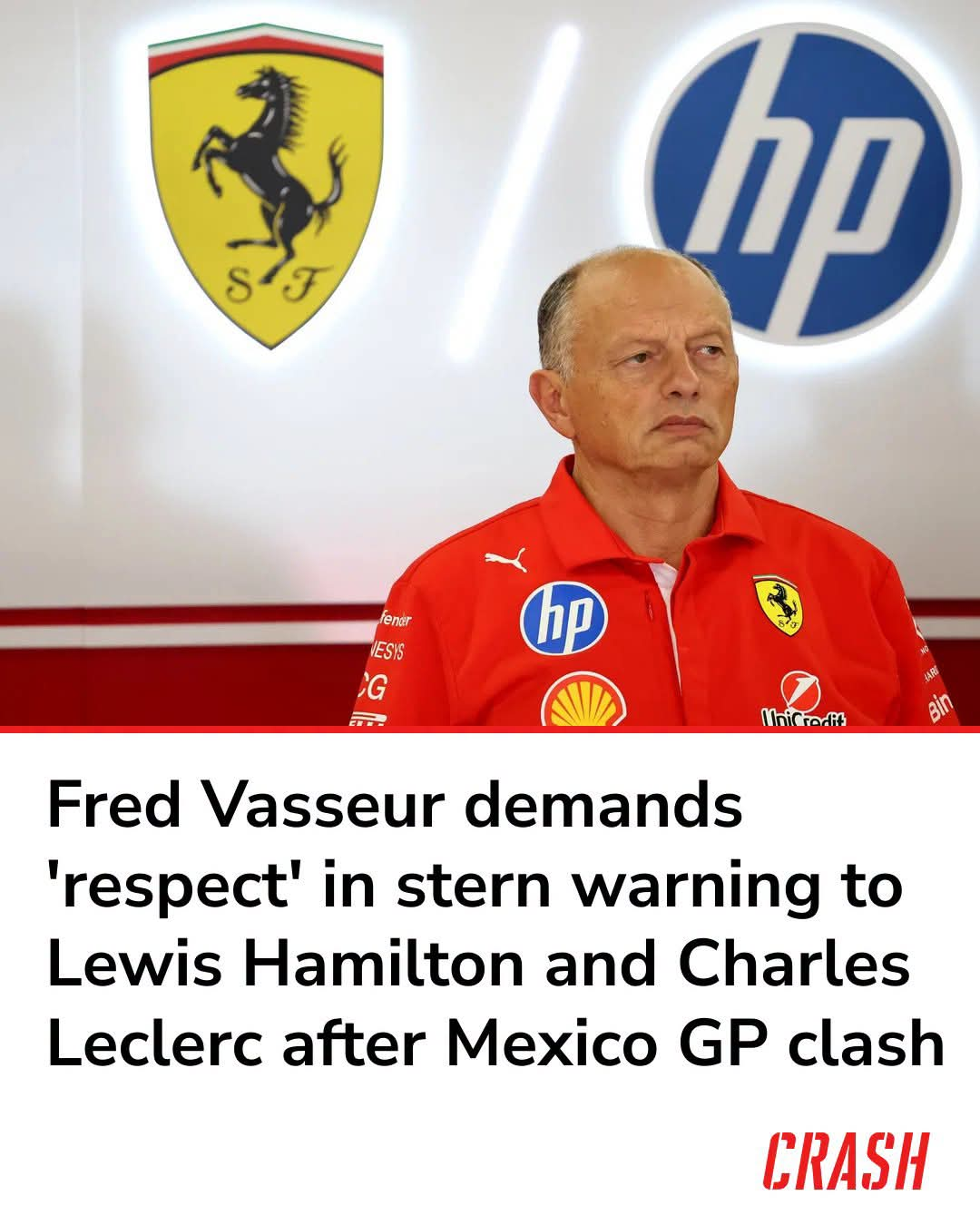
Whether that reading is accurate or not, the mere existence of the theory underlines how quickly on-track incidents can become internal power plays. Ferrari’s leadership under Fred Vasseur faces the classic challenge of keeping two highly competitive drivers aligned without crushing the edge that makes them special.
LOOKING AHEAD: WHAT COMES NEXT
Clear-the-air talks did take place before the Brazilian Grand Prix. Public statements emphasised moving on. Yet Brundle’s core warning remains relevant. Competitive drivers do not suddenly become less competitive because a meeting occurred. The next time they find themselves side-by-side into a critical corner with championship points or race victory on the line, the same instincts will surface.
The real test for Ferrari is not whether the drivers can say the right things in front of microphones. It is whether the team can create a framework—clear racing rules, consistent messaging, and honest internal accountability—that channels that intensity productively rather than destructively.
History is littered with teammate rivalries that elevated teams and others that tore them apart. Hamilton and Leclerc possess the talent to deliver Ferrari the success the tifosi have waited for. They also possess the competitive fire that can undermine it. Brundle’s message is that the fire will keep sparking. Managing it is now one of the most important jobs in the paddock.
The Mexico incident was not an isolated moment of poor judgment. It was a preview of the pressure this partnership will generate for the remainder of the season and beyond. Ferrari has been warned. The only question left is whether the warning will be heeded before the next collision—literal or figurative—arrives.