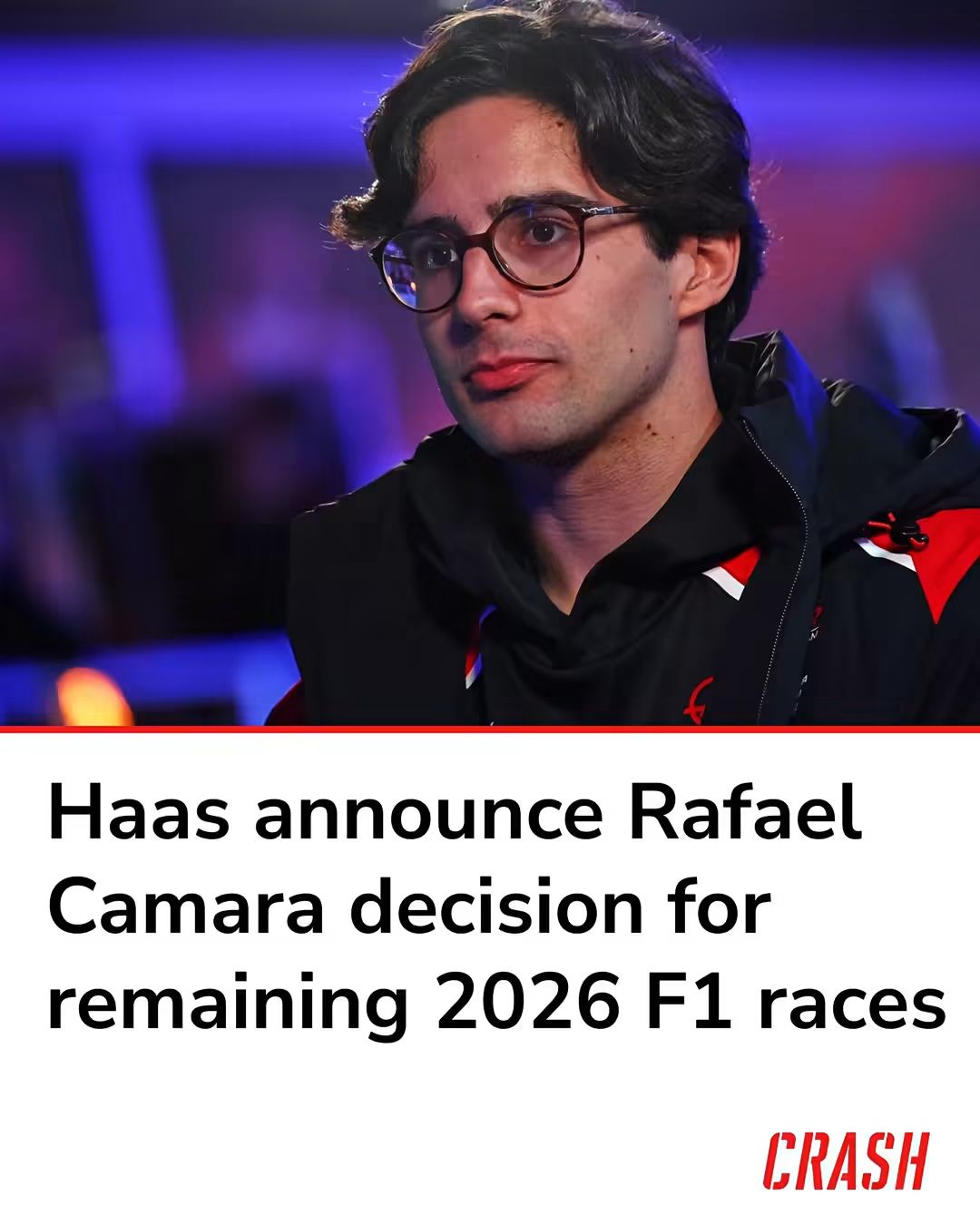
Haas has made it official. Brazilian talent Rafael Camara will stay in the VF-26 for the final two races of the 2026 Formula 1 season, contesting the Qatar Grand Prix and the season-ending Abu Dhabi Grand Prix. The decision prioritizes hands-on experience ahead of his full-time debut in 2027 and effectively ends his Formula 2 championship challenge while he still leads the standings.
This is more than a simple lineup confirmation. It reveals how modern Formula 1 teams weigh immediate junior-series silverware against the long-term value of race starts, team integration, and real-world learning under Grand Prix pressure.
WHY HAAS CHOSE EXPERIENCE OVER AN F2 TITLE
Camara, 21, already has two races under his belt. He made his Formula 1 debut at his home event in São Paulo and followed it up in Las Vegas, finishing 20th and 16th respectively. The American team had options. Reserve driver Ryo Hirakawa had stepped in after Esteban Ocon’s mid-season exit and could have returned. Instead, Haas kept the incoming 2027 driver in the car.
Team principal Ayao Komatsu framed the choice clearly. The squad wants to build on those first two starts, embed Camara deeper into the team, and use the short off-season productively as 2027 preparations accelerate. In an era of tightly controlled testing and limited practice time, every additional race weekend is gold for a rookie.
Camara currently leads the Formula 2 championship by seven points over Red Bull junior Nikola Tsolov, with Alex Dunne a further distance back. Because drivers cannot compete in both Formula 1 and Formula 2 on the same weekend, staying in the Haas seat means he will not contest the final rounds in Qatar and Abu Dhabi. His title hopes are now in the hands of his rivals’ results rather than his own performances.
THE BIGGER PICTURE FOR CAMARA AND HAAS
This decision fits a broader pattern. Once a driver has a confirmed Formula 1 seat, the relative value of a Formula 2 title drops. History is full of examples where race experience and team familiarity proved more useful than junior championships when the lights went out the following March. Camara already has the Ferrari Driver Academy pedigree, an F3 title, and strong F2 form. Four Grand Prix starts before his rookie year give him a head start that few recent newcomers have enjoyed.
For Haas, the move signals confidence and pragmatism. Partnering Camara with Oliver Bearman creates a young, Ferrari-linked lineup with upside. Keeping Camara in the car for the final two races allows engineers, strategists, and the driver himself to refine communication, tire management, and race-craft before the winter break. In a short off-season, that continuity matters.
The decision also carries cultural weight. Brazil has a rich Formula 1 history. Another competitive Brazilian on the grid strengthens the country’s presence and gives Haas an emotional connection in a key market.
IMPACT ON THE FORMULA 2 CHAMPIONSHIP AND BEYOND
The Formula 2 title race is now wide open. Tsolov sits close enough that consistent scoring could overhaul Camara’s points total. Dunne remains a mathematical threat. Invicta Racing, Camara’s F2 team, publicly thanked him and wished him well, acknowledging the end of a strong chapter.
Beyond the immediate standings, the situation highlights an ongoing tension in the junior ladder. When Formula 1 seats open mid-season or early promotions become available, drivers and teams must choose. In Camara’s case, both sides appear aligned: the long-term prize is more valuable than the short-term one.
WHAT THIS MEANS FOR 2027 AND THE SPORT
Camara will enter his first full season with four race weekends already completed. That experience should reduce the usual rookie learning curve in areas such as traffic management, race-start procedures, and adapting to different circuit characteristics under live conditions. Haas gains a driver already familiar with its processes, garage environment, and technical feedback loops.
The broader industry takeaway is straightforward. Teams increasingly treat late-season race opportunities for confirmed future drivers as high-value preparation rather than temporary fill-ins. When the alternative is returning a driver to Formula 2 for a title that may not change their career trajectory, the math favors Formula 1 mileage.
Camara still has work to do. Results in Qatar and Abu Dhabi will be scrutinized, even if points are unlikely in the current Haas package. How he handles pressure, recovers from setbacks, and contributes useful data will shape early perceptions of his potential. Yet the foundation is already stronger than it would have been had he returned to Formula 2.
Haas has chosen the future. Camara has accepted the trade-off. The final two races of 2026 will serve as the bridge into his first full campaign, and both the team and the driver are treating that bridge as essential infrastructure rather than optional experience. In the high-stakes world of Formula 1, that kind of clarity is rare and revealing.