Ferrari entered the latest Formula 1 race with an important objective: close the gap to McLaren and strengthen its position against one of the strongest competitors on the grid. However, another frustrating afternoon has left the Scuderia facing uncomfortable questions about its ability to turn potential into results.
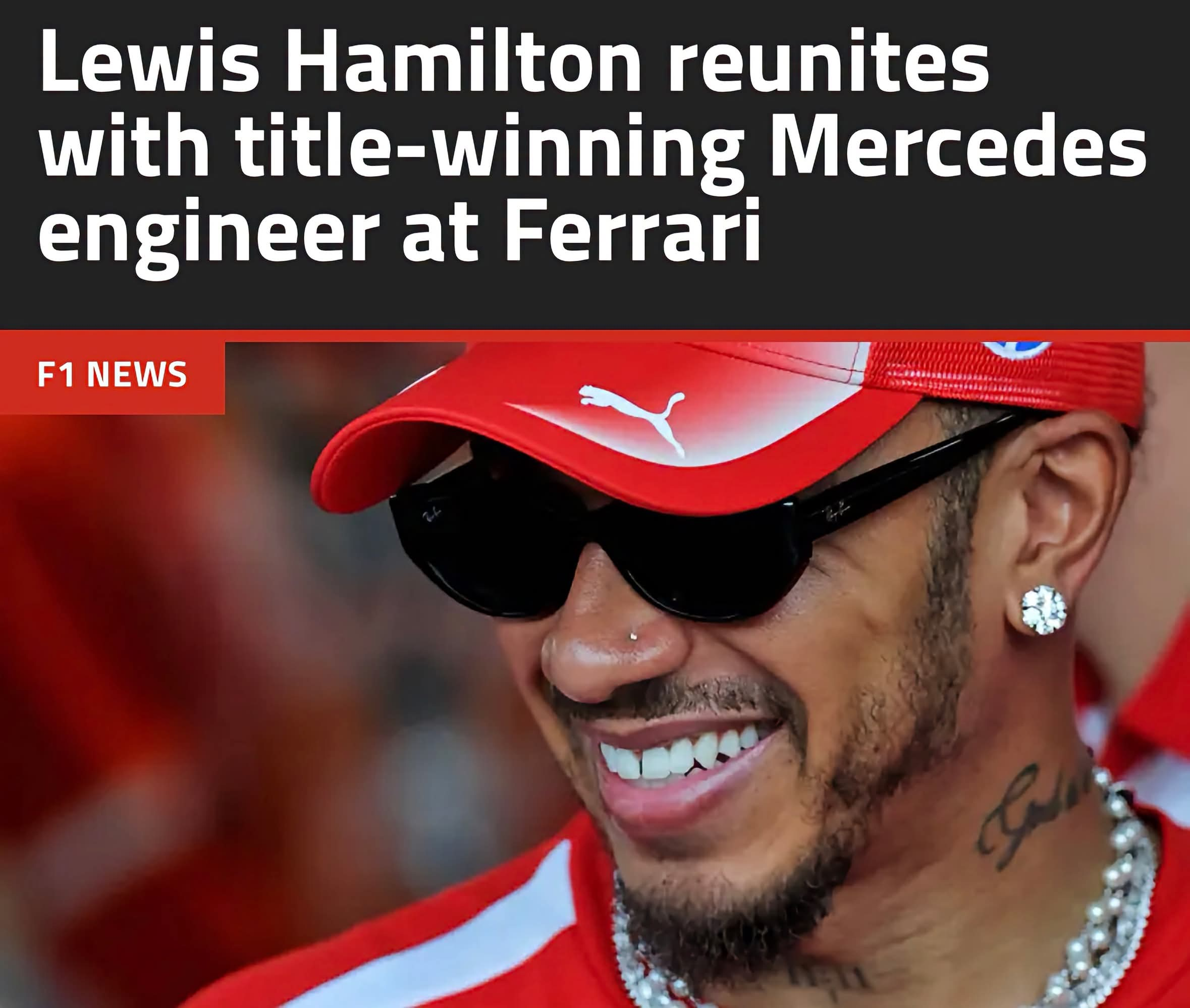
This time, the spotlight has fallen on Lewis Hamilton.
The seven-time world champion has made it clear that Ferrari needs to concentrate on defeating its external rivals rather than allowing the competition between its own drivers to become a distraction.
His message comes at a particularly sensitive moment, with tensions between Hamilton and Charles Leclerc already attracting attention following their disagreements at the Mexican Grand Prix.
For Hamilton, however, the bigger picture should be obvious. Ferrari is not competing against itself. Its real objective is to challenge McLaren.
And with only two races remaining, there is little room for further mistakes.
LEWIS HAMILTON QUESTIONS FERRARI’S PRIORITIES
Hamilton’s latest comments have offered an interesting insight into the atmosphere inside Ferrari.
Despite another disappointing result, the British driver remained convinced that the team had enough performance to challenge for a podium.
He praised Ferrari’s strategy, engineers and garage personnel, suggesting that the ingredients for a much stronger result were available.
However, his afternoon became considerably more complicated after receiving a 10-second penalty.
Despite that setback, Hamilton fought his way back towards the McLaren drivers and believed Ferrari could still salvage a valuable result.
Unfortunately, further contact from behind disrupted his recovery, leaving another opportunity slipping away.
Rather than focusing exclusively on his individual disappointment, Hamilton directed attention towards Ferrari’s broader objectives.
“We’re trying to beat McLaren. It’s not about me and Charles, it’s about trying to beat McLaren, and we didn’t do that today.”
That statement deserves attention.
Hamilton appears to recognise that Ferrari cannot afford to become consumed by an internal rivalry when its competitors are consistently fighting for stronger results.
His message is essentially a reminder that individual ambitions must remain secondary to the team’s collective objectives.
FERRARI’S INTERNAL DYNAMICS ARE BECOMING A DISTRACTION
Having two highly competitive drivers can be an enormous advantage in Formula 1.
However, managing two drivers with championship-winning ambitions requires clear communication, consistent leadership and carefully established expectations.
Ferrari has an especially demanding situation with Hamilton and Leclerc.
Hamilton brings extraordinary experience, seven world championships and a deep understanding of what it takes to operate inside a championship-winning organisation.
Leclerc, meanwhile, is an established Ferrari driver who understands the team’s culture and has spent years building his relationship with the Scuderia.
Both drivers want to succeed, and neither can reasonably be expected to abandon their competitive instincts.
The challenge for Ferrari is ensuring that those instincts benefit the team rather than create unnecessary complications.
The disagreements following the Mexican Grand Prix have made this situation even more delicate.
When two drivers begin questioning decisions, expressing frustration or disagreeing over racing situations, the consequences can extend beyond the immediate incident.
Engineers must manage additional conversations, team management must address competing expectations, and strategic decisions can become more complicated.
None of this necessarily means Ferrari has a serious internal crisis. However, the team must recognise that unnecessary tension can become expensive when championship positions are being decided by relatively small margins.
MCLAREN IS THE REAL BENCHMARK FERRARI MUST CHALLENGE
Hamilton’s reference to McLaren is particularly important because it highlights the difference between individual competition and organisational performance.
McLaren has demonstrated the importance of operating with a clear competitive structure.
Its ability to extract performance from both sides of the garage has helped establish it as a formidable force in Formula 1.
Ferrari, by comparison, needs to ensure that its attention remains focused on closing the performance and execution gap.
Having two talented drivers is not enough.
A competitive Formula 1 team requires more than qualifying speed and race pace. It needs consistent tyre management, effective pit-stop execution, accurate strategic decisions and the ability to respond quickly when unexpected situations arise.
McLaren’s advantage is not simply that it has competitive machinery. Its wider operational package has allowed it to convert opportunities into results.
Ferrari must demonstrate that it can do the same.
Hamilton’s comments suggest that he believes the team has the necessary ingredients but is not consistently bringing everything together.
That is a significant distinction.
If Ferrari’s underlying performance is competitive, improving communication and execution could make a considerable difference without requiring an entirely new technical direction.
HAMILTON AND LECLERC MUST FIND A WAY TO WORK TOGETHER
One of Ferrari’s biggest responsibilities is managing the relationship between its two drivers.
Hamilton and Leclerc do not need to become close friends to succeed together.
What matters is mutual respect, professional communication and a shared understanding of the team’s priorities.
Their rivalry could actually become one of Ferrari’s greatest strengths.
Hamilton’s experience can provide valuable technical feedback, while Leclerc’s familiarity with Ferrari offers an important reference point when evaluating the car’s behaviour and development direction.
Combining those perspectives should help the team improve.
However, that advantage disappears if disagreements become more important than collective progress.
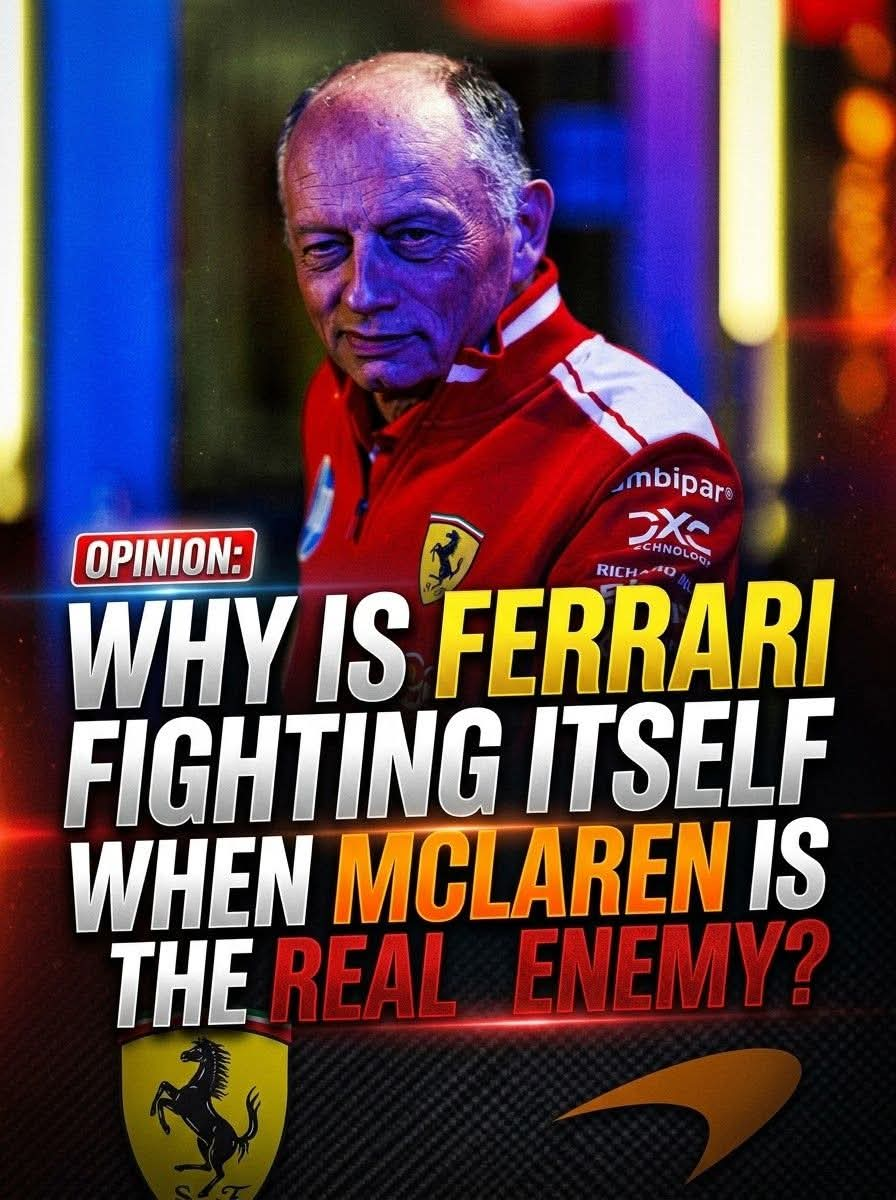
Ferrari team principal Fred Vasseur will therefore have an important role in ensuring that both drivers understand their responsibilities.
Clear instructions, consistent decision-making and equal professional respect will be essential.
The team must also avoid creating unnecessary uncertainty around driver priorities.
When both drivers understand how the team intends to approach particular racing situations, there is less opportunity for frustration and miscommunication.
Ultimately, Ferrari needs both Hamilton and Leclerc performing at their highest level.
Choosing unnecessary internal battles over that objective would be a serious strategic mistake.
WHY HAMILTON’S EXPERIENCE COULD BE IMPORTANT FOR FERRARI
Hamilton’s perspective is particularly interesting because he has experienced both successful and difficult periods in Formula 1.
His championship-winning years at Mercedes demonstrated the importance of combining individual excellence with a highly organised team structure.
He understands that even the fastest driver cannot consistently overcome operational weaknesses.
Winning championships requires everyone working towards the same objective.
That experience could become valuable for Ferrari as it continues its efforts to return to the top of Formula 1.
Hamilton is not simply asking the team to improve its relationship with Leclerc. His comments suggest a broader demand for greater collective focus.
Ferrari must create an environment where both drivers can compete aggressively without compromising the team’s overall performance.
There is a difference between healthy competition and unnecessary conflict.
The former pushes a team forward. The latter risks giving rivals an advantage.
TWO RACES REMAINING: FERRARI CANNOT AFFORD MORE MISSED OPPORTUNITIES
The timing of Hamilton’s comments makes the situation even more significant.
With only two races remaining, Ferrari has limited opportunities to recover lost ground and demonstrate that it can consistently challenge its competitors.
Every penalty, strategic error and avoidable incident carries additional importance during the closing stages of a season.
The team cannot afford to spend valuable time dealing with preventable internal disagreements while McLaren continues to focus on delivering results.
There is also a psychological element.
When a team repeatedly experiences frustrating weekends, confidence can gradually become affected.
Drivers begin questioning decisions, engineers face increased pressure, and even relatively small incidents can generate disproportionate reactions.
Ferrari must avoid allowing that cycle to develop.
The final two races should be approached as an opportunity to demonstrate unity, not as another stage for internal disagreements.
A strong collective response would send an important message about the team’s direction heading into the next season.
WHAT SHOULD FERRARI DO NEXT?
Ferrari’s immediate priority should be restoring clarity across both sides of the garage.
First, communication between Hamilton, Leclerc and the engineering department must remain constructive.
Second, the team should establish clear expectations regarding racing incidents and strategic decisions.
Third, Ferrari must concentrate on improving the execution of its race weekends.
There is little value in having a car capable of fighting near the podium if penalties, contact and operational mistakes repeatedly undermine its potential.
Most importantly, Ferrari should resist the temptation to turn every disagreement between its drivers into a major public controversy.
Both Hamilton and Leclerc are elite competitors. Their desire to win should be encouraged, provided it contributes to the team’s objectives.
Ferrari needs to manage that competitive energy rather than suppress it.
VERDICT: FERRARI MUST STOP MAKING ITS OWN JOB MORE DIFFICULT
Lewis Hamilton’s latest comments highlight an issue that Ferrari cannot afford to ignore.
McLaren remains a formidable competitor, but Ferrari must also examine the factors within its control.
The team has two exceptionally talented drivers, experienced engineers and the resources of one of Formula 1’s most prestigious organisations.
What it needs now is consistency, unity and a clearer collective direction.
Hamilton and Leclerc will naturally want to outperform each other. That is part of elite motorsport.
However, their personal rivalry should never become more important than Ferrari’s pursuit of victories and championships.
Hamilton’s message is straightforward: Ferrari should be fighting McLaren, not fighting itself.
With only two races remaining, the Scuderia has an opportunity to demonstrate that it understands the difference.
If it fails to do so, its biggest disappointment may not be losing to McLaren.
It may be knowing that Ferrari made the challenge unnecessarily difficult for itself.
—
FEEDBACK
<text>Thinking about this conversation so far, how satisfied are you with ChatGPT’s help with <bold>creating SEO sports articles</bold>?</text>
<survey>
<radio name=”satisfaction” value=”Very satisfied” required>Very satisfied</radio>
<radio name=”satisfaction” value=”Somewhat satisfied”>Somewhat satisfied</radio>
<radio name=”satisfaction” value=”Neither satisfied nor dissatisfied”>Neither satisfied nor dissatisfied</radio>
<radio name=”satisfaction” value=”Somewhat dissatisfied”>Somewhat dissatisfied</radio>
<radio name=”satisfaction” value=”Very dissatisfied”>Very dissatisfied</radio>
<text>What could ChatGPT have done better to help with <bold>creating SEO sports articles</bold>? Select all that apply.</text>
<checkbox shape=”square” name=”improvements” value=”Sound less like AI writing”>Sound less like AI writing</checkbox>
<checkbox shape=”square” name=”improvements” value=”Follow my instructions more closely”>Follow my instructions more closely</checkbox>
<checkbox shape=”square” name=”improvements” value=”Provide deeper analysis and insights”>Provide deeper analysis and insights</checkbox>
<checkbox shape=”square” name=”improvements” value=”Improve readability and article structure”>Improve readability and article structure</checkbox>
<checkbox shape=”square” name=”improvements” value=”Nothing needed improvement”>Nothing needed improvement.</checkbox>
<text>Add detail (optional)</text>
<textarea name=”detail” optional=”true”></textarea>
<button type=”submit”>Submit feedback</button>
</survey>