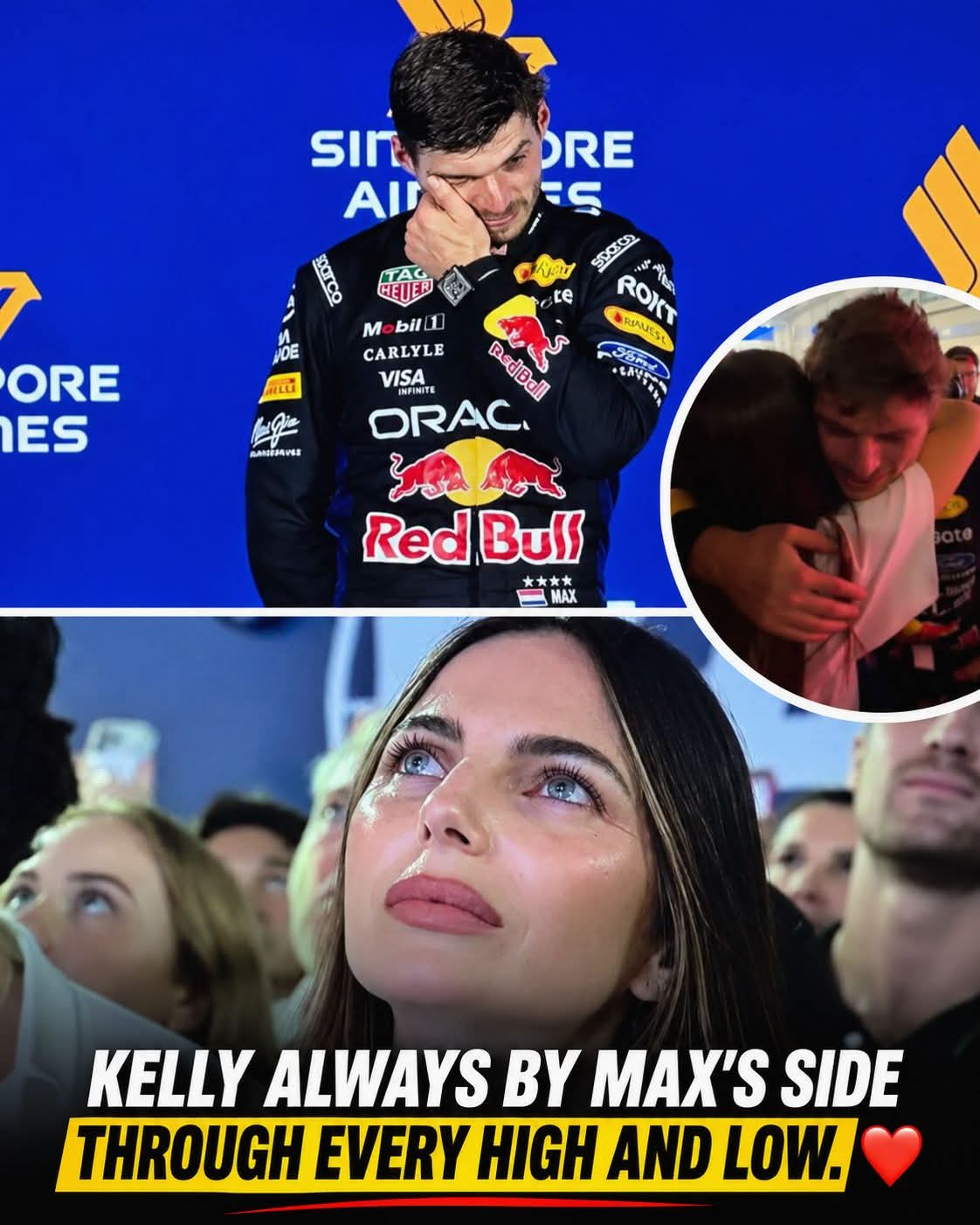
In Formula 1, the difference between winning and merely competing often comes down to thousandths of a second, tire degradation curves, and strategic calls under pressure. Yet the most consistent champions repeatedly point to something less measurable: the people who stay steady when the car is slow, the headlines are brutal, or the calendar refuses to give a break. Max Verstappen and Kelly Piquet have become one of the clearest modern examples of that truth.
Their relationship is not a side story. It has become part of the infrastructure that lets a four-time world champion keep performing at the highest level while building a family life that looks, from the outside, almost normal by paddock standards.
WHY THE PARTNERSHIP WORKS WHEN MOST DO NOT
Kelly Piquet grew up inside the sport. Daughter of three-time champion Nelson Piquet and sister of former driver Nelson Piquet Jr., she already understood the demands before she and Verstappen went public in early 2021. That shared language matters. When Verstappen chooses to race a GT event on one of the rare free weekends in a packed stretch of the calendar, she does not treat it as abandonment. She treats it as continuity of the life they both know.
Verstappen has said openly that her racing-family background helps her understand the intensity better than most people outside the paddock ever could. The result is practical compromise rather than resentment. They protect time together when the schedule allows, and they accept the absences when it does not. In a sport where many relationships fracture under the weight of 24 races, media scrutiny, and constant travel, that shared baseline is rare.
Their family has grown into a blended unit. Penelope, Kelly’s daughter from her earlier relationship with Daniil Kvyat, has been part of Verstappen’s world for years. He has described himself as her “bonus dad.” In May 2025 the couple welcomed their own daughter, Lily. The public glimpses—summer photos on a yacht, birthday cakes that include the pets, quiet paddock moments—show a household that prioritizes ordinary family rhythms amid extraordinary professional demands.
THE PERFORMANCE IMPACT THAT RARELY GETS MEASURED
Drivers talk about mental load more openly now than they did a decade ago. The ability to leave the garage, go home, and reset with people who are not analyzing telemetry or media narratives has tangible value. Verstappen has spoken about how much harder it has become to leave for race weekends since becoming a father. That honesty does not signal weakness. It signals that the support system is functioning: he has something worth missing.
Kelly’s presence at races, her low-key public messages after difficult weekends, and the mutual willingness to adjust schedules create a buffer. When the car is not competitive or the championship fight tightens, the emotional baseline remains stable. That stability is an advantage. It reduces the secondary noise that can creep into radio messages, post-race interviews, and private debriefs.
For Red Bull, a driver who arrives at the track centered and leaves with a clear head is simply more effective over a long season. The organization benefits from the continuity even if it never appears on a data sheet.
WHAT THIS MEANS FOR THE BROADER SPORT
Formula 1 has spent years trying to humanize its stars for a wider audience. Stories of genuine partnership and family life travel further than pure results in an era of social media and streaming. Verstappen and Piquet illustrate that elite performance and a private life are not zero-sum. Other drivers and partners watch that example. Younger athletes entering the junior formulas see a model that does not require total isolation.
There is also a quiet cultural shift. The old stereotype of the driver whose partner simply trails the circus is fading. Mutual support, shared decision-making about schedules, and public acknowledgment of the partner’s role are becoming more visible. Kelly has spoken about turning down work to protect balance and about Verstappen encouraging her to pursue opportunities when the timing allows. That reciprocity matters.
LOOKING AHEAD: LONGEVITY AND LEGACY
Verstappen has already secured a long-term future with Red Bull. The personal side of his life appears equally settled. Recent light-hearted comments about “practicing” for marriage drew laughs in press conferences, but they also signaled that the relationship sits at the center of his planning rather than at the edges.
As the calendar remains brutal and the technical challenges keep evolving, the drivers who last longest will be those who solve the human equation as carefully as the aerodynamic one. Verstappen and Piquet have shown one working version of that solution: deep understanding of the sport’s demands, deliberate protection of family time, and consistent public and private support through both wins and setbacks.
The championships will be decided on track. The ability to keep chasing them year after year is decided somewhere quieter—by the people who stay when the garage lights go off. In that quieter contest, Max Verstappen and Kelly Piquet are already proven winners.