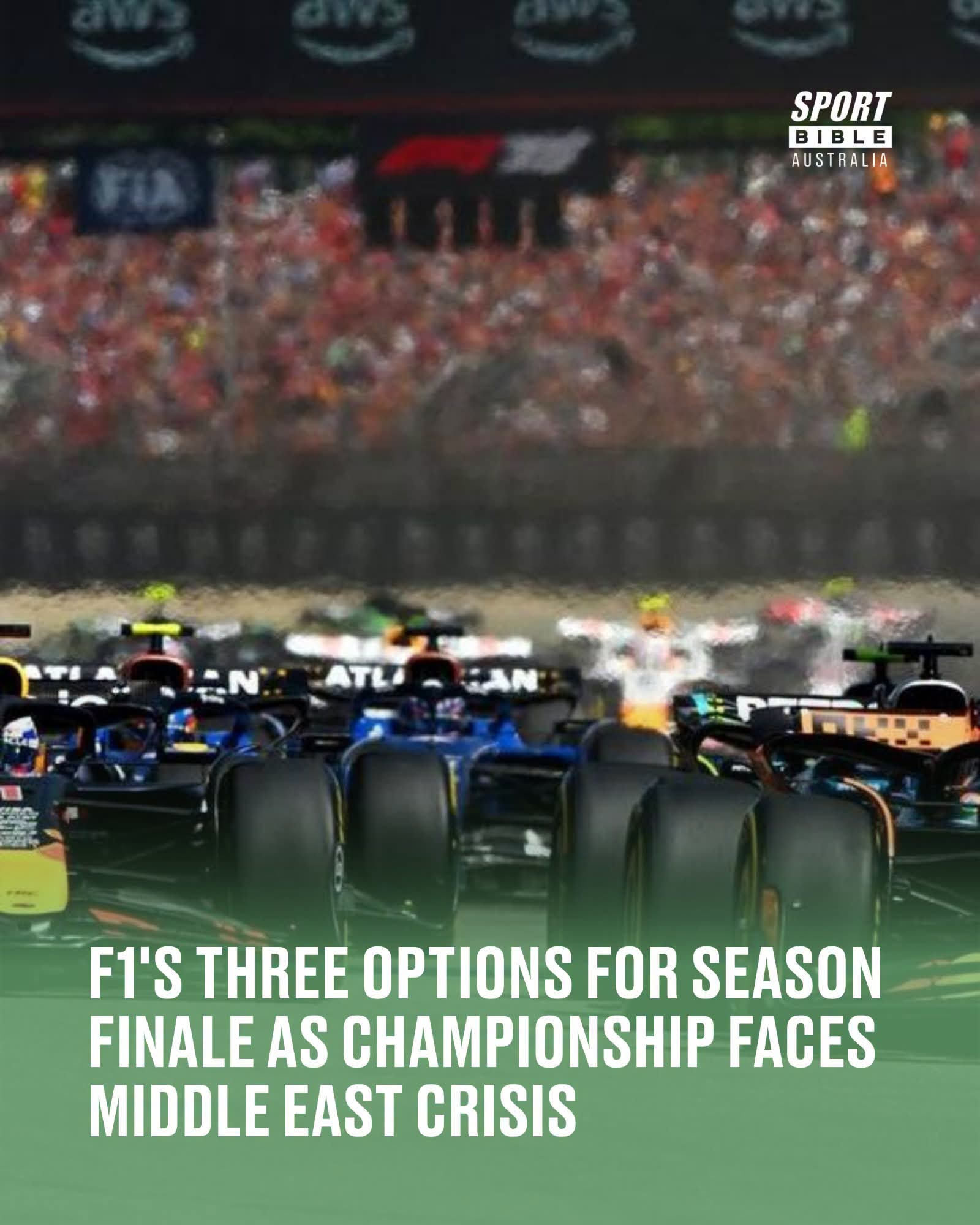
Formula 1 is facing an increasingly complicated decision over how to conclude its 2026 championship, with escalating tensions in the Middle East threatening the final two races of the season. The Qatar and Abu Dhabi Grands Prix remain officially scheduled, but concerns surrounding regional security have placed the championship’s closing events under serious scrutiny.
With Kimi Antonelli already crowned world champion and Mercedes firmly positioned to secure the constructors’ title, Formula 1 could find itself facing an unprecedented situation in which sporting priorities, financial consequences and safety considerations collide.
According to reports, three potential scenarios are emerging: keeping the original calendar intact, replacing the Middle East double-header with a single race at Imola, or bringing the championship to an early conclusion in Las Vegas.
Each option presents significant challenges, and the final decision could have major consequences for teams, drivers, broadcasters and Formula 1’s commercial operations.
FORMULA 1 STILL INSISTS QATAR AND ABU DHABI WILL GO AHEAD
The official position from Formula 1 and the FIA remains that the Qatar and Abu Dhabi Grands Prix are expected to take place as scheduled.
FIA president Mohammed Ben Sulayem has publicly maintained that the races will happen, while Formula 1 CEO Stefano Domenicali has similarly defended the championship’s existing calendar.
Domenicali previously explained that the decision was based on information and assurances received by the championship, while acknowledging that the situation could change if circumstances demanded it.
That qualification is particularly important because the regional security situation remains uncertain.
Recent attacks affecting Saudi Arabian airports and concerns about regional airspace have raised questions about travel arrangements and the safety of personnel moving between race destinations.
For Formula 1, the issue extends beyond the circuits themselves. Hundreds of team personnel, drivers, engineers, journalists and hospitality workers must travel internationally, often through complicated logistics arrangements.
Even if the circuits remain operational, the safety of transportation routes and the wider environment could ultimately determine whether the races can proceed.
DRIVERS AND TEAM BOSSES ARE INCREASINGLY CONCERNED
<AsyncImage query=”Carlos Sainz Williams Formula 1 driver portrait 2026″ aspectRatio=”16:9″/>The uncertainty has also generated concerns within the paddock.
Carlos Sainz and Max Verstappen have reportedly expressed reservations about racing in the region under the current circumstances, highlighting the uncomfortable position facing drivers who must balance their professional responsibilities with personal safety.
Red Bull team principal Laurent Mekies has indicated that teams are placing their trust in Formula 1 and the FIA to make the appropriate decision.
His comments reflect the complicated relationship between teams and championship organisers.
Teams depend heavily on Formula 1’s commercial and logistical operations, meaning they generally expect the governing organisations to assess risks and provide clear guidance rather than independently determine whether races should be cancelled.
However, reports that some paddock personnel remain uncomfortable with travelling to the region suggest that the issue could become increasingly difficult to ignore.
The situation is no longer simply about whether Formula 1 can organise two additional races. It is about whether the championship can guarantee an acceptable level of safety for everyone involved.
OPTION ONE: KEEP QATAR AND ABU DHABI ON THE CALENDAR
<AsyncImage query=”Lusail International Circuit Qatar Formula 1 night race” aspectRatio=”16:9″/>The first option is the most straightforward on paper: Formula 1 maintains its existing schedule and concludes the season with the Qatar Grand Prix from November 27 to 29, followed by Abu Dhabi from December 4 to 6.
This would preserve the championship’s original structure, avoid the disruption associated with finding replacement venues and protect the substantial commercial value attached to both events.
Qatar and Abu Dhabi are also established destinations on the Formula 1 calendar, with major infrastructure and facilities designed to accommodate the championship.
However, maintaining the schedule would depend on the security situation improving sufficiently and organisers receiving assurances that the races can be conducted safely.
The challenge is that Formula 1 cannot simply rely on the availability of the circuits. It must also consider travel arrangements, emergency procedures and the risks facing everyone attending the events.
MotoGP’s experience in Qatar has already demonstrated how seriously the situation is being treated across motorsport. Yamaha withdrew from the event, citing safety concerns, while the Lusail circuit reportedly provided emergency shelter information and safety protocols to personnel.
For Formula 1, proceeding with the races would require confidence that the circumstances justify bringing the entire championship into the region.
OPTION TWO: REPLACE THE MIDDLE EAST DOUBLE-HEADER WITH IMOLA
<AsyncImage query=”Autodromo Enzo e Dino Ferrari Imola Formula 1 circuit aerial” aspectRatio=”16:9″/>The second possibility involves returning to one of Formula 1’s most iconic European venues.
Imola has emerged as a potential replacement destination if Qatar and Abu Dhabi cannot proceed.
The circuit returned to the Formula 1 calendar during the COVID-19 disruption and remained part of the championship until its removal after the 2025 season.
Its familiarity among teams and drivers could make it an attractive alternative, particularly compared with introducing an entirely new venue at short notice.
There are reportedly two variations of the Imola proposal.
Formula 1 could cancel both Middle East races and replace them with a single Grand Prix at Imola. Alternatively, Qatar could remain on the calendar if conditions permit, with Imola replacing Abu Dhabi.
Audi team principal Mattia Binotto previously indicated that a decision concerning Imola would need to be made within a relatively short timeframe.
The reported deadline has since shifted, with November 10 emerging as another important date for a potential decision.
Although Imola would provide a traditional European alternative, organising an additional race would still require substantial logistical work, including transportation, accommodation, circuit preparation and coordination with local authorities.
Nevertheless, the venue offers Formula 1 a familiar option if the championship decides that continuing in the Middle East is no longer appropriate.
WHY IMOLA COULD BE THE MOST PRACTICAL ALTERNATIVE
From a sporting perspective, Imola would provide an opportunity to preserve competitive action without introducing an unfamiliar circuit into the championship.
Its layout is challenging, with narrow sections, limited overtaking opportunities and a reputation for rewarding precision.
The venue also carries enormous historical significance, having hosted some of Formula 1’s most memorable races and championship moments.
A return would likely generate considerable enthusiasm among European supporters who have welcomed the circuit’s previous appearances.
However, one major obstacle remains the financial implications.
Replacing two Grands Prix with a single race would not necessarily compensate Formula 1 for the hosting fees lost from Qatar and Abu Dhabi.
The championship would also need to determine whether an additional event could be organised efficiently enough to justify the expense.
Imola may therefore represent a compromise between maintaining the sporting spectacle and responding to the security situation, rather than a perfect solution.
OPTION THREE: END THE 2026 SEASON IN LAS VEGAS
<AsyncImage query=”Las Vegas Formula 1 Grand Prix Strip circuit night race” aspectRatio=”16:9″/>The third scenario would involve bringing the championship to an early conclusion after the Las Vegas Grand Prix.
Unlike the Imola proposal, this option would eliminate the need to organise additional replacement races.
With Antonelli already securing the drivers’ championship and Mercedes enjoying a commanding advantage in the constructors’ standings, Formula 1 would face less sporting pressure to complete every remaining event.
An early ending would nevertheless represent a major departure from the championship’s original plans.
The financial consequences would also be significant, particularly if the final two races were cancelled without replacement.
Las Vegas offers an attractive setting for a season finale, combining Formula 1’s entertainment ambitions with one of the most recognisable destinations on the calendar.
However, ending the season there would mean losing two races that had already been incorporated into the championship’s commercial and logistical arrangements.
The decision would also raise questions about whether Formula 1 should prioritise completing its sporting calendar or accept an early conclusion because of circumstances outside its control.
THE FINANCIAL CONSEQUENCES COULD BE MASSIVE
<AsyncImage query=”Formula 1 paddock team hospitality commercial event” aspectRatio=”16:9″/>One of the biggest challenges facing Formula 1 is the financial impact of cancelling the Qatar and Abu Dhabi Grands Prix.
Reports suggest the championship could lose approximately $100 million to $180 million in hosting fees if both races are abandoned.
That would represent a substantial financial setback, particularly because hosting agreements form an important part of Formula 1’s commercial model.
The consequences could extend beyond the championship itself.
Teams depend on Formula 1’s commercial revenues, while race promoters, hospitality businesses, broadcasters and local suppliers all have financial interests connected to the events.
Cancelling two Grands Prix could therefore affect a wide range of stakeholders.
However, financial considerations cannot reasonably override safety concerns.
Formula 1’s challenge is to find the most responsible solution while limiting the commercial damage and preserving the integrity of the championship.
An Imola replacement could recover some of the sporting value lost through cancellation, but it would not automatically eliminate the financial consequences.
THE WORLD RALLY CHAMPIONSHIP AND MOTOGP OFFER IMPORTANT WARNING SIGNS
Formula 1 is not the only motorsport championship facing difficult decisions because of the Middle East situation.
The World Rally Championship has already cancelled its Saudi Arabian round, while the Dakar Rally has reportedly moved its January event from Saudi Arabia to North Africa.
MotoGP has also encountered safety concerns surrounding its Qatar event, with Yamaha withdrawing from the race.
These developments demonstrate that the situation is affecting motorsport organisations beyond Formula 1.
The decisions made by other championships could provide additional context for F1 officials as they evaluate their own calendar.
However, each competition operates under different commercial arrangements, logistical requirements and sporting circumstances.
Formula 1 must therefore make its own assessment rather than simply follow the decisions of other organisations.
ANTONELLI’S CHAMPIONSHIP TRIUMPH CHANGES THE EQUATION
<AsyncImage query=”Kimi Antonelli Mercedes celebrating 2026 Formula 1 world championship” aspectRatio=”16:9″/>The timing of the crisis is particularly significant because the 2026 drivers’ championship has already been decided.
Antonelli’s historic victory in Mexico means Formula 1 no longer needs the final two races to determine its world champion.
Mercedes also holds a substantial advantage in the constructors’ championship, reducing the likelihood of a dramatic title battle emerging from the remaining events.
That does not mean the races are meaningless.
Drivers are still competing for positions, teams have individual objectives and the championship remains an important platform for commercial partners.
Nevertheless, the absence of a title fight could make an early conclusion more politically and commercially manageable than it would have been if the championship remained undecided.
It also creates an unusual situation in which Formula 1 must decide whether the value of completing the calendar outweighs the risks and complications associated with doing so.
WHAT HAPPENS NEXT?
Formula 1 now faces a decision that could define the closing chapter of the 2026 season.
Keeping Qatar and Abu Dhabi would preserve the original calendar but depend heavily on the security situation and the assurances available to organisers.
Replacing the races with Imola would allow the championship to continue while avoiding the uncertainty surrounding the Middle East, although the logistical and financial challenges would remain substantial.
Ending the season in Las Vegas would provide the simplest sporting conclusion but could create significant commercial consequences.
The reported November 10 deadline for an Imola decision is therefore particularly important, as it could provide greater clarity over the championship’s direction.
Ultimately, Formula 1 must prioritise the safety of its drivers, teams, staff and fans.
The 2026 season has already delivered a historic champion in Kimi Antonelli. Whether its final chapter unfolds in Qatar, Abu Dhabi, Imola or Las Vegas will depend on a decision that extends far beyond racing.
For now, the championship’s finale remains uncertain, and the next few days could determine how Formula 1 brings one of its most extraordinary seasons to an end.