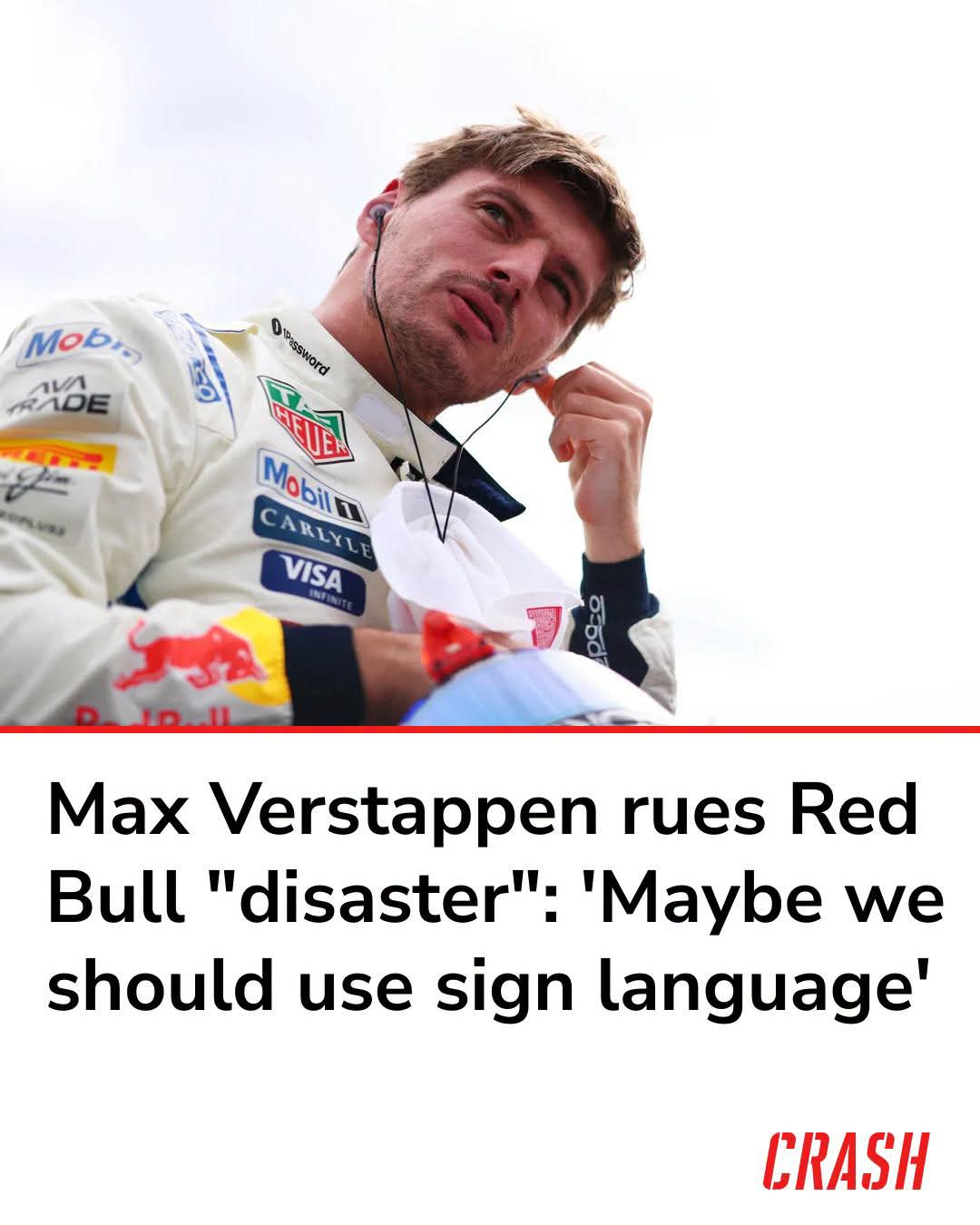
Max Verstappen left Circuit of the Americas on Sunday with a third-place finish and a familiar scowl. The four-time Formula 1 world champion had just watched Kimi Antonelli claim a dominant victory for Mercedes while Charles Leclerc slipped past him late for second. Yet the result itself was not the main source of his irritation. Once again, Red Bull’s team radio had failed him at a critical moment.
“It’s not the second time. It’s already, I don’t know how many times this year,” Verstappen said in the post-race press conference. “Maybe we should just start communicating in sign language. It’s probably cheaper as well. It’s a disaster. Yeah, it’s a disaster. It’s really frustrating, to be honest.”
The Dutchman’s sarcasm cut through the usual diplomatic language of the paddock. What should be a routine two-way conversation between driver and pit wall had become a recurring technical liability for the Milton Keynes squad throughout the 2026 season.
RECURRING RADIO FAILURES TURN HIGH-STAKES RACES INTO GUESSING GAMES
Radio problems first became highly visible in Singapore, where Verstappen’s regular race engineer Gianpiero Lambiase could not properly hear him. The pair resorted to coded yes/no signals to decide strategy. Team principal Laurent Mekies later insisted the issue was being treated seriously and that a robust fix was coming. That fix clearly had not arrived in time for the bumpy, high-speed layout of COTA.
In Austin, Tom Hart stood in as race engineer so the pair could begin building their future working relationship. Verstappen could barely hear him. He admitted he almost pitted at the wrong moment because the only clear instruction reaching him was a distorted “box, box.” Teammate Isack Hadjar suffered similar problems and left the pits with the incorrect engine map as a result.
In modern Formula 1, the radio is far more than a convenience. Drivers receive real-time information on tyre degradation, energy deployment, differential settings, wing adjustments, and rival strategies. When that link breaks, a driver is effectively flying partially blind in a car that already demands maximum concentration at 300 km/h over kerbs and elevation changes.
WHY THE PROBLEM MATTERS BEYOND ONE FRUSTRATED CHAMPION
These communication failures do not exist in isolation. They compound other operational weaknesses that have dogged Red Bull in 2026. Verstappen also highlighted inconsistent power unit behaviour around corners, a slow pit stop, and a two-stop strategy that left the door open for Antonelli’s successful one-stop approach. Poor starts from both Red Bull cars further cost positions early.
For a team that dominated the previous era, these “little things” are becoming costly. Every lost second in dirty air or every missed adjustment costs championship points. With the constructors’ battle tight and Antonelli emerging as a genuine title threat, Red Bull can no longer afford self-inflicted wounds.
The impact extends to the drivers themselves. Verstappen has always been a highly vocal, detail-obsessed racer. His frustration is not mere temperament; it reflects the gap between the precision he expects and the reliability he is currently receiving. Hadjar, still building experience at this level, is learning the hard way that even basic communication cannot be taken for granted.
BROADER INDUSTRY CONTEXT AND THE PRESSURE ON RED BULL
Formula 1 teams invest millions in every system on the car. Radio technology is not glamorous, yet it remains fundamental. Other squads appear to have solved similar challenges more effectively this season, as Mekies has effectively acknowledged by noting that competitors’ radios can be heard clearly while Red Bull’s continue to struggle.
The issue also raises questions about prioritisation. After years of near-perfect execution, Red Bull is discovering that dominance can breed complacency in areas that once felt solved. Bumpy circuits such as COTA and Singapore simply expose weaknesses that smoother tracks may mask.
For the championship picture, the radio problems are a symptom of a larger challenge. Antonelli’s Austin win moved him closer to a potential title. Verstappen remains a fierce competitor, but consistent operational excellence from the team will be required if he is to stay in the fight. Third place is still a solid result, yet the manner of it left little satisfaction.
WHAT COMES NEXT FOR RED BULL AND VERSTAPPEN
Mekies and the engineering group now face clear pressure to deliver the promised solution before the next races. Temporary workarounds and coded messages may work in isolation, but they are not sustainable across a 24-race calendar. The team must also address the related issues of starts, power unit consistency, and strategic clarity that Verstappen listed after the race.
Verstappen’s sign-language joke may have drawn laughs in the media pen, yet it carried an edge. Drivers at this level demand reliability in every system that affects their ability to extract maximum performance. When that reliability is missing, the frustration is both understandable and public.
The Austin weekend offered a reminder that even the most successful teams can be undermined by details others take for granted. For Red Bull, fixing the radio is no longer a minor technical task. It has become a test of whether the organisation can return to the ruthless efficiency that once defined its championship-winning years. Until it does, Max Verstappen’s frustration is likely to remain a recurring theme of the season.